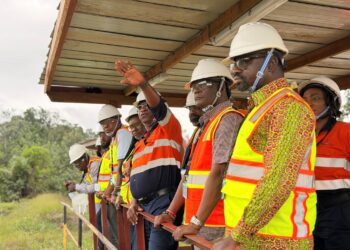
The Energy Commission has intensified engagement with Ghana’s transport and logistics sector as the country moves toward greater adoption of electric vehicles (EVs) and more efficient energy use across the economy.
The Commission’s latest engagement took place at the Chartered Institute of Logistics and Transport (CILT) Ghana 2026 Logistics and Transport Conference and Annual General Meeting, where it delivered a presentation on energy conservation and the emerging infrastructure requirements for electric mobility.
The session brought together fleet operators, logistics executives, transport planners and other industry professionals, placing energy policy within the practical realities of transportation and logistics operations.
EV Regulation Takes Centre Stage
A major component of the presentation was the Energy Commission’s regulatory mandate over EV charging infrastructure in Ghana.
The Commission explained that regulation governing the EV charging sub-sector is currently before Parliament awaiting passage.
The development is significant as Ghana’s transition toward electric mobility increasingly moves beyond vehicle acquisition to questions of infrastructure, technical standards, grid capacity and consumer protection.
The absence of a fully operational regulatory framework could create uncertainty for businesses considering investments in charging infrastructure, particularly as private operators assess the commercial viability and technical requirements of establishing charging stations.
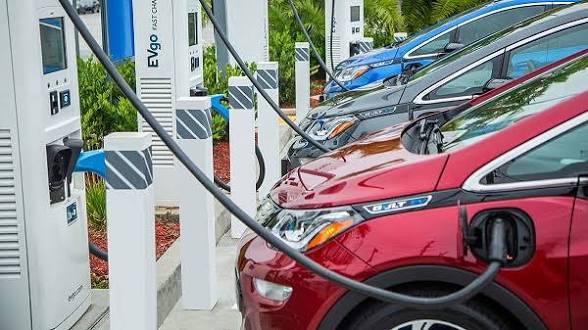
The Commission’s engagement therefore highlighted the importance of establishing clear rules before the charging network expands substantially.
“The regulation governing the EV charging sub-sector is currently before Parliament awaiting passage.”
Energy Commission
The regulatory framework is expected to provide greater clarity for investors and operators while helping ensure that charging infrastructure develops in a manner compatible with Ghana’s electricity system.
This is particularly important because EV adoption can shift electricity demand from conventional transport fuels to the power sector.
Without adequate planning, rapid growth in charging demand could create pressure on distribution networks, particularly in areas where grid infrastructure is already constrained.
Charging Infrastructure Must Match Transport Demand
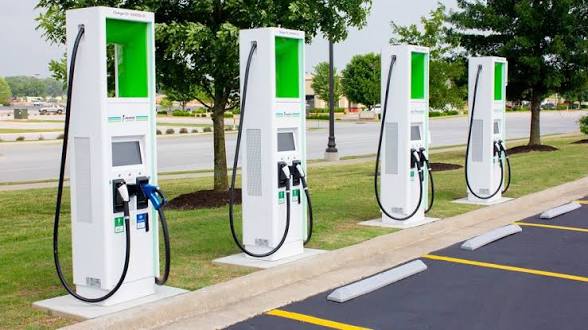
The Commission also unpacked the technical dimensions of EV charging infrastructure, focusing on standards, grid readiness and the appropriate siting of charging stations.
The discussion placed emphasis on the need to consider where charging infrastructure is located rather than simply increasing the number of charging points.
For a logistics and transport industry that depends heavily on predictable journey times, charging infrastructure must correspond with major transport corridors and patterns of commercial movement.
The siting of charging stations along key transport corridors could therefore become an important determinant of how quickly fleet operators can transition from conventional vehicles to electric alternatives.

For commercial fleets in particular, the economics of electrification extend beyond the purchase price of vehicles.
Operators must consider charging availability, charging time, electricity costs, grid connection requirements and the operational implications of vehicles being unavailable while charging.
“The technical dimensions of EV charging infrastructure include standards, grid readiness and the siting of charging stations along key transport corridors.”
Energy Commission
The issue of grid readiness is equally critical. Ghana’s electricity transition is increasingly being linked to emerging sources of demand, including electric mobility.
This means transport electrification cannot be treated as an isolated transport-sector policy. It requires coordination between energy planning, electricity infrastructure development and transport policy.
A poorly coordinated rollout could result in charging infrastructure being concentrated in locations where the grid cannot efficiently accommodate additional demand, increasing the cost and complexity of deployment.
Businesses Seek Clarity On Cost And Policy
The presentation generated a lively question-and-answer session, reflecting growing interest among industry players in the commercial implications of Ghana’s energy transition.
Fleet operators and logistics executives questioned the cost implications of adopting EVs, the pace at which charging infrastructure is expected to develop and how businesses should plan around anticipated regulatory changes.
These concerns point to one of the central challenges facing Ghana’s transport electrification agenda: businesses need sufficient policy visibility to make long-term investment decisions.
For logistics companies operating vehicles as productive assets, the transition to electric mobility involves substantial capital and operational considerations.
Businesses therefore require greater certainty about the regulatory environment, charging infrastructure and the broader electricity market before committing significant resources to electrification.
The Commission’s team responded to the questions collectively, addressing both policy and technical issues and helping translate what can often be a highly technical energy subject into practical considerations for transport professionals.
“The Commission’s engagement addressed both policy and technical concerns, making the subject accessible and practical for industry participants.”
Energy Commission
Several participants commended the Commission’s team for the clarity of the presentation and its responses to questions from the industry.
The interaction also demonstrated that demand for information on EVs is expanding beyond policymakers and energy specialists.
As transport and logistics companies begin assessing electrification, professional bodies and industry associations are becoming increasingly important channels for communicating regulatory and technical developments.
Energy Conservation Becomes Business Imperative
Beyond electric mobility, the Commission outlined practical measures that transport and logistics operators can adopt to conserve energy.
This aspect of the engagement is particularly relevant to a sector where fuel and energy costs directly affect operating margins.
Improving energy efficiency can reduce costs while simultaneously supporting Ghana’s broader emissions-reduction and energy-transition objectives.
The discussion therefore connected energy conservation with business competitiveness rather than treating it solely as an environmental objective.
For Ghana’s logistics sector, improving energy efficiency could become increasingly important as businesses face pressure to control operating costs while responding to changing expectations around sustainability.
The broader implication is that the country’s energy transition will depend not only on introducing new technologies but also on changing how existing energy resources are consumed.
The Commission’s engagement consequently provided a platform for connecting energy policy with the day-to-day decisions of businesses whose operations will increasingly influence electricity demand and transport-sector energy consumption.
“The engagement reinforced the growing stake of the transport and logistics sector in Ghana’s energy transition.”
Energy Commission
The session forms part of the Energy Commission’s broader effort to engage directly with professional bodies and industry stakeholders.
Such engagements are becoming increasingly important as Ghana’s energy landscape evolves to accommodate electric mobility, changing electricity demand and stronger emphasis on energy efficiency.
For the transport and logistics sector, the transition will ultimately depend on whether regulation, infrastructure and economics develop at a pace that gives businesses sufficient confidence to invest.
The Energy Commission’s continued engagement with industry therefore represents more than public education.
It provides an avenue for identifying practical constraints early and ensuring that Ghana’s emerging EV ecosystem develops around the realities of the country’s electricity system and commercial transport network.
READ ALSO: 16th Korean Ambassador’s Cup Will Spotlight Next Generation of Taekwondo Talents – GTF PRO