Energy Commission of Ghana has reinforced its dedication to building a clean energy future by leading major policy dialogues at the Sustainable Energy B2B Expo 2026.
Organised by the Association of Ghana Industries Energy Service Centre (AGI-ESC) under the theme “Powering Industry Through Sustainable Energy,” the high-level convention gathered policymakers, private-sector innovators, development partners, and industrial leaders to map out realistic frameworks for the country’s power dynamics.
The foundational architecture of this transition hinges on deep structural adjustments engineered by the state’s energy regulator to shift Ghana away from fossil fuel dependencies and toward commercial self-reliance.
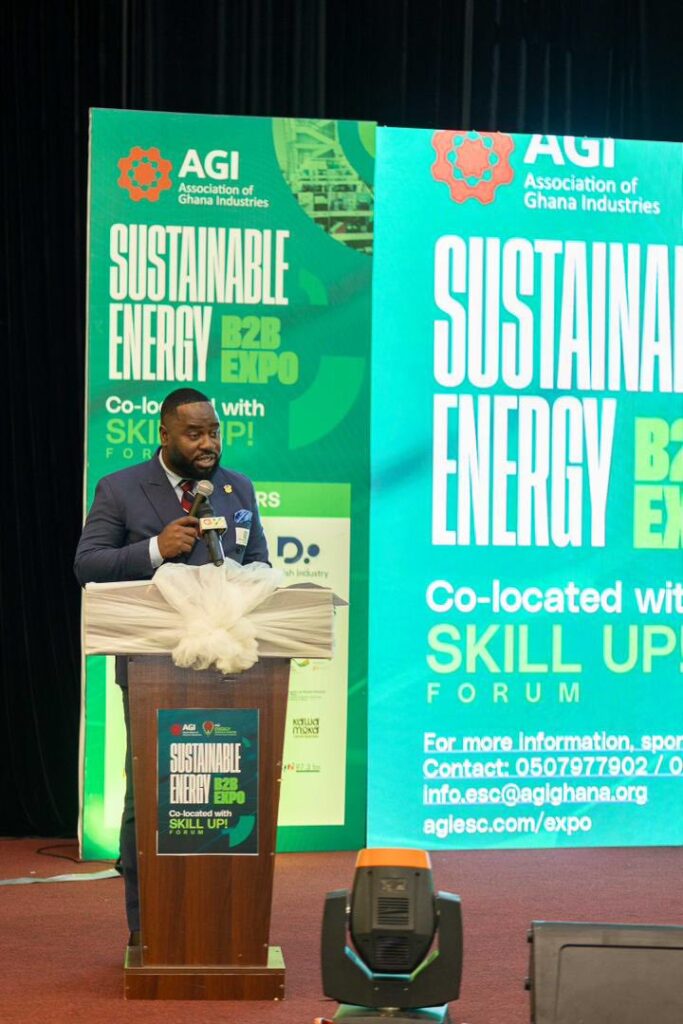
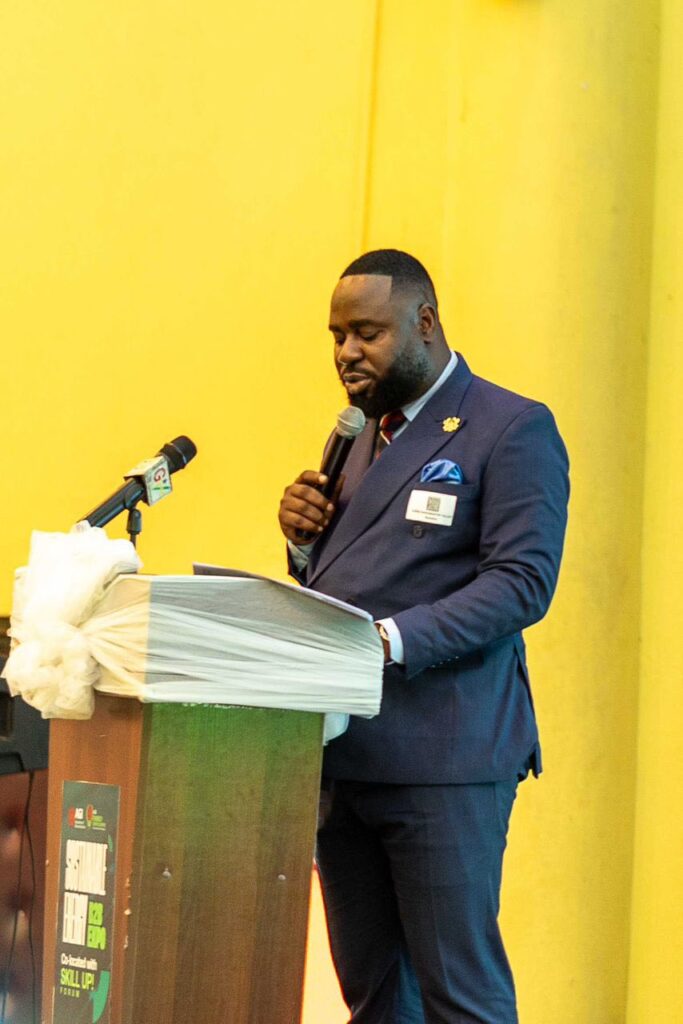
“In his remarks, he [Mr. Chris Yalley] highlighted key initiatives being undertaken by the Commission, including the development of an Energy Performance Certification framework for buildings, progress on Electric Vehicle Charging Regulations, and the implementation of the Net Metering Programme, which will empower consumers to generate electricity through rooftop solar systems and feed surplus electricity back into the national grid. The initiative is expected to democratise energy generation and reduce pressure on the national grid.”
Energy Commission of Ghana

Expanding on this blueprint, the Deputy Executive Secretary of the Energy Commission, Mr. Chris Yalley, reaffirmed that the state is actively driving Ghana’s clean energy transition through a sophisticated mixture of strategic partnerships, green innovation, and rigorous regulatory leadership.
Addressing the corporate stakeholders at the expo, Mr. Yalley outlined several front-line regulatory mechanisms designed to decentralise domestic power markets, including advanced work on Electric Vehicle (EV) Charging Regulations, an Energy Performance Certification framework for modern buildings, and the rollout of the Net Metering Programme.
According to the regulator, these interventions will jointly optimize public facility electricity efficiency, expand sub-regional renewable energy deployment, and drastically upgrade technical skills development across the entire local market.
Mitigating Grid Pressures and “Dumsor” Through Distributed Solar
The integration of robust solar technologies has evolved from an environmental ideal to an economic necessity for Ghana’s industrial landscape.
Historically, the country’s electrical infrastructure has relied heavily on hydro-generation and expensive thermal plants, leaving state grids highly susceptible to volatile fuel import pricing and fluctuating water levels at the Akosombo Dam. T
his underlying vulnerability often triggers systemic power distribution crises, known locally as “Dumsor,” which penalise commercial productivity and shave significant percentages off the national Gross Domestic Product (GDP).
By implementing a structured Net Metering Programme, the Energy Commission allows commercial and residential consumers to transform from passive end-users into active “prosumers” who generate local solar power.
This distributed energy model minimizes the transmission and distribution losses that typically plague long-distance grid systems.
It also allows local factories to offset peak daytime operational costs using direct sunlight, effectively flattening the load curve on the state network.
Furthermore, moving toward a targeted target of 10% renewable energy in the national mix by 2030 requires heavy private-sector investments in both utility-scale arrays and rooftop photovoltaic (PV) systems.
Removing upfront capital barriers through mobile-money-backed financing models and explicit regulatory guarantees positions solar power as a predictable safeguard for primary industries like manufacturing and mining.
Decarbonizing Transport via Structured EV Infrastructure Regulations
The transport sector remains one of Ghana’s largest consumers of imported liquid fossil fuels, exposing the domestic economy to global crude price shocks and worsening urban air quality.
Transitioning towards electric mobility presents a strategic pathway to absorb excess nighttime electricity generation, thereby improving the financial viability of state distribution utilities like the Electricity Company of Ghana (ECG).
To prevent a chaotic influx of uncoordinated electronic hardware, the Energy Commission’s formulation of the Electric Vehicle Charging System and Swap System Regulation 2026 establishes standard guidelines for private investors.
The state’s technical roadmap prioritizes solar-powered charging systems to ensure that the power feeding these vehicles is genuinely clean, rather than relying on fossil-fuel-burning thermal plants.
This regulatory framework establishes four separate charging configurations alongside localized battery swap mechanisms, specifically tailored for two-wheeled commercial transport and public transit networks.
By building out this framework, the Commission secures a critical dual benefit: it directly satisfies international climate obligations under the Paris Agreement while spawning new domestic industries focused on certified green electrical engineering, smart installation, and battery maintenance.
Operationalizing Energy Efficiency via the New Performance Framework
Beyond clean generation, managing consumer demand through strict regulatory supervision forms the final pillar of Ghana’s sustainable energy strategy.
The introduction of the Energy Performance Certification framework targets the construction sector, compelling commercial developers to incorporate passive cooling, natural lighting, and highly efficient appliances into building designs.
By applying strict consumption baselines to both existing state properties and new private developments, the Public Facility Sustainable Energy Action Plan (PF-SEAP) aims to slash public sector utility bills, redirecting saved revenue into key public infrastructure.
Ultimately, these unified actions by the Energy Commission establish a highly resilient, market-driven environment where sustainable power functions as the engine for Ghana’s long-term industrialization.