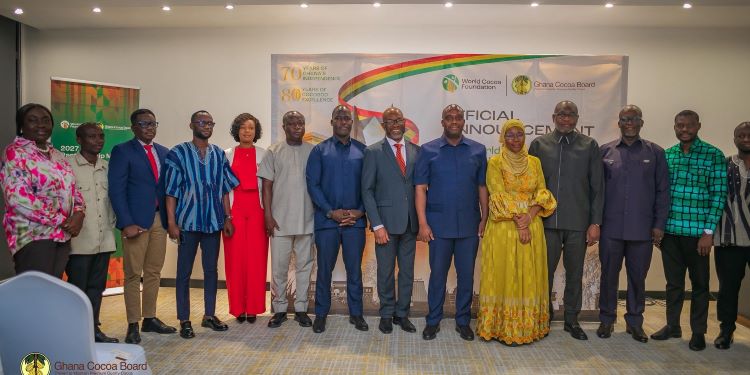
The Government of Ghana has officially launched the corporate and diplomatic countdown to hosting the global cocoa industry’s premier institutional gathering, signaling a major policy shift in the state’s management of its most vital agricultural sector.
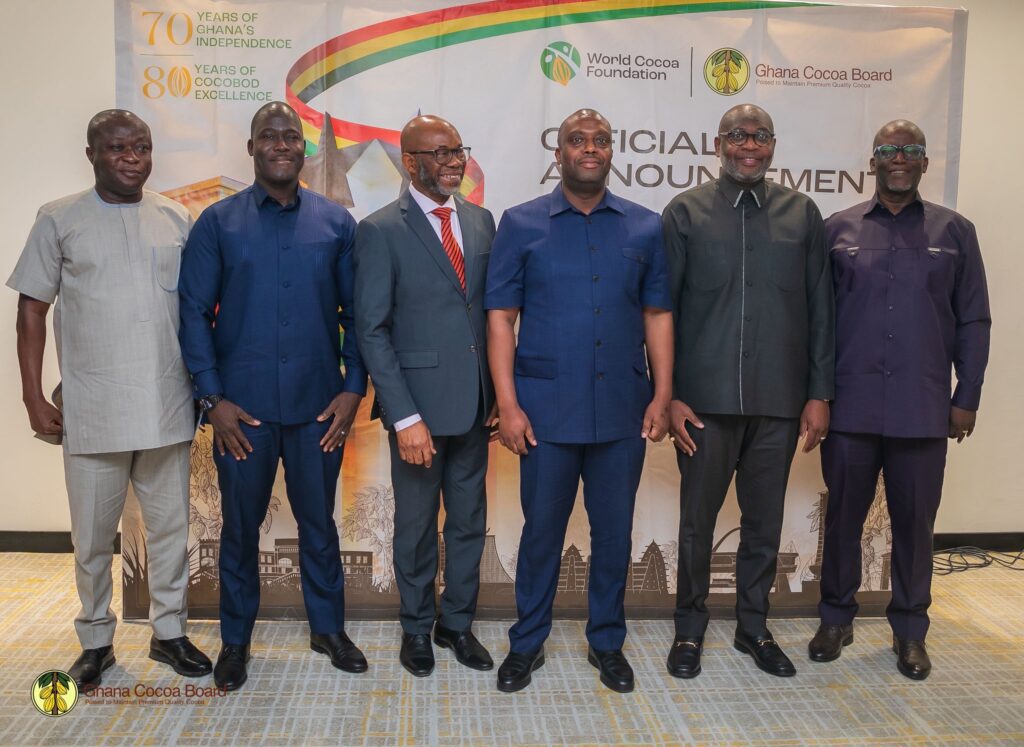
At a high-profile ceremony held at the Four Points by Sheraton Hotel in Accra, state officials, international diplomats, and commodity value chain executives gathered for the formal announcement of the 2027 World Cocoa Foundation (WCF) Partnership Meeting.
The international summit, scheduled to take place in the capital from March 16 to March 19, 2027, will position Ghana at the center of global trade negotiations, sustainability policy formulation, and supply chain compliance. Representing the substantive Minister for Finance, Dr. Cassiel Ato Forson, the Deputy Minister for Finance, Hon. Thomas Ampem Nyarko, delivered the state’s keynote address.
“At the Official Announcement of the 2027 World Cocoa Foundation Partnership Meeting, I reiterated H.E. President John Dramani Mahama’s vision of a ‘Cocoa Reset’ – a bold agenda that recognises cocoa not merely as an export commodity, but as a strategic national asset critical to Ghana’s economic transformation”
Hon. Thomas Ampem Nyarko, Deputy Finance Minister
The Deputy Minister used the international platform to outline an aggressive fiscal and structural modernization strategy for the domestic cocoa landscape, framing the upcoming international conference not merely as an administrative milestone but as a catalyst for sweeping macroeconomic adjustments.

The state’s Cocoa Reset agenda is a departure from trade models that treat raw cocoa beans primarily as a high-volume, dollar-denominated export product used to secure short-term international syndicated loans. Instead, the Treasury is moving to classify the domestic cocoa economy as a high-value sovereign economic asset integrated into the national industrialization program.
Hon. Ampem indicated that the traditional framework has left the state highly vulnerable to global market price shocks, environmental changes, and shifting regulatory demands from primary consumer markets like the European Union.
Under the updated policy structure, Ghana will prioritize domestic processing, value-added manufacturing, and strategic state intervention in international pricing mechanisms to safeguard local production structures.
This structural pivot is expected to reshape the investment portfolios of major state institutions, including the Ghana Cocoa Board (COCOBOD), redirecting capital toward localized agro-processing installations and modernized storage logistics.
Reforms And Producer Prosperity
The Deputy Minister’s briefing emphasized that the execution of the “Cocoa Reset” extends far beyond standard bureaucratic reshuffling or administrative audits within sector regulatory agencies, as he detailed an integrated program aimed at resolving systemic financial imbalances within the supply chain.
Faced with rising inflation, high input fertilizer costs, and localized environmental disruptions, local cocoa farmers have faced significant income pressures over the past decade.
The state’s strategy aims to neutralize these vulnerabilities by establishing stronger price floors, providing transparent bonus payment structures, and implementing comprehensive social protection initiatives – such as the operationalization of the Cocoa Farmers Pension Scheme, with an immediate focus on securing the economic survival of primary producers.
According to Hon. Ampem, the policy framework seeks to restore structural equity to the value chain, ensuring that a larger percentage of global chocolate market revenues flows directly back to the rural communities responsible for primary production.
He further noted that the hosting of the 2027 WCF Partnership Meeting carries significant geopolitical and historic weight for Ghana.
The multi-day international conference is strategically timed to coincide with the nationwide celebrations marking Ghana’s 70th independence anniversary, allowing the state to leverage its historical pan-African leadership to drive new trade and economic agendas across the sub-region.
The summit will bring together global chocolate manufacturing conglomerates, international sustainability organizations, civil society groups, and governmental delegations from competing production nations, including Côte d’Ivoire, Cameroon, and Indonesia.
Hosting the global forum in Accra guarantees that Ghana leads negotiations on critical international trade regulations, particularly the enforcement of the European Union Deforestation Regulation (EUDR) and the establishment of fair-trade living income differentials.
The Ministry of Finance, in coordination with the Ministry of Food and Agriculture and the Ministry of Foreign Affairs, has initiated the formation of an inter-ministerial planning committee to oversee the logistical, security, and diplomatic requirements of the summit.

Ghana plans to use the global event to showcase its advanced traceability systems, certified deforestation-free supply chains, and emerging premium organic cocoa markets, positioning itself as the world’s most stable, transparent, and innovative destination for sustainable agricultural investments.
READ ALSO: Nollywood Actress Sharon Ooja Nwoke Welcomes First Child