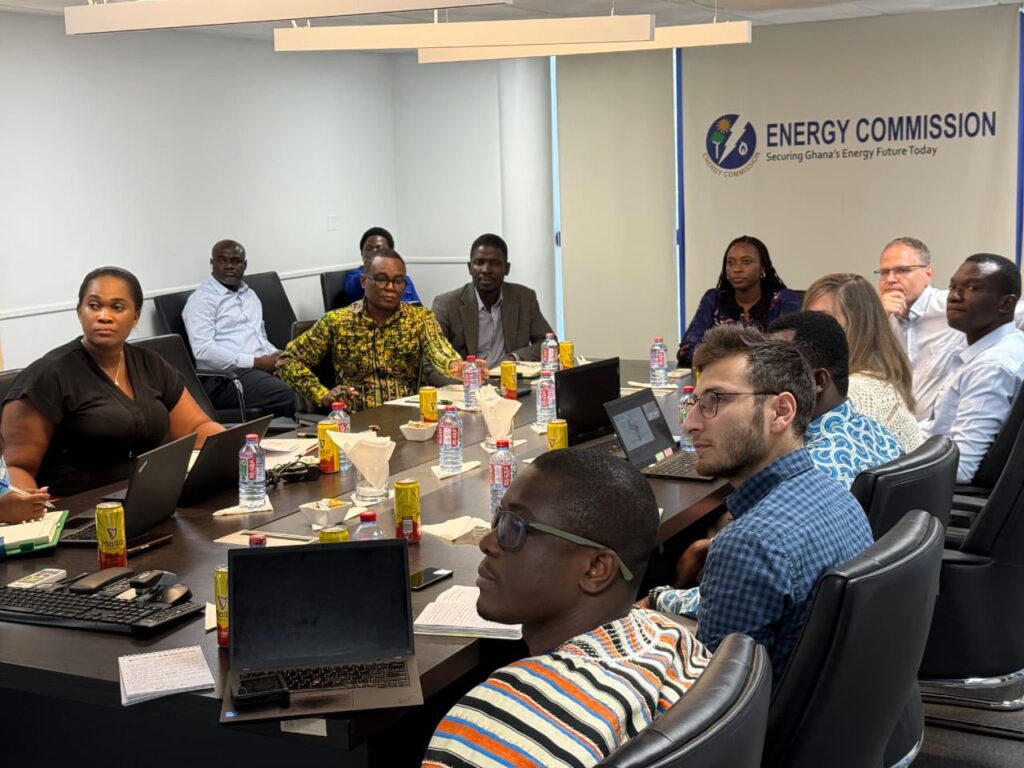
Energy Commission of Ghana has initiated a high-level project preparatory meeting with the Deutsche Gesellschaft für Internationale Zusammenarbeit (GIZ) to streamline the implementation of the “Mobilize Net-Zero II” initiative.
This strategic partnership aims to accelerate the decarbonization of Ghana’s domestic transport sector by establishing a robust framework for electric vehicle (EV) integration.
By aligning national policy with international technical expertise, the collaboration seeks to transform the country’s mobility landscape into a sustainable, low-carbon ecosystem that meets global climate standards.
“During the meeting, Adwoa Serwaa Bondzie provided an overview of the Commission’s ongoing work in the EV space. This includes developing regulatory frameworks for EV charging infrastructure and battery swapping, foundational steps toward creating a reliable and scalable ecosystem for electric mobility in Ghana.”
Energy Commission of Ghana

This foundational engagement, led by GIZ Project Manager Mr. Gunnar Wegner and top executives of the Energy Commission, focuses on three primary pillars: the promotion of e-mobility solutions, the mobilization of climate finance, and the integration of gender-responsive strategies within the transport value chain.
As Ghana works toward its Nationally Determined Contribution (GH-NDC) under the Paris Agreement, the initiative provides the necessary technical scaffolding to move from conceptual frameworks to tangible infrastructure.
Discussions highlighted the importance of “grid readiness” and the development of regulatory standards for battery swapping and charging stations to ensure a reliable transition.
Advancing Regulatory Frameworks and Grid Integration

The partnership is set to catalyze the Energy Commission‘s ongoing efforts to formalize the electric vehicle market through comprehensive Legislative Instruments.
During the deliberations, Acting Executive Secretary Adwoa Serwaa Bondzie emphasized that the Commission is already “developing regulatory frameworks for EV charging infrastructure and battery swapping,” which serve as the bedrock for a scalable e-mobility ecosystem.
A critical component of this expansion is the integration of renewable energy sources into the national grid. By ensuring that EV charging stations are powered by clean energy, Ghana avoids the pitfall of “displacing emissions” from the tailpipe to the power plant, effectively securing a truly net-zero transport cycle.
Economic Transformation and Green Job Creation
Beyond environmental benefits, the “Mobilize Net-Zero II” initiative is positioned as a significant driver for economic growth and social equity.
The engagement explored innovative financing mechanisms designed to “attract private sector investment,” reducing the fiscal burden on the state while stimulating the local economy.
Stakeholders identified a massive opportunity for “green job creation,” particularly for local technicians who will require specialized training in EV maintenance and charging station installation.
By embedding “gender-responsive approaches” into the project’s DNA, the Commission and GIZ aim to ensure that the transition to sustainable transport provides equitable professional opportunities for women across the emerging value chain.
Strategic Impact on Ghana’s Green Energy Agenda

This collaboration serves as a primary vehicle for achieving Ghana’s National Energy Transition Framework goals, which envision a phase-out of internal combustion engine vehicles by 2070.
The technical expertise provided by GIZ helps bridge the “capacity gap” in managing complex e-mobility logistics, such as grid impact studies and standardized battery swap systems.
By positioning Ghana as a leader in sustainable transport across West Africa, the initiative not only lowers the national carbon footprint but also enhances energy security by reducing the country’s heavy reliance on imported fossil fuels.
As the initiative moves toward its full implementation phase, the resulting policy reforms and infrastructure investments are expected to solidify Ghana’s status as a premier destination for climate-aligned capital in the sub-region.
READ ALSO: TCDA Deploys CCS Framework To Secure Tema Export Corridor