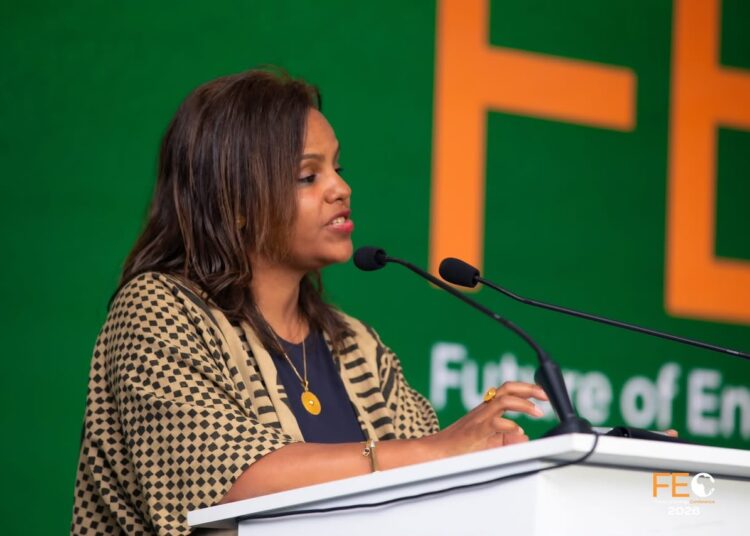
Africa must rethink how it plans and develops its energy systems, with greater emphasis on powering industries and value chains rather than planning primarily around household consumption, Dr. Marit Kitaw, Economic Affairs Officer at the United Nations Economic Commission for Africa (UNECA), has said.
According to Dr. Kitaw, Africa’s industrialisation ambitions will remain difficult to achieve if businesses continue to contend with electricity that is too expensive, unreliable or unavailable at the scale required for production.
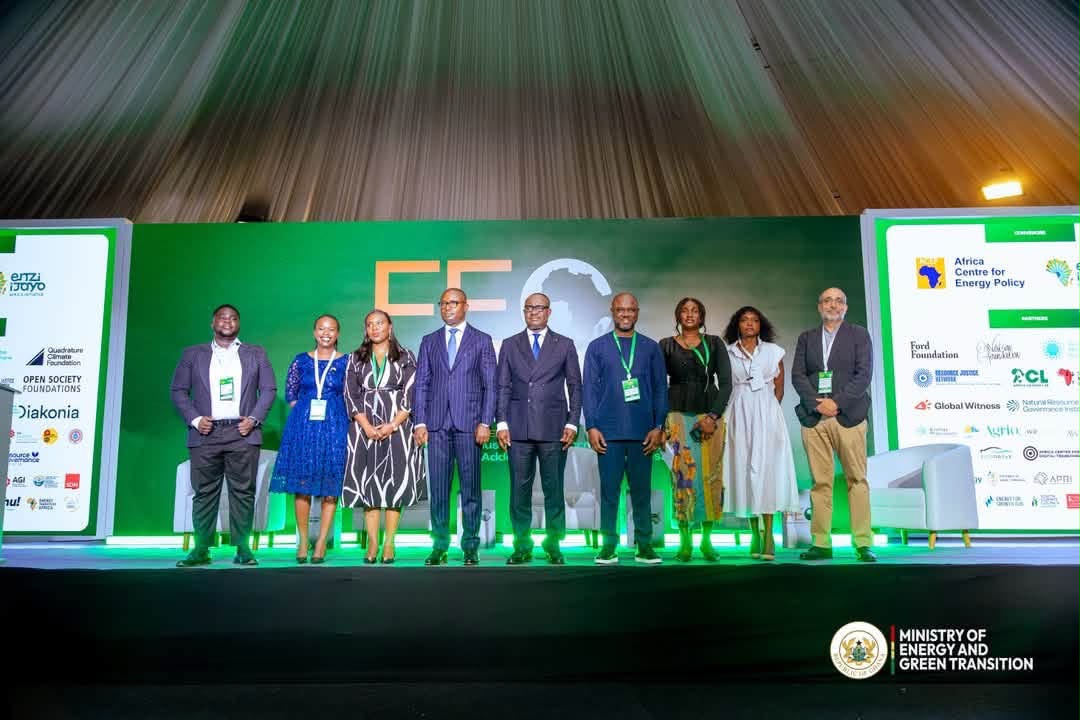
Delivering the keynote address on the second day of the Future of Energy Conference 2026 in Accra, she argued that the continent’s substantial energy and mineral resources could provide the foundation for structural economic transformation if supported by the right infrastructure, financing, skills and regional markets.
“Africa cannot industrialise on unreliable energy, nor can it prosper by exporting the very minerals that should energize its transformation.”
Dr. Kitaw
The intervention comes as African countries face the dual challenge of expanding electricity access while creating competitive industrial economies capable of processing the continent’s abundant natural resources.
Energy Planning Must Follow Industrial Ambition
Dr. Kitaw pointed to Africa’s significant deposits of critical minerals needed for the global energy transition, alongside its solar, wind, hydro, geothermal and natural gas resources.
Yet this resource wealth exists alongside a persistent electricity deficit, with millions of Africans lacking reliable access to power and industries in several countries facing high energy costs and supply constraints.
For Dr. Kitaw, the problem is therefore not simply how much electricity Africa produces, but whether energy planning is connected to the productive activities economies want to develop.
“Africa must stop planning energy only for consumption and begin planning energy for production.”
Dr. Kitaw
Under this approach, countries would identify the industries and value chains they want to establish first, before determining the energy infrastructure, transmission capacity and generation resources required to make those industries competitive.
That would place energy planning directly alongside mineral strategies, industrial policy, trade frameworks, infrastructure corridors and skills development.
“Energy planning and industrial policy will remain aspirations if they are developed in separate rooms.”
Dr. Kitaw
The argument is particularly relevant for countries seeking to move from exporting raw commodities towards processing and manufacturing, where reliable and competitively priced electricity can determine whether investment remains viable.
Regional Integration Could Unlock African Value Chains
Regional cooperation was another central element of the address, with Dr. Kitaw arguing that African countries do not need to reproduce entire value chains within individual national borders.

Instead, countries could specialise in different stages of production and connect them through regional electricity systems, transport corridors and the African Continental Free Trade Area.
A mineral extracted in one country, processed in another and ultimately converted into a manufactured component elsewhere could form part of a single integrated African value chain.
Such integration could also create larger markets for energy infrastructure and improve the commercial case for investments that may be difficult to justify within individual national economies.
Minerals Strategy Must Drive Industrialisation
Dr. Kitaw further urged African governments to treat the Africa Green Minerals Strategy as more than a climate initiative.
In her assessment, the strategy should also be viewed as an industrial and energy-security framework capable of supporting domestic value addition.
Fragmentation between energy, mining, industry, trade and finance institutions, she warned, could undermine investment and create conflicting policy signals.
International partnerships must consequently move beyond securing access to Africa’s raw materials.

“The central question for every partnership should be what productive capability and what lasting development benefit will remain in Africa after the extraction of the minerals?”
Dr. Kitaw
That means encouraging joint ventures, co-investment in processing and manufacturing, regional centres of excellence, technology partnerships and long-term off-take agreements linked to value addition.
Skills and Local Ownership Matter
Human capital, according to Dr. Kitaw, will determine whether Africa can capture the opportunities created by its resources.
The continent’s young population could become a major competitive advantage if investment is directed towards technical education, engineering, metallurgy, geology, data science, research and entrepreneurship.
Local content must also extend beyond employment.
African engineers should be involved in designing systems, domestic companies should participate in supplying equipment and services, and entrepreneurs should have opportunities to develop and own intellectual property.
Women, young people, artisanal miners and local communities must similarly become meaningful participants in emerging green value chains.
A Just Energy Transition Requires a Just Minerals Transition
The industrialisation argument also extends to the environmental and social dimensions of the energy transition.
Dr. Kitaw cautioned against pursuing clean-energy technologies through mineral extraction systems that reproduce environmental degradation, exploitation or inequality.
“There cannot be a just energy transition without a just minerals transition.”
Dr. Kitaw
That principle, she argued, must apply across the entire minerals lifecycle; from exploration and extraction through processing, manufacturing, use and recycling.
It also requires economic opportunities for workers and communities, greater participation for women and youth, environmental protection and responsibility towards Africa’s natural capital.
From Resource Extraction to Industrial Transformation
Dr. Kitaw’s intervention ultimately placed Africa’s energy challenge within a much broader development question: whether the continent can use its natural resources to build productive economies rather than remain primarily an exporter of raw materials.
Her message is particularly significant for resource-rich economies such as Ghana, where petroleum, natural gas and critical minerals present opportunities for greater domestic value addition but also require reliable and affordable energy infrastructure.
Ghana’s own industrial ambitions will increasingly depend on whether electricity and gas infrastructure are planned around productive demand, rather than treating industry as a secondary consumer of power.
The broader policy implication is clear: energy investment should be measured not only by megawatts added or connections achieved, but also by the productive capacity those investments make possible.
Drawing on the words of Ghana’s first President, Dr. Kwame Nkrumah, Dr. Kitaw called for greater unity and coordination as Africa confronts the emerging global industrial order.
“We face neither East nor West; we face Forward.”
She followed this with Nkrumah’s well-known call:
“Africa Must Unite Or Perish.”
Dr. Kitaw
For Dr. Kitaw, facing forward means moving from resource extraction towards industrial production, replacing fragmentation with cooperation and translating policy ambitions into implementation.
The objective, ultimately, is to build energy, mineral, climate and industrial policies that operate as parts of one transformation agenda rather than separate policy tracks.
“Let us unite, face forward, and build energy systems that switch on Africa’s industrial future and power a green transition that is Just and Truly Transformative.”
READ ALSO: WHO Confirms Uganda Ebola-Free as DR Congo Battles Rising Cases