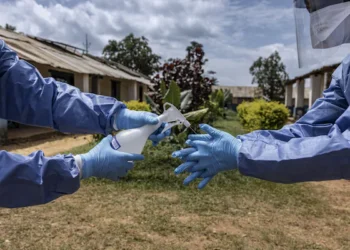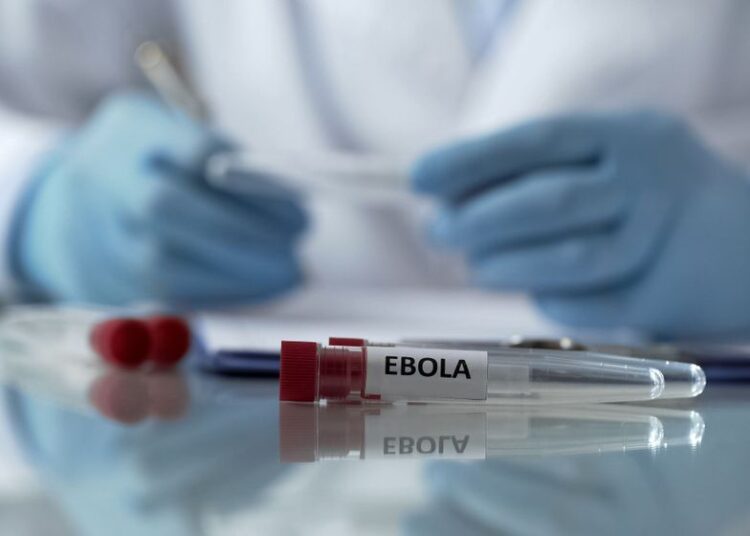
Uganda has officially brought its latest Ebola outbreak to an end after health authorities confirmed that no new chains of transmission had emerged, but the progress has been overshadowed by a worsening outbreak in neighbouring Democratic Republic of Congo (DRC), where infections and deaths continue to rise despite intensified containment efforts.
The World Health Organization (WHO) confirmed that Uganda had successfully interrupted transmission of the Bundibugyo strain of the Ebola virus after recording 20 cases and two deaths during the outbreak.
The development follows the Ugandan government’s declaration on July 28 that the country was free of Ebola, with the WHO maintaining surveillance for several weeks afterwards to ensure that undetected chains of transmission had not persisted.
The successful conclusion of the outbreak represents a significant public health achievement for Uganda, which has faced repeated Ebola emergencies and has developed extensive experience in surveillance, contact tracing, case management and community engagement.
However, the WHO has warned that the situation across the border in the Democratic Republic of Congo remains deeply concerning, with the outbreak there continuing to spread and becoming one of the deadliest Ebola emergencies ever recorded.
Speaking at a WHO regional meeting, Dr Marie Roseline Belizaire, Director of Emergency Preparedness for the WHO African region, indicated that health authorities had made progress in slowing the acceleration of infections but had not yet managed to reverse the overall trajectory of the outbreak.
According toDr Marie Roseline Belizaire, “transmission remains very active. We have slowed the acceleration, but we have not yet bent this curve.”
According to figures from the Congolese government, more than 5,600 cases and over 2,700 deaths had been recorded as of Tuesday. The scale of the outbreak has placed immense pressure on healthcare systems and emergency responders working to identify infections, trace contacts and prevent further community transmission.
The situation presents a stark contrast between Uganda and its neighbour. While Ugandan authorities have moved into a post-outbreak monitoring phase, health officials in the DRC are still confronting active transmission in areas where access to healthcare and emergency services remains challenging.
The Ebola outbreak has also generated concerns over the capacity of response teams to maintain essential operations as the number of cases increases. According to Belizaire, improvements have been recorded in contact tracing and testing, two critical elements in breaking chains of transmission.
Health professionals have also been monitoring the genetic characteristics of the virus to determine whether changes in the pathogen could be contributing to its rapid spread.
Belizaire added that analyses of the Bundibugyo virus had so far not detected signs of mutation, offering some reassurance to health officials attempting to understand the continued transmission.
The absence of evidence of mutation is considered positive because significant genetic changes in a virus can potentially affect its behaviour, transmissibility or the effectiveness of existing diagnostic and medical tools.
Nevertheless, the WHO’s warning that transmission remains highly active underlines the fact that the outbreak continues to pose a serious threat even without an identified mutation.
WHO Warns Funding Shortfall Undermines Congo’s Ebola Response
The WHO has identified an immediate $30 million funding gap for logistical operations required to sustain the Ebola response in the worst-affected areas of the Democratic Republic of Congo.
The funding is needed to support the delivery of essential medical supplies and personal protective equipment to health workers and communities confronting the outbreak.
Belizaire warned that the financial shortfall could jeopardise progress already achieved by response teams and undermine efforts to prevent further transmission.
The warning comes at a critical stage of the outbreak, with health authorities facing the difficult task of expanding response operations while attempting to prevent the virus from spreading into additional communities.
Logistics are particularly important during an Ebola emergency because response teams require a continuous supply of protective equipment, testing materials, medicines and other essential resources. Delays in transporting such supplies can leave health workers exposed and make it more difficult to isolate and treat infected patients quickly.
Contact tracing is similarly dependent on adequate resources. Health officials must identify people who have been in close contact with confirmed patients, monitor them for symptoms, and rapidly test suspected infections. Any disruption to that process creates opportunities for the virus to move through communities undetected.
The experience of Uganda demonstrates what sustained surveillance and coordinated intervention can achieve. However, the situation in the DRC shows that declaring an outbreak contained requires more than simply reducing the rate of new infections.
For WHO, the immediate priority is to prevent the gains already made from being reversed.
READ ALSO: World Bank Raises Red Flag Over Ghana’s Economic Stability