Africa Education Watch (Eduwatch) has raised fresh concerns over the allocation of education financing in Ghana, warning that a significant imbalance in how GETFund resources are distributed between Free Senior High School (Free SHS) and basic education is deepening structural inequities across the country’s school system.
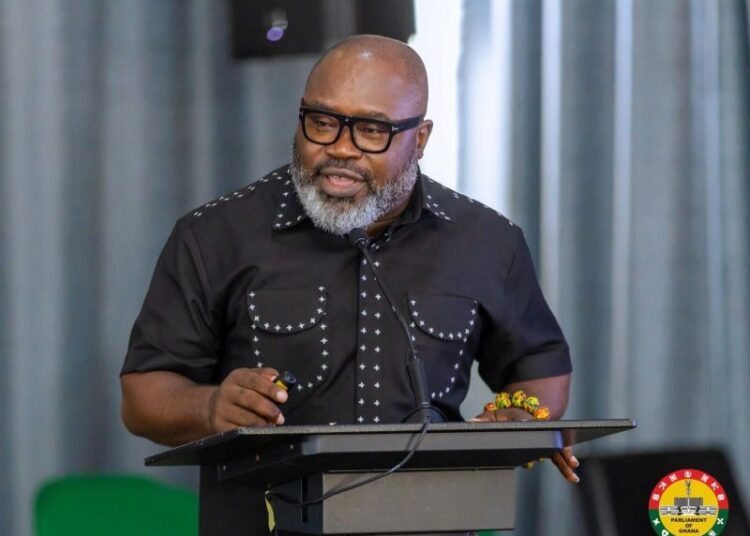
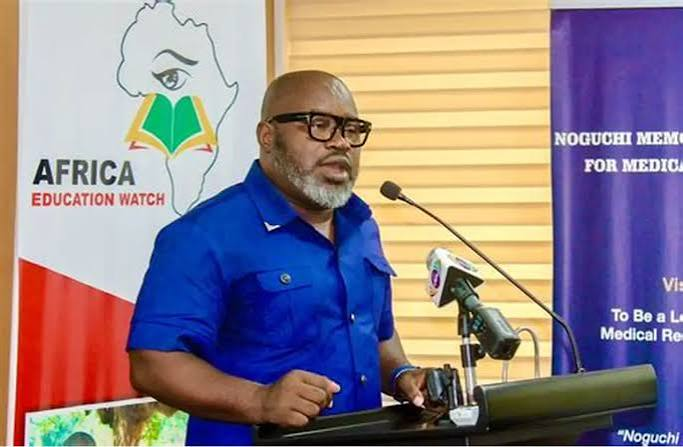
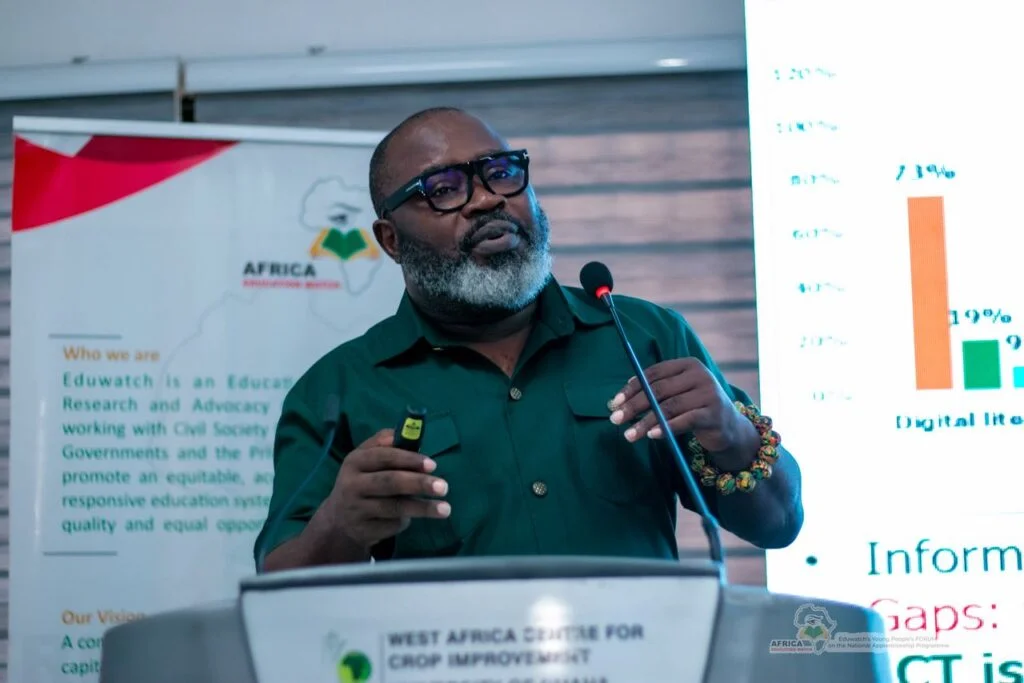
The concerns were raised during a policy dialogue on Emerging Trends in Education Delivery, Learning Outcomes, Financing and Curriculum Implementation, where Eduwatch presented detailed findings covering infrastructure gaps, teacher deployment imbalances, financing trade-offs and the state of ongoing curriculum reforms.
While acknowledging notable improvements in areas such as the predictability of Capitation Grant disbursements, the school feeding programme and the Free Sanitary Pad Programme, Eduwatch was firm in highlighting that these gains have not translated into equity across the wider system.
The organisation pointed to persistent disparities in teacher deployment, school infrastructure, furniture availability, ICT access, water and sanitation (WASH) facilities, and teacher accommodation, particularly in underserved parts of the country.
Illustrating the scale of the imbalance, Eduwatch noted that in the Northern Region, an apparent surplus of teachers coexists with severe shortages in rural communities, a contradiction it said reflects deeper structural problems in how teaching staff are deployed nationally.
This was compounded, the organisation added, by findings in the Auditor-General’s 2026 report, which indicated that approximately 10,600 schools across the country continue to operate under trees, sheds and other unapproved structures.
Learning Outcomes Lagging Behind Access Gains
Beyond infrastructure, Eduwatch presented data showing that expanded access to education has not been matched by consistent improvements in learning outcomes.
According to the organisation, BECE core-subject performance in deprived districts declined from 81.01 percent in 2021 to 75.65 percent in 2024, while performance in more endowed districts also fell, from 90.19 percent to 86.84 percent over the same period. Both categories, Eduwatch noted, remain below the 90 percent target set under the 2022–2025 medium-term development framework.
“When both deprived and endowed districts are falling short of the same national target, it tells us the problem goes beyond geography, it is systemic.”
Eduwatch
Financing Imbalance Between Free SHS And Basic Education
On financing, Eduwatch drew particular attention to how District Assemblies Common Fund (DACF) allocations are structured, arguing that they should better reflect actual levels of deprivation and infrastructure need across districts rather than relying on more generalised formulas.
The organisation highlighted a stark trade-off in how GETFund resources are currently distributed, noting that about 42 percent of GETFund allocations go toward Free SHS, compared with roughly 9 percent directed to basic education, despite basic education carrying much of the burden of the infrastructure and access challenges Eduwatch had already outlined.
“A financing structure that channels more than four times as much to secondary education as to basic education cannot be reconciled with the state of our primary schools.”
Eduwatch
On the ongoing review of the Standards-Based Curriculum, Eduwatch welcomed proposals to strengthen task-based and competency-based assessment, along with plans to expand language inclusion at the lower primary level.
However, the organisation cautioned that curriculum reform on paper means little without matching implementation readiness, calling for stronger teacher preparation, stakeholder orientation, adequate learning materials, sustainable financing and robust monitoring and accountability systems, underpinned by a published and fully costed Curriculum Implementation Readiness Plan.
Broader Policy Gaps and Path Forward
The dialogue also touched on delays in finalising the revised Inclusive Education Policy, ongoing concerns about teacher welfare and working conditions, and worries about school climate, indiscipline and declining ethical values among learners.
Participants called for stronger guidance and counselling services, deeper parental and community engagement, and a shift toward preventive and restorative approaches to school discipline, alongside continued recognition of the role played by School Management Committees, Parent-Teacher Associations, local-language learning and community facilitators in supporting equitable education delivery.
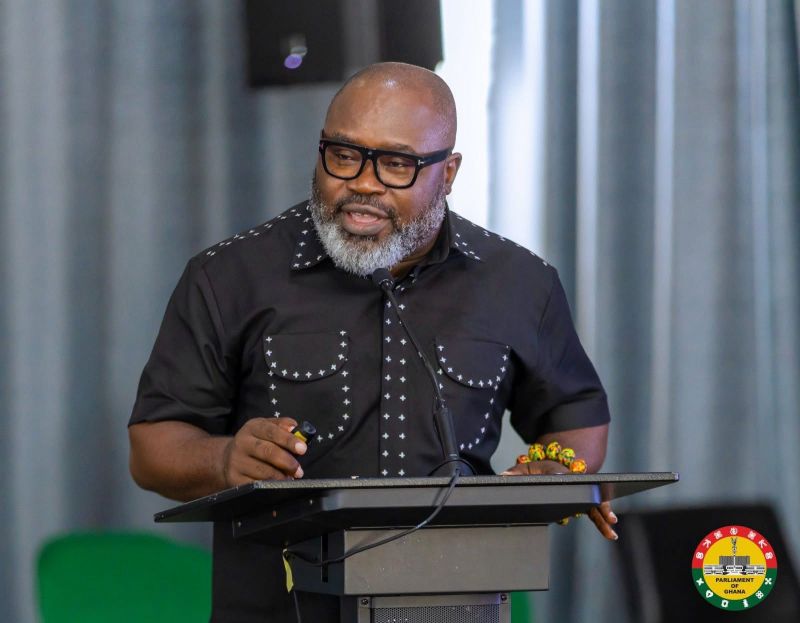
Following the deliberations, participating civil society organisations agreed to strengthen collective advocacy around equity-responsive financing, fairer teacher deployment, minimum school-level infrastructure standards, curriculum implementation readiness, inclusive education policy, safer school environments and closer coordination among CSOs on evidence-based education reform.
READ MORE: Government Declines MTN’s GHS20 Million Offer for xenophobic Victims