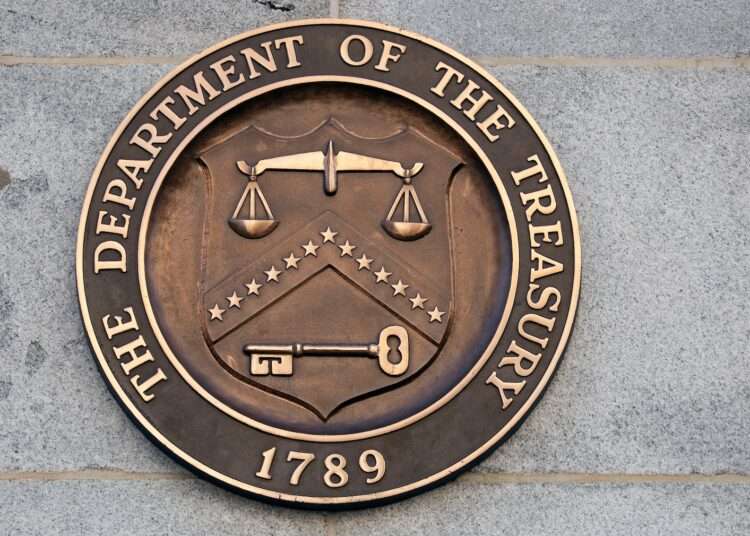
The United States has imposed sanctions on three organisations and two individuals as the Treasury Department expands its efforts to target what it describes as violent far-left extremist and terrorist networks operating across several countries.
The U.S. Department of the Treasury’s Office of Foreign Assets Control, known as OFAC, announced the measures against Italy-based Autistici/Inventati, the UK-based Palestine Action and the transnational organisation Masar Badil. Two senior leaders of Masar Badil, Germany-based Zaid Abdulnasser and Brazil-based Rawa Alsagheer, were also designated.
The Treasury Department said that the sanctions reflect the U.S. government’s growing focus on violent far-left groups, which it said have been identified in the 2026 U.S. Counterterrorism Strategy as one of the country’s three major terrorist threats. The latest measures also build on previous action by the State Department in November 2025 against groups described by Washington as antifascist organisations engaged in violent and criminal activities.
Autistici/Inventati, which is based in Italy, was designated under Executive Order 13224, a U.S. counterterrorism sanctions authority. According to the Treasury Department, the organisation provides specialised digital tools and services to vetted individuals and groups aligned with its anti-fascist and anti-militarist ideology.
The department alleged that its services include website hosting on foreign servers, encrypted email accounts, chat and video conferencing platforms and digital infrastructure linked to its “Noblogs” platform. Treasury said that Autistici/Inventati had provided technological support to groups, including organisations already designated by the United States as terrorist entities.
It specifically cited the Kurdistan Workers’ Party, or PKK, which has been designated by the United States, Britain and the European Union as a terrorist organisation. The U.S. government said Autistici/Inventati was sanctioned for allegedly providing material or technological support in connection with acts of terrorism.
The sanctions also target Palestine Action, a UK-based organisation that was proscribed as a terrorist group by the British government in July 2025 under the Terrorism Act of 2000. According to the Treasury Department, Palestine Action has been involved in acts that resulted in injuries to UK law enforcement personnel and in actions targeting defence infrastructure and military facilities.
Washington also accused the group of damaging military equipment and encouraging similar tactics internationally through its social media activity, including in the United States and near the U.S.-Mexico border. The Treasury Department said its action complements the British government’s decision to proscribe the organisation and criminalise certain forms of involvement with or support for the group in the United Kingdom.
Masar Badil was also sanctioned after the United States described it as a transnational organisation operating as a front for the Popular Front for the Liberation of Palestine, or PFLP, through its alleged links with the Samidoun Palestinian Prisoner Solidarity Network. Samidoun was jointly sanctioned by the United States and Canada in October 2024, with both governments alleging that it was controlled or directed by the PFLP, which the United States has designated as a Foreign Terrorist Organization since 1997.
The Treasury Department said that Masar Badil and Samidoun share fundraising mechanisms, leaders and members of their respective executive committees. Among the individuals named in connection with the organisations were already sanctioned figures Khaled Barakat, Mohammad Khatib and Jaldia Abubakra, as well as Abdulnasser and Alsagheer. Abdulnasser and Alsagheer were designated by OFAC as leaders or officials of Masar Badil.
A Broader Campaign To Halt Political Terrorism
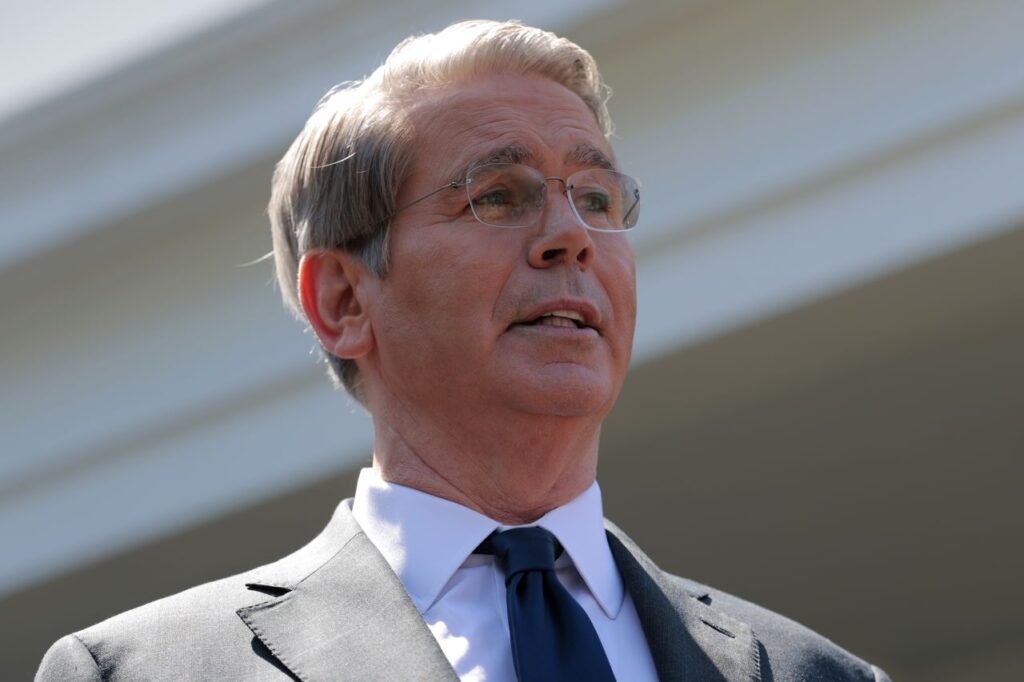
U.S Treasury Secretary Scott Bessent said that the action formed part of a broader U.S. effort to disrupt the financial and operational infrastructure of groups Washington considers linked to political violence and terrorism.
“Far-left extremists, their fronts, and their enablers should be on notice: We will bring the full weight of our economic tools to bear. Political terrorism has no place in our society, and we will continue to cut the financial lifelines of these groups until they are eliminated.”
Scott Bessent
Under the sanctions, all property and interests in property belonging to the designated individuals and organisations that are located in the United States or fall under the possession or control of U.S. persons must be blocked and reported to OFAC. The restrictions also extend to entities that are owned, directly or indirectly, by 50 percent or more by one or more blocked persons.
Unless authorised by OFAC or otherwise exempted, U.S. persons are generally prohibited from engaging in transactions involving the property or interests of sanctioned individuals or organisations. The Treasury Department warned that violations of U.S. sanctions could result in civil or criminal penalties for both American and foreign persons.
Financial institutions and other entities could also face sanctions risks if they engage in certain transactions involving designated or blocked persons.The restrictions prohibit the provision or receipt of funds, goods or services to, from or for the benefit of sanctioned individuals and organisations. Treasury said that the measures were intended to disrupt the networks that allow the targeted groups to operate, coordinate and allegedly support acts of violence across international borders.
The action signals an expansion of Washington’s use of financial sanctions against groups it identifies as belonging to violent far-left extremist networks, alongside its longstanding sanctions programmes targeting organisations linked to other forms of terrorism.
READ ALSO: Zelenskyy Honors Musk for Starlink Role