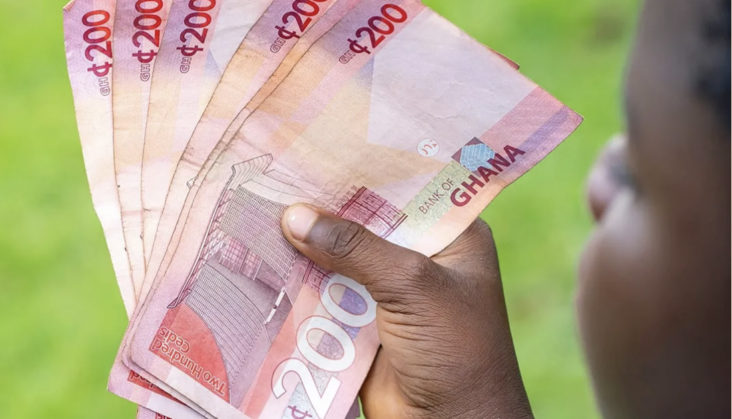
Ghana’s secured credit market expanded sharply in value during the second quarter of 2026 even as fewer security interests were registered, raising questions about how broadly the country’s credit recovery is spreading.
Bank of Ghana data show that secured credit advanced and registered reached GH¢31.5 billion, up 73.4 per cent from GH¢18.2 billion a year earlier and 57.5 per cent above the first quarter.
The increase came despite security-interest registrations falling 32.2 per cent year-on-year to 92,033 from 135,721. Registrations also slipped 4.5 per cent from the first quarter. The combination points to a market in which a much larger value of credit is being secured through fewer registrations, suggesting that larger transactions, rather than simply more borrowing relationships, are driving much of the increase.
That distinction matters because Ghana’s banking data already show a strong lending recovery. Gross loans and advances rose 39.4 per cent year-on-year to GH¢124.3 billion at the end of June, while private businesses and households accounted for 96.2 per cent of bank credit.
The latest Collateral Registry numbers strengthen the evidence that credit conditions are improving, but they also raise a second question: who is receiving the additional financing?
Bigger Transactions Drive the Headline Surge
The Bank of Ghana’s latest Collateral Registry brief said, “Notwithstanding the decline in registration volumes, the total value of secured credit registered during the period increased significantly by 73.4 percent.” Banks dominated by value, accounting for GH¢19.9 billion, or 63.1 per cent, of registered secured credit.
Foreign-controlled banks provided GH¢14.1 billion of the banking-sector total, while indigenous banks registered about GH¢5.7 billion. Indigenous banks nevertheless recorded the faster year-on-year growth, more than doubling their secured lending from GH¢2.7 billion.
The distinction between value and breadth is important for monetary-policy transmission. Stronger aggregate lending can support investment and activity, but its effect on the wider economy depends on whether credit reaches a broad base of productive firms.
Construction Absorbs Nearly One-Third of Credit
Construction received GH¢9.9 billion in secured credit during the quarter, equivalent to 31.4 per cent of the total and roughly ten times the GH¢989 million recorded a year earlier. Commerce and finance followed with GH¢8.1 billion, while services received GH¢4.4 billion.
Those three areas absorbed roughly seven out of every ten cedis of registered secured credit. By comparison, agriculture, forestry and fishing received GH¢785 million, while manufacturing accounted for GH¢1.4 billion.
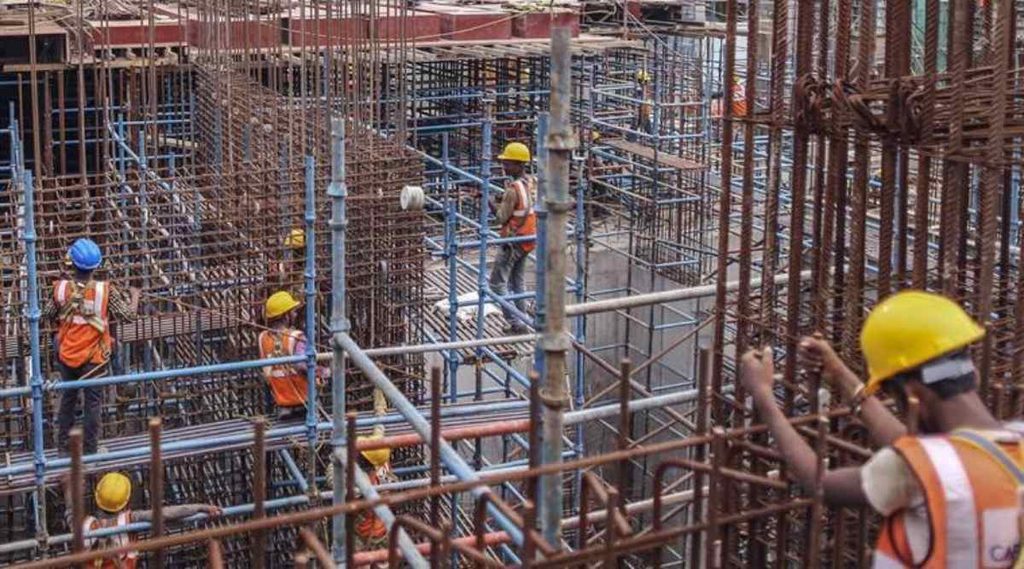
The construction jump may support housing, commercial property and infrastructure-linked activity, with spillovers to cement, transport and labour. But it also cautions against reading the headline as evidence of economy-wide credit deepening. A small number of large facilities can lift total credit value sharply without producing the same breadth of access as many smaller business loans.
SME Numbers Tell More Complicated Story
Large enterprises received GH¢13.8 billion, representing 43.9 per cent of all secured credit. SMEs obtained GH¢3.8 billion, up 28.9 per cent from the same quarter of 2025, but their secured credit declined compared with the first quarter of this year.
That mixed performance is because SMEs typically face greater financing constraints and account for a large share of employment and commercial activity. A recovery dominated by larger enterprises can still support growth, but its transmission into job creation, supplier networks and smaller businesses may be less evenly distributed.
The Bank of Ghana has already urged banks to convert improving financial conditions into financing for SMEs, agriculture and other productive sectors. The new data suggest that the issue is increasingly not whether credit is recovering in aggregate, but whether that recovery is broad enough to support the productive base.
MPC Must Read Beyond the Credit Headline
The briefs arrive days before the Monetary Policy Committee concludes its September meeting on September 24. With inflation at 5.0 per cent and the policy rate at 14 per cent, the Bank must assess how quickly previous easing and improved financial conditions are passing through to borrowers.

Strong growth in secured credit shows that the financial system is responding. Yet falling registration volumes, borrower concentration and the outsized construction share mean the GH¢31.5 billion headline should not be read as proof that access to finance has improved uniformly.
For policymakers, the next stage of monetary transmission is therefore about breadth as much as volume. Falling rates and stronger bank balance sheets will matter most if they produce sustainable financing for productive firms across sectors and sizes, rather than mainly larger secured transactions. Ghana’s credit recovery is clearly gathering value. The harder test is whether it is also gaining reach.
READ ALSO: GES Warns Schools Against Rejecting Students Over Trunk Type