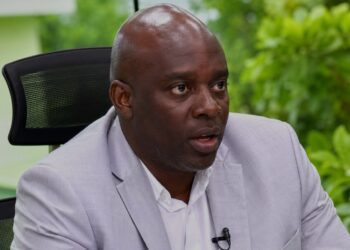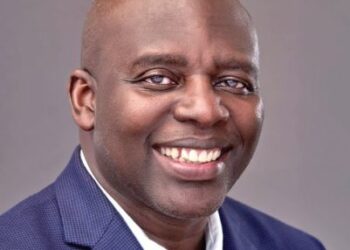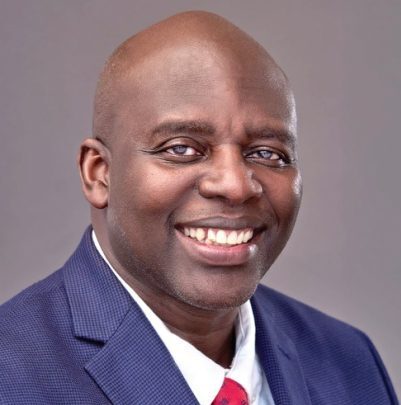
Author: Dr. John Osae-Kwapong, Democracy and Development Fellow, CDD-Ghana, and Project Director, the Democracy Project
The case of a senior nursing officer in Techiman, taken from her home near midnight by security operatives and charged with abetting the publication of false news, has once again drawn the public into a conversation about free speech, the use of insults in politics, and the inconsistent use of state power in the name of law enforcement.
She has pleaded not guilty but remains remanded in custody for two weeks. Before I proceed, let me state unequivocally that I do not, in any way, support the violation of a citizen’s right to due process.
I am reminded of former President Akufo-Addo’s frequent refrain that only when you find yourself in trouble with the law do you come to appreciate why due process matters. The courts will settle the particulars of this case. Former Vice President Bawumia — rightly, in my view — called the arrest “very worrying” and demanded her release.
Legal commentators have questioned the basis of the charges. There is a broader public unease about how inconsistent law enforcement seems to treat uncivil social media commentary. And, predictably, the familiar partisan banter has already surfaced.
Whatever the facts turn out to be, the case raises a triangle of issues I have been thinking about — civility, free speech, and law enforcement. Untangling them, in my view, is one urgent task facing our democracy.
On civility, and how we lost it
I bemoaned, in a recent Daily Graphic opinion piece, what feels like a steady erosion of civility in our public life. By civility I mean something modest: the capacity to disagree, even fiercely, about politics and governance without resorting to intemperate, dehumanising language.
That capacity feels thinner than it used to be. Political actors insult opponents rather than engage their arguments. Social media has become, for some, a conveyor belt for uncivil conduct. And the citizens who consume that content — praising it, sharing it, tapping a like or a love reaction — send their own signal of approval, one that only deepens the erosion.
How did we get here? Part of the answer is structural: social media rewards uncivil conduct. Anonymity and distance also strip away the social cost that once restrained what people were willing to say about each other. Part of it is political: when leaders tacitly or directly sanction uncivil speech for political opponents, that permission fuels the erosion of civility.
Recognising the problem is easier than fixing it, and I want to resist the temptation of calling for “more civility” as though that alone settles this. It doesn’t. Because the harder question — and the one this case forces on us — is what happens when incivility collides with the other two values in this triangle: free speech and law enforcement.
Is Free Speech Absolute?
Democracies take pride in guaranteeing citizens broad latitude to say what they think. This sometimes includes things that offend, provoke, or even wound. But I am unaware of any democracy that treats free speech as an unrestricted licence to do or say anything at all.
If it were, we would have no laws against defamation, no restrictions on speech that incites violence or disturbs the public peace, no liability for publishing falsehoods that damage reputations. Every democracy draws lines. What we are wrestling with is where, and on what principle, those lines get drawn.
I admit that uncivil speech — speech that is rude, personal, offensive or even cruel — is not the same thing as unlawful speech. By my standards – an Akuapem man from Akropong – there are far too many instances of uncivil political commentary in public debates.
However, much of it is also protected speech. Chief Justice John Roberts of the US Supreme Court made this point in a 2011 ruling: “Speech is powerful. It can stir people to action, move them to tears of both joy and sorrow, and—as it did here—inflict great pain. On the facts before us, we cannot react to that pain by punishing the speaker. As a Nation we have chosen a different course—to protect even hurtful speech on public issues to ensure that we do not stifle public debate.”
As someone who has been hurt by speech before — falsely accused of being a spy for one of the country’s two political parties — it is easy to dismiss Chief Justice Roberts’s position. And even when some are quick to say, “go to court if you feel defamed,” we all know that the exhausting nature of the legal process can itself serve as a deterrent.
That, however, is the “painful beauty” of democracy – resisting the temptation to punish speech that wounds. Here is the real test, though for when a speaker may be punished: does the speech cross into a much narrower category — a false claim presented as fact that damages people or institutions, a genuine incitement to violence, or a real threat to public safety?
Law enforcement’s role — and its burden
Ghana’s laws reflect the state’s attempt to walk the fine line between protecting free-speech rights while at the same time policing speech that crosses into this narrower category. Determining that uncivil speech has crossed into the territory of unprotected and punishable speech requires the state to make judgment calls.
In doing so, the state must exercise restraint and real discipline, because it is not, in practice, an easy line to see. And that explains the heightened scrutiny when the state moves in to punish speech it deems to have crossed the line.
The police have a legitimate, necessary role here. No one seriously disputes that the state has the authority to enforce the law. But that authority comes with obligations: due process, respect for fundamental human rights, and balance between the alleged offence and the response to it.
And when the conduct of law enforcement creates doubts in the minds of reasonable citizens, it raises the question of whether the state is responding to a genuine legal violation or to uncivil speech it disapproves of.
This is precisely why the burden is always on the state to demonstrate that it is responding to a legitimate violation of the law. When the state’s own conduct — not just the speech it is responding to — becomes part of the controversy, then we must pause and ask why. How, in practice, should the state decide when uncivil speech has crossed from protected into unlawful conduct?
Here is a three-pronged test: a) demonstration of the specific crime, supported by facts; b) a plausible connection to real harm; and c) consistency — the same standard applied to everyone. The last part matters most, because inconsistent enforcement, more than we might think, is what turns legitimate law enforcement into a partisan grievance.
Where Do We Go from Here?
Every time a case like this arises, it gets absorbed almost instantly into a partisan duel. One side treats it as evidence of a democracy under attack and an assault on free speech. The other treats it as a legitimate law enforcement activity and quickly draws parallels to similar conduct in the past.
In my view, both framings avoid the more difficult question: what standard should govern speech, civility, and enforcement, regardless of who is in power or who is being criticized?
I don’t think we can legislate our way to civility. You cannot mandate respectful disagreement, and trying to may backfire — we would end up with vague laws carrying wide administrative discretion, open to being used without restraint.
But there are things we can do. Institutional actors — police, prosecutors, and the judiciary — need to exercise visible restraint and consistency, precisely because citizens’ trust in them depends on being seen as fair, impartial arbiters in a challenging environment. The last thing we want is a democracy where institutions are seen as partisan instruments.
Law enforcement, in particular, must hold itself to the highest standards of professional conduct. Partisans regularly accuse state institutions of doing the bidding of whoever holds power — yet today’s harshest critics of those institutions were, not long ago, their staunchest defenders, and vice versa.
When that alternation between critic and defender tracks so neatly with the alternation of political power, the problem isn’t partisan inconsistency. It’s that our institutions haven’t been professionalized enough to resist being used for partisan ends. I hope that’s not the case. But partisans keep giving me reason to think it is.
We must also find a way to reinforce a culture where incivility carries a social cost even where it carries no legal one. What if political parties disassociated themselves from the purveyors of uncivil speech, even when it benefits them?
What if partisans reached some shared agreement on where the line between protected and unprotected speech begins and ends? We don’t have to agree on politics. But our democracy needs consensus on how we resolve this tension.
Whatever one believes about the case of the senior nursing officer, the courts will resolve it. Trust is already low, and asking citizens to trust that process is a hard sell. But the public reaction reveals something instructive: Ghanaians can still recognize state overreach, even against people whose politics they don’t share and whose uncivil conduct they’ll never approve of.
Ultimately, the real test of Ghana’s democracy is not whether the state can deal with the purveyors of uncivil speech — any state can do that. The test is whether the state can restrain itself from “punishing speech” it deems uncivil and prosecute only where the law can be shown to have been broken.
Until our institutions can pass that test consistently, we will keep returning to this argument — if not under this government, then under the next one, whenever power changes hands again.
READ ALSO: Ablakwa Asks Auditor-General To Audit All Evacuations Since 2017