
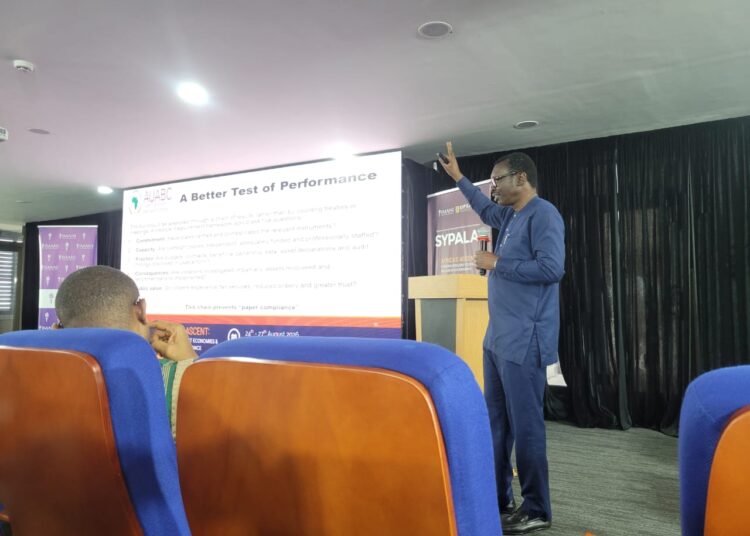
The Chairperson of the African Union Advisory Board Against Corruption, Honourable Kwami Edem Senanu, has identified weak implementation, accountability gaps and limited transparency as major obstacles to Africa’s development, telling participants at the Students and Young Professionals African Liberty Academy that the continent continues to struggle translating its own commitments into measurable results.
Speaking on day two of the four-day SYPALA 2026 event, Mr Senanu said the African Union has built an extensive architecture of frameworks and initiatives meant to drive development and integration, but argued that the gap between what has been agreed and what has actually been delivered remains the continent’s defining weakness.
Mr Senanu called for stronger implementation mechanisms built around regular reporting and review, arguing that Africa’s development challenge is less a shortage of policy than a shortage of follow-through.
“That is an implementation where we need to make sure that reports are in, and review what has been done and executed,” he said, framing the absence of consistent monitoring as a structural gap that allows commitments to go unfulfilled without consequence.
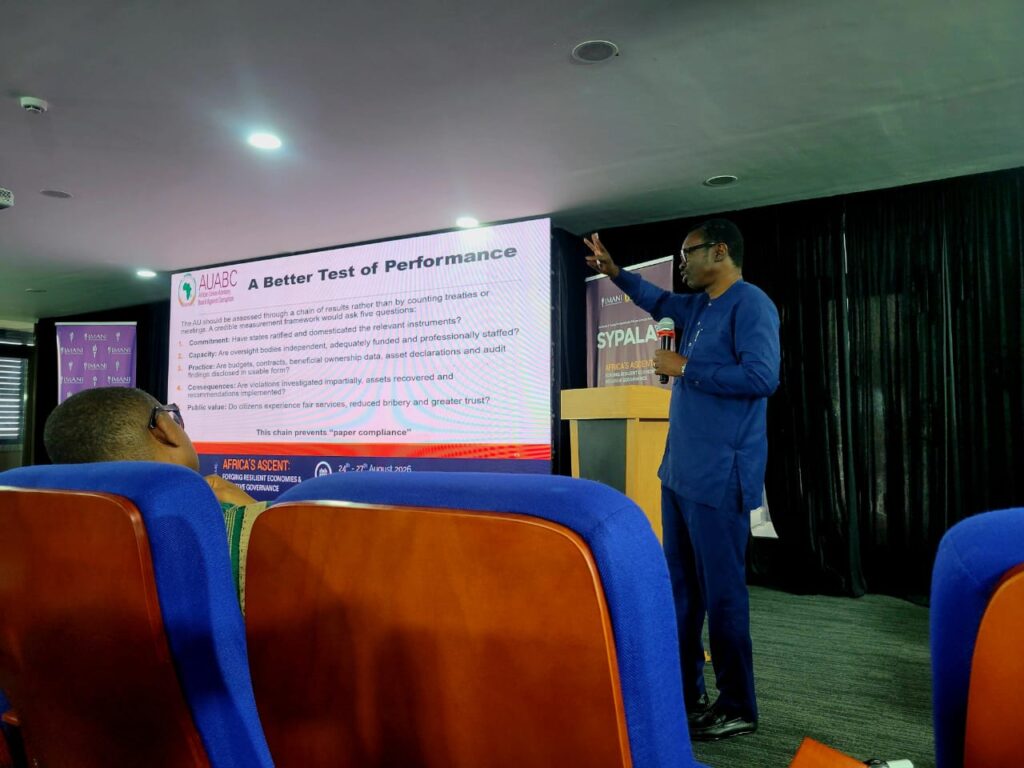
Economic Outcomes “Still Lacking”
Turning to the continent’s economic performance, Mr Senanu said the results African countries have produced fall well short of what the AU itself has set out to achieve.
“Now, outcomes, in general, in relation to what we have set out for economic development as a continent, is still lacking. We are not seeing the kind of economic development that is expected.”
Edem Senanu
He cited the African Continental Free Trade Area as a specific example of a well-designed framework whose implementation has lagged its ambitions, particularly on intra-African trade.
He argued that effective execution of the agreement should already have produced visible improvements in trade volumes and economic cooperation among African states. “If we had done a good job, we should have ensured that by now trade is moving, results are being seen,” he said.
A Call for Citizen-Level Transparency
Mr Senanu’s sharpest criticism was reserved for the gap between continental institutions and the citizens those institutions are meant to serve.
He argued that ordinary Africans should be able to easily track what the AU is doing and how much progress it has made, describing that kind of accessible transparency as still largely absent. “Finally, transparency, especially at the citizen level, so that citizens of Africa can easily see what the AU is doing and how far we have come,” he said.
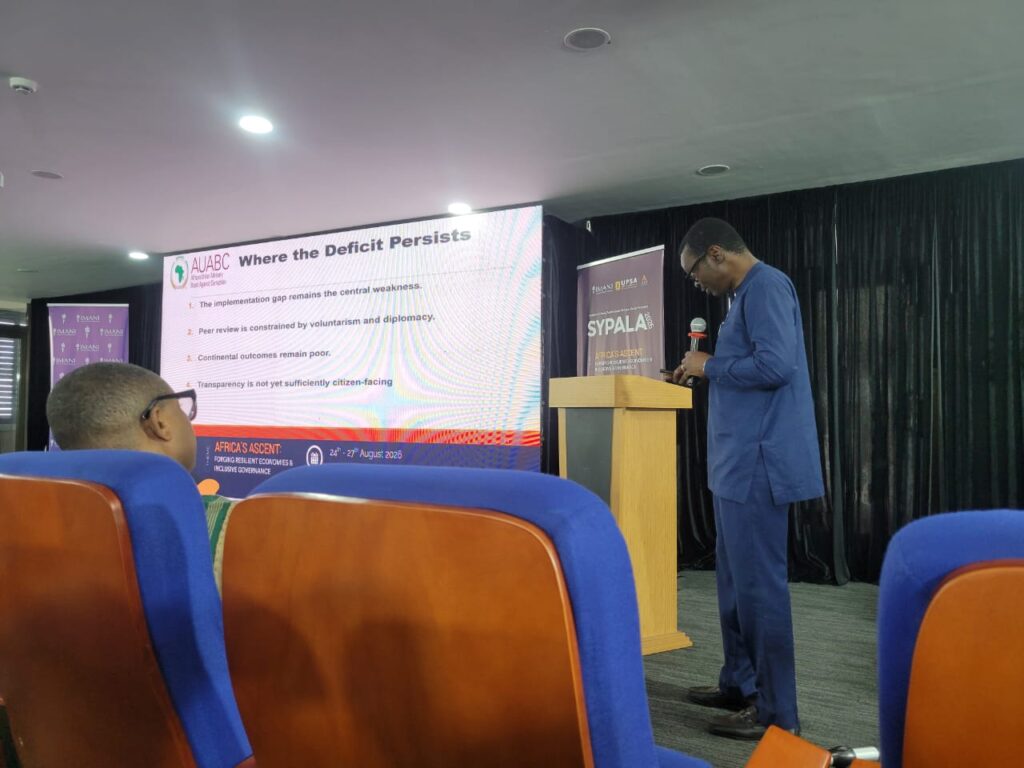
He said the AU has not done enough to build the channels, platforms and public spaces that would let ordinary citizens follow the implementation of continental programmes and independently assess their results.
“I don’t think that we have done enough in terms of creating the channels, platforms, and spaces where ordinary citizens can easily know what has been achieved,” he added.
A Consistent Theme From the AUABC Chair
Mr Senanu’s remarks at SYPALA 2026 extend an argument he has pressed in other settings this year.
Speaking in Accra in July at a regional convening on the financialisation of politics in Africa, jointly organised by the AUABC, CDD-Ghana, the Open Society Foundations and Transparency International. he identified opaque and unregulated political party financing as one of the principal entry points for corruption, illicit financial flows and state capture on the continent, warning that unregulated campaign finance risks letting elections reflect the interests of hidden financiers rather than the will of citizens.
Mr Senanu, a Ghanaian management and development consultant, was re-elected to a second term as AUABC Chairperson on June 16, 2025, having first joined the Board in April 2023. He also serves as Co-Chair of the Citizens Movement Against Corruption and Executive Director of Africa 2000 Network Ghana.
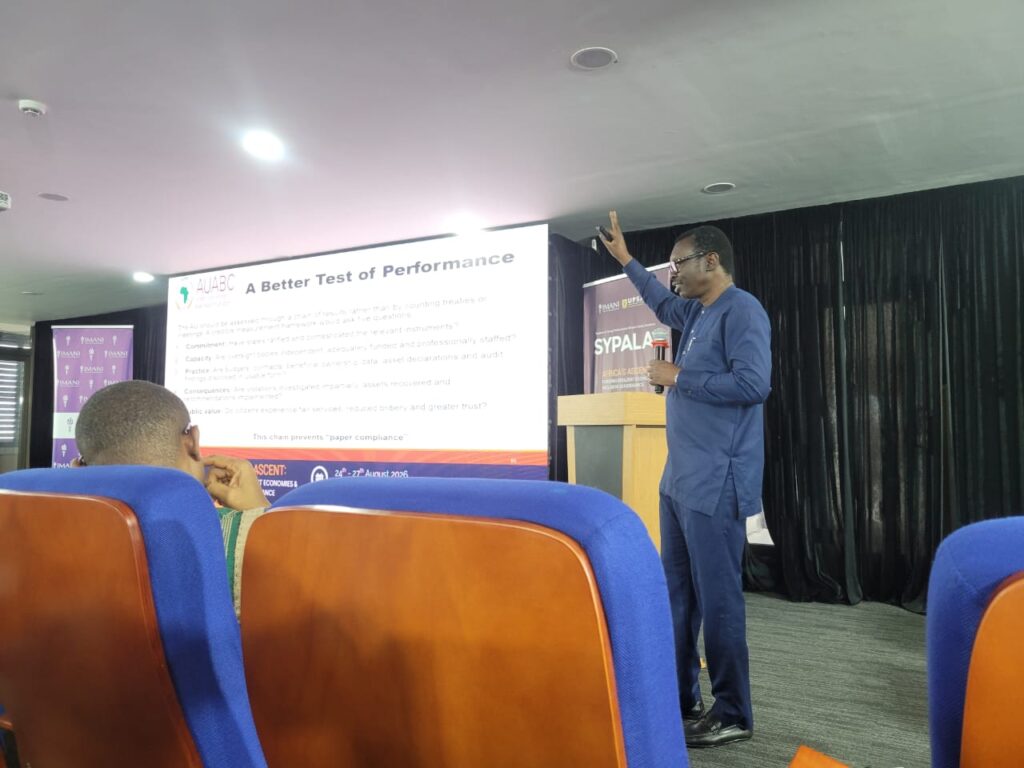
His remarks returned repeatedly to a single underlying argument: that Africa’s institutions have generally succeeded at the design stage, producing conventions, frameworks and agreements, while consistently underperforming at the delivery stage, where reporting, review and public accountability are meant to turn those commitments into results that citizens can actually see and measure.
READ ALSO: US Sanctions Three Groups Over Far-Left Extremism