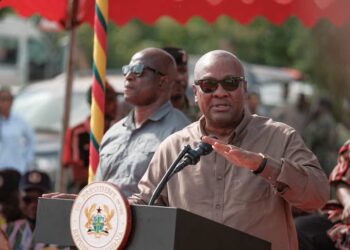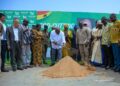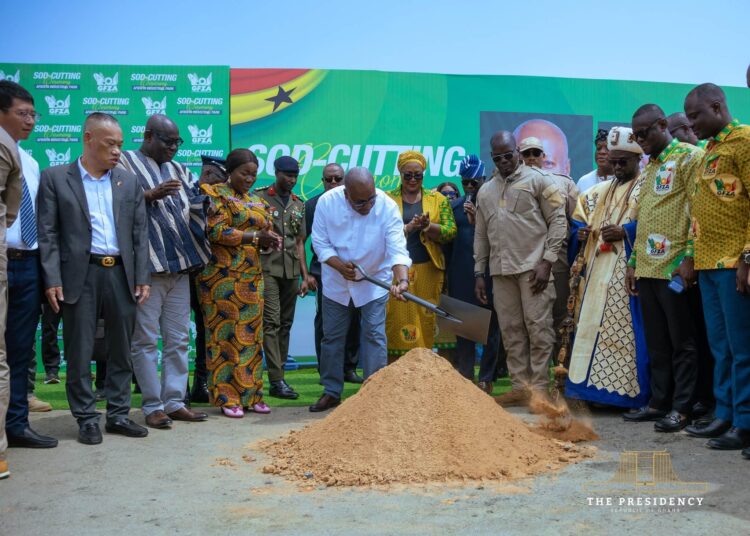
President John Dramani Mahama has broken ground for the 1,238-acre Afienya Industrial Park in Greater Accra, a project planned to host more than 120 enterprises. He performed the ceremony on Thursday, October 15, 2026, and presented the park as a base for manufacturing and exports.
The park lies along the Eastern Corridor Road, within reach of the Port of Tema, and the Tema-Mpakadan railway line passes through the enclave. President Mahama explained that the government has secured the site and now expects private investors to build on it.
“Establish your businesses here as a launching pad to reach customers across Africa and beyond.”
President John Dramani Mahama
President Mahama described the location as a significant advantage. Manufacturers can move imported inputs to their factories and send finished products to the Port of Tema. They can also ship exports to regional and international markets by rail or along the Eastern Corridor Road.
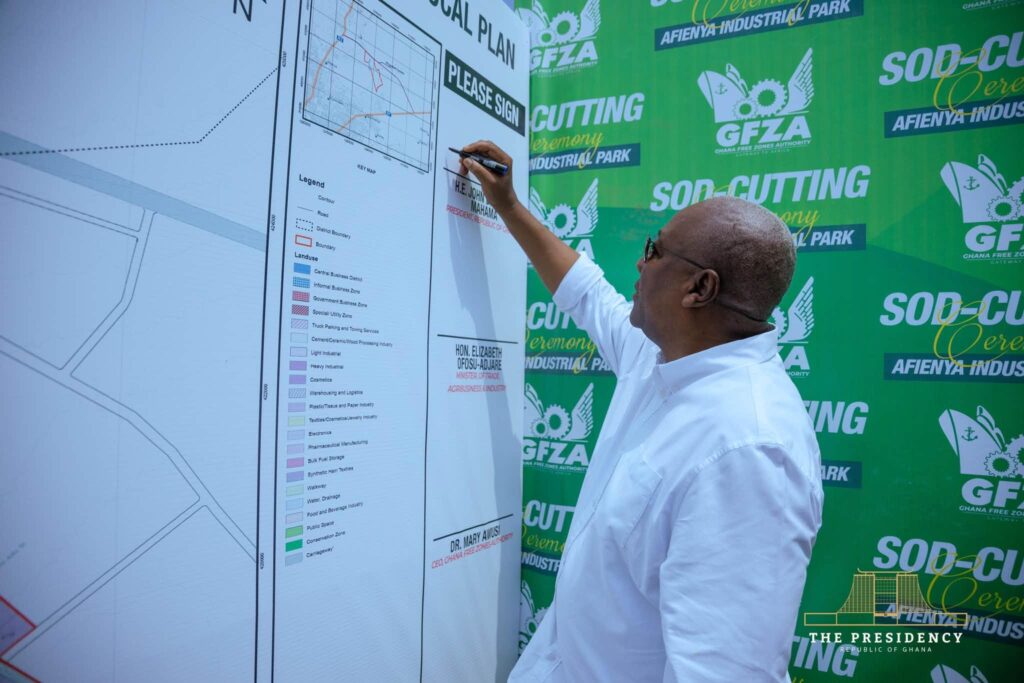
He then added a caution: “Location alone, however, will not make an industrial park successful.” Investors need reliable power, water, roads, drainage, waste treatment and telecommunications, he explained, and part of the financing for that infrastructure will come from the New Economy Programme.
Plots, Factory Shells and Shared Services
Afienya will offer service plots and ready-to-use factory shells backed by essential infrastructure. President Mahama stated that the aim is to “reduce the time and cost between an investor’s decision to establish a business and the start of production.”
The development also allows co-investment in infrastructure, including embedded power generation and distribution, telecommunications and warehousing. Smaller firms can rent that capacity rather than build it themselves.
President Mahama directed the Ghana Free Zones Authority to write clear service standards into its concession agreements and to publish them. Investors, he insisted, should know which services to expect, who must deliver them and how performance will be assessed.
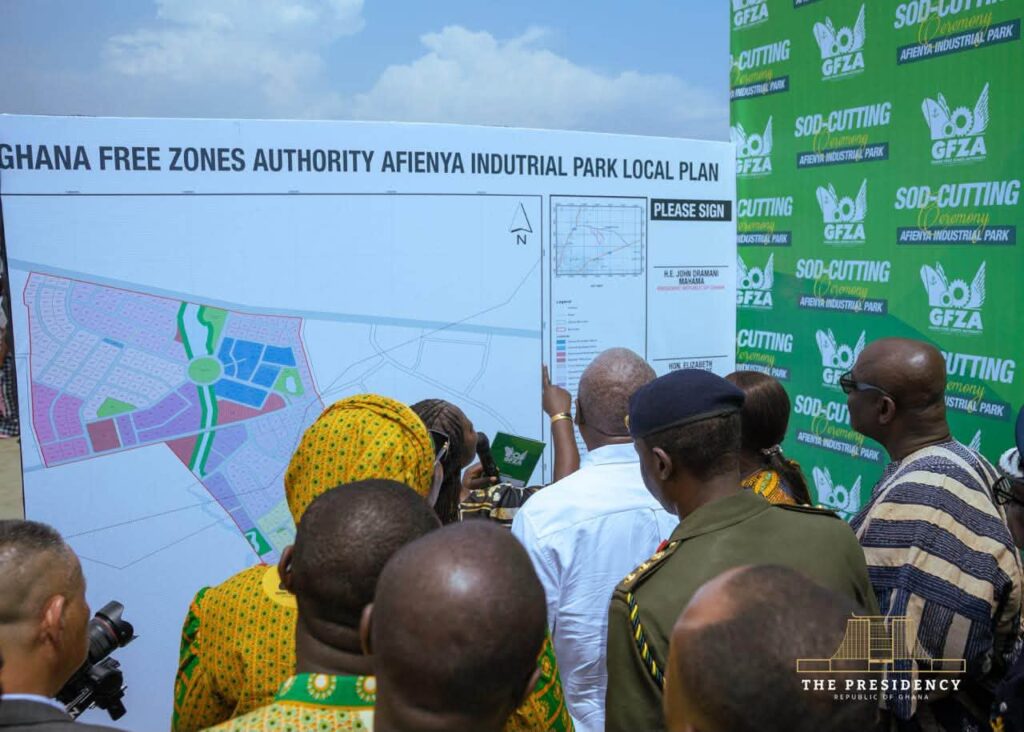
The President listed cocoa processing, cashew and oil palm processing, textiles and garments, pharmaceuticals, medical consumables, automotive components and assembly, and light engineering among the priority sectors.
The park will also create openings in logistics, data services and business process outsourcing, with dedicated space for renewable energy and green manufacturing. “This park is designed to add greater value to Ghana’s resources and broaden Ghana’s industrial base.”
The Ministry of Trade, Agribusiness and Industry will lead the development of these sectors with the Free Zones Authority and private investors.
Wider Market Access Across Africa
President Mahama pointed to the African Continental Free Trade Area as a major opportunity for enterprises based at Afienya. Ghana has an important role in advancing continental trade, he stressed, and the country must match that role with the capacity to produce goods that African consumers and businesses want to buy.
Access to a wider market brings its own demands. Competitive pricing, consistent quality and reliable delivery must support it, he noted, and manufacturers must be equipped to meet local and regional standards.
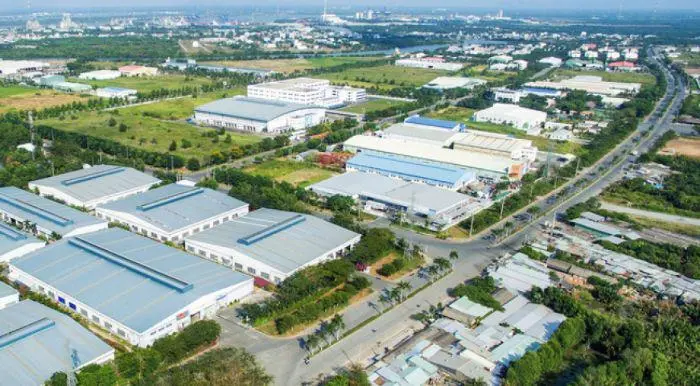
The President directed the Minister of Trade, Agribusiness and Industry to lead a targeted investment outreach programme in key markets, working with the Free Zones Authority and the private sector.
He praised both institutions with a story from his own travels. Wherever he goes abroad, he related, he meets them already on the ground. When he asks what they are doing there, they answer that they came on an investment outreach to look for investors.
He then set a measure for the effort. “The test of our efforts will be businesses operating, Ghanaians getting employment, and products reaching the wider African market,” President Mahama stated.
Responding to the Chief Executive of the Free Zones Authority, he disclosed that he has asked for a meeting on the new Customs Act once the Minister of Finance returns from the World Bank and IMF meetings in Thailand.
The meeting will examine how the Act affects the free zones. If corrections are needed, the government will send amendments to Parliament.
A Link to Ghana’s Industrial Past
President Mahama placed the project in a longer story. Ghana is only months away from the 70th anniversary of its independence, and he recalled that the generation that built the Tema Industrial Area understood that political independence needed industrial capacity beneath it.
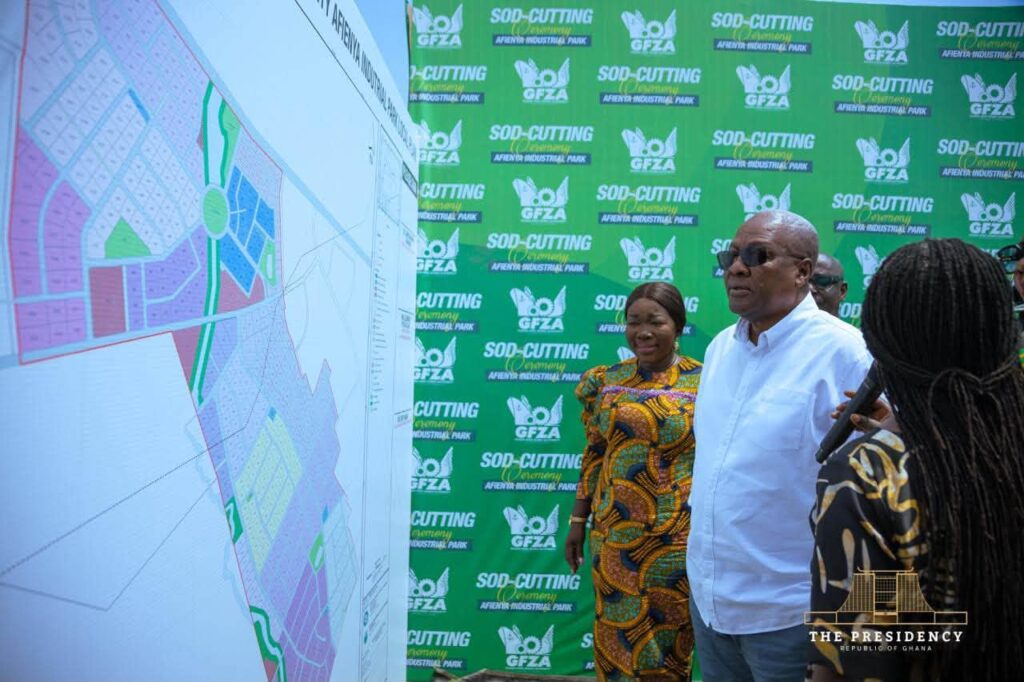
Today’s leaders, he argued, must carry that work forward in ways that suit the present economy. He closed by wishing that Afienya becomes a place where Ghanaian talent, enterprise and resources converge to create lasting prosperity.
READ ALSO: African Energy Leaders Push South-South Oil and Gas Partnerships