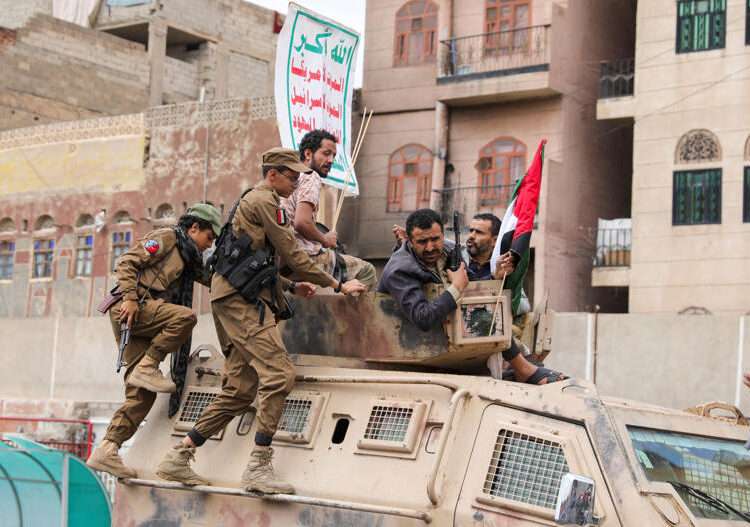
Saudi Arabia has accused Iran of encouraging an escalation in attacks by Yemen’s Houthi rebels, warning that Tehran appears unwilling to make the concessions needed to resolve the wider conflict involving the United States.
Rayed Krimly, Deputy Minister for public diplomacy at Saudi Arabia’s Foreign Ministry, made the remarks during a rare briefing with journalists following more than a week of Houthi attacks targeting critical infrastructure across the kingdom.
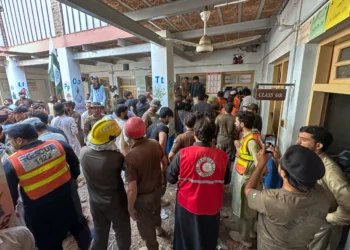
The attacks have targeted Riyadh’s international airport, the headquarters of Saudi oil giant Aramco, and other aviation, oil and military facilities. At least 19 people, including foreign nationals, have been killed, in what Krimly described as war crimes. “We think the escalation by the Houthis at this later stage of the conflict is encouraged by Iran,” Krimly said.

He accused Tehran of continuing to arm, train and support the Houthi militia in violation of relevant United Nations Security Council resolutions and its commitments under the Beijing agreement.
The agreement, reached in 2023, restored diplomatic relations between Saudi Arabia and Iran after a seven-year rupture. The latest accusations raise questions about the durability of that rapprochement as the regional conflict intensifies.
A Spokesperson for the Saudi-led coalition fighting the Houthis said today that King Khalid International Airport in Riyadh had been targeted 20 times by the rebels this month alone.
The intensifying attacks have exposed Saudi Arabia’s challenges in intercepting incoming strikes as the conflict opens another front in the wider Iran war. They have also heightened concerns in global markets and strengthened Riyadh’s appeals to allies, including the United States, for additional military assistance.
Houthis Reject Saudi Arabia’s Negotiation Efforts
Krimly said that Saudi Arabia had attempted to engage the Houthis diplomatically before the latest escalation, reaching out weeks earlier to propose a meeting in Oman to resolve outstanding differences and end the fighting.
However, he said that the rebels refused to participate in the proposed discussions.
Days later, the Houthis made a significant territorial advance along Yemen’s Red Sea coast, seizing areas near the Bab el-Mandeb Strait. The strategic waterway provides an alternative shipping route to the Strait of Hormuz, another critical passage for global maritime trade.
Earlier this month, the Saudi-led coalition launched a major military offensive in Yemen to retake the areas seized by the rebels.
The developments have intensified tensions between Saudi Arabia and Iran, longstanding regional rivals whose relationship had improved following a diplomatic agreement.
Although Iran’s government has indicated an openness to dialogue aimed at ending the fighting, Krimly stated that Saudi Arabia had not requested Tehran’s mediation. “We maintain direct channels of communication with the Houthis, and Oman serves as a facilitator of these talks and not as a mediator,” he said.
Krimly added that Saudi Arabia also maintained direct communication with Iran. The Foreign Ministers of the two countries had spoken by telephone at least once during the attacks on Riyadh’s airport.
Saudi Arabia Supports Efforts To Resume US-Iran Talks
Beyond the Houthi attacks, Saudi Arabia is continuing to support diplomatic efforts to contain the broader conflict involving Iran and the United States.
Krimly noted that the kingdom backed mediation initiatives led by Qatar and Pakistan, which are seeking to keep Washington and Tehran engaged in negotiations.
According to the Saudi official, mediators are working to address two central issues that could help reduce tensions and establish a framework for further discussions.
The first concerns the safe passage of ships through the Strait of Hormuz. The proposed arrangement would involve ensuring maritime navigation through the strategic waterway in exchange for ending the US blockade of Iranian ports.

The blockade is intended to restrict Iran’s oil exports and increase economic pressure on Tehran.
The Strait of Hormuz is a vital route for international energy shipments, making disruptions in the waterway a significant concern for global markets and countries dependent on oil supplies from the region.
The second issue involves securing a “clearer commitment” on the process and scope of negotiations over Iran’s nuclear programme.
Krimly did not indicate whether the parties had made substantial progress on either issue. However, his remarks highlighted the importance Saudi Arabia attaches to diplomatic efforts to prevent further regional escalation.
The kingdom’s position reflects the challenges it faces on multiple fronts: countering attacks on its territory, confronting the expanding role of the Houthis in Yemen and supporting efforts to bring Washington and Tehran back to the negotiating table.
With attacks continuing to threaten Saudi infrastructure and strategic maritime routes, the outcome of the diplomatic initiatives could have significant implications for regional security and international energy markets.
READ ALSO: Trump’s Energy Truce Collapses As Drone Attacks Intensify