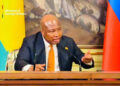
Pakistani Prime Minister, Shehbaz Sharif has condemned Houthi attacks against Saudi Arabia, reaffirming Islamabad’s support for the kingdom as missile strikes disrupt air travel and raise concerns over the safety of civilian infrastructure.
In a social media statement, Sharif bemoaned the reported attacks attributed to Yemen’s Houthi movement on King Khalid International Airport in Riyadh and Abha International Airport in southwestern Saudi Arabia, which he said had resulted in deaths and injuries among civilians.
Describing the incidents as a threat to the kingdom’s security, Sharif said, “I strongly condemn the repeated terrorist attacks by the Houthi militia against the Kingdom of Saudi Arabia.”
The Pakistani leader commended Saudi Arabia’s armed forces and the coalition supporting the kingdom for intercepting multiple ballistic missiles. He praised their efforts to protect civilians and safeguard Saudi territory against further attacks.
Sharif’s statement came after the Houthis claimed responsibility for a ballistic missile strike targeting Riyadh airport, where witnesses reported explosions, including a major blast at King Khalid International Airport. The reported attack badly damaged an aircraft and prompted some international airlines to suspend flights to the Saudi capital.

Lufthansa and Air India confirmed that they were suspending services to Riyadh following the incidents. Data compiled by aviation analytics company Cirium showed that almost half of departures from the airport had been cancelled by 1500 GMT on Thursday. The data also indicated that a further 31 cancellations were expected across Saudi airports on Friday.
The disruption highlighted the potential impact of the escalating attacks on civilian aviation and international travel, particularly as airlines reassessed operations in response to the security situation.
Saudi authorities said on Wednesday that three people had been killed during attacks on Riyadh airport and Abha airport earlier in the week. Separately, Saudi officials reported that debris from an intercepted missile had struck a kindergarten and a medical complex in Riyadh.
The incidents have intensified concerns about the risks posed to civilian facilities as the conflict involving the Houthis and Saudi-backed forces continues.
Sharif Reaffirms Pakistan’s Commitment To Riyadh’s Security
Sharif also reiterated Pakistan’s commitment to its relationship with Saudi Arabia, saying, “Pakistan stands in unwavering solidarity with the leadership and people of our brotherly Kingdom of Saudi Arabia,” he said.
“In line with the Makkah Joint Defence Agreement, and recent decisions taken by its Strategic Political and Defense Committee, our commitment to the Kingdom’s sovereignty, territorial integrity and security is resolute. We also fully support Saudi Arabia’s legitimate right to defend its people and protect its cities and vital infrastructure.”
Shehbaz Sharif
Pakistan Urges Halt In Houthi Attacks
Also, the Pakistani Prime Minister asserted that the Houthi militia “must immediately cease these attacks,” adding that Pakistan would continue to stand alongside Saudi Arabia in the face of security threats.

On Thursday, the Houthis stepped up their campaign against Saudi Arabia, seeking to disrupt the kingdom’s airspace and warning workers to stay away from energy installations that the group said would be targeted.
The threats against energy infrastructure added another dimension to the security concerns facing Saudi Arabia, given the importance of the kingdom’s energy facilities to its economy and international markets.
The Houthis say that their attacks are a response to Saudi Arabia’s support for government forces in Yemen’s renewed civil war. Riyadh, meanwhile, says that it is backing an offensive by Yemen’s internationally recognised government to regain territory held by the movement.
The conflict has seen shifting territorial gains, with the Houthis making rapid advances across Yemen’s coastal plain over the past month. The group appeared to gain further ground in the country’s southwest on Wednesday as its forces approached the city of Taiz.
The latest developments underscore the connection between the fighting in Yemen and the wider security situation in neighbouring Saudi Arabia. The missile attacks and threats against infrastructure have raised concerns about the potential for further disruption to aviation and civilian activities.
For Pakistan, the developments have prompted a renewed public declaration of support for Riyadh. Sharif’s statement emphasised the importance of the countries’ defence relationship and Islamabad’s position that Saudi Arabia has the right to protect its people and territory.
However, the immediate outlook remains uncertain as the Houthis continue to threaten Saudi infrastructure and airlines respond to the reported security risks. The extent of further disruption will depend on developments on the ground and the ability of Saudi forces to prevent additional attacks.
The latest episode sheds light on the growing security pressures on Saudi Arabia as its involvement in Yemen’s conflict continues to intersect with missile attacks, threats to critical infrastructure and disruptions to international air travel.