South Korea’s Education Minister, Choi Kyo-jin has resigned following an artificial intelligence-assisted cheating scandal that prompted an unprecedented security crackdown ahead of the country’s highly competitive university entrance examination.
Choi announced his resignation after Thursday’s eight-hour College Scholastic Ability Test, commonly known as the suneung, saying that he accepted responsibility for what he described as inadequate preparations to prevent examination misconduct.
“The exam concluded without any major incidents … However, as the minister in charge, I do not believe I am immune from public criticism that we failed to prepare adequately in advance.
“Now that the exam is over, I take full responsibility and hereby offer my resignation.”
Choi Kyo-jin
According to the presidential office, President Lee Jae Myung accepted the resignation.

The controversy began last Sunday when the top scorer in a national tax accountancy examination admitted to using a concealed miniature camera and smartphone to obtain a near-perfect result. The confession came just four days before the suneung, intensifying public concerns about the potential use of artificial intelligence to undermine the integrity of high-stakes examinations.
AI Cheating Scandal Triggers Security Crackdown
The cheating case emerged after the top-performing candidate in the national tax accountancy examination confessed to photographing examination questions with a hidden microcamera and sending them to an artificial intelligence system for answers.
According to a video published on his lawyer’s YouTube account, the candidate then accessed the answers through a smartphone. “I cheated in the tax accountant exam,” he said, adding, “My top placing is not the result of legitimate effort.”
The admission raised concerns about the ability of artificial intelligence and concealed digital devices to facilitate cheating in examinations that play a major role in determining educational and professional opportunities.
With the university entrance examination approaching, authorities moved quickly to strengthen security at testing centres.
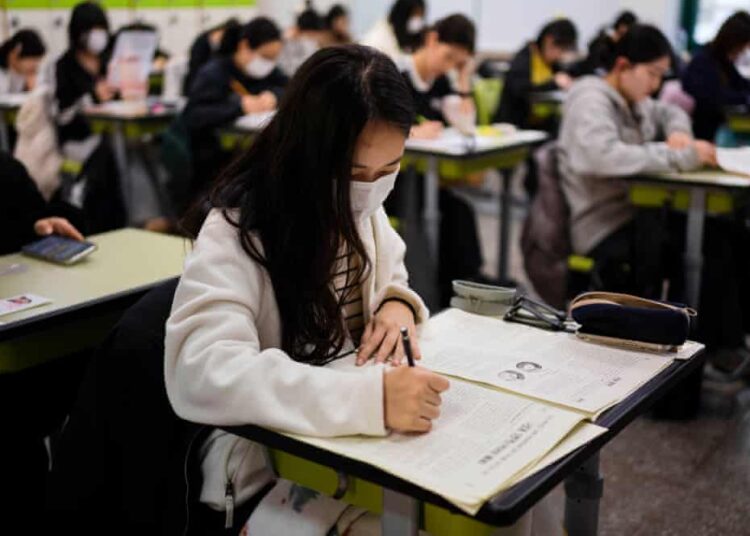
The government doubled the number of examination supervisors and introduced restrictions on electronic devices. Public Wi-Fi was blocked in examination areas, while candidates were instructed to arrive with pencils only. Erasers were supplied by examination centres to reduce the possibility of students concealing digital equipment in stationery.
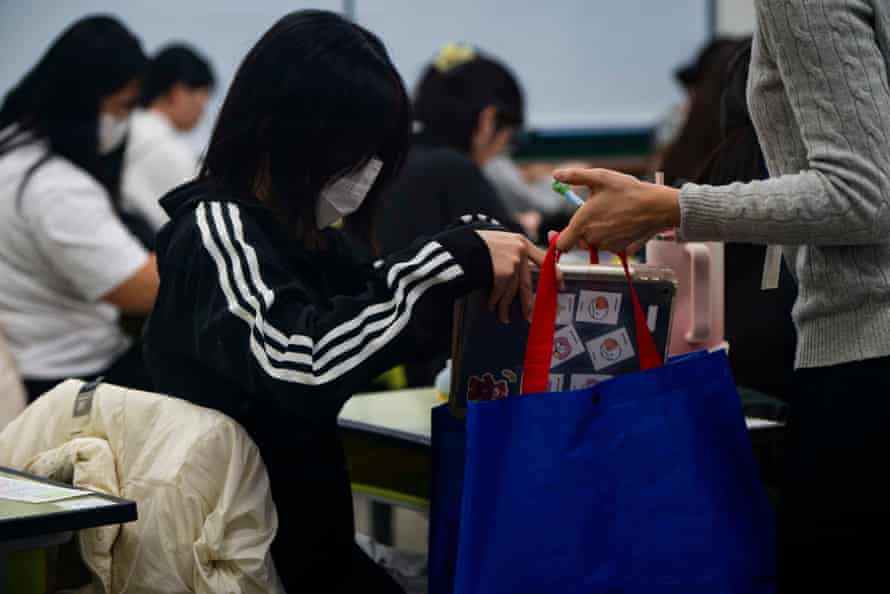
Authorities also introduced restrictions on clothing. Candidates were advised to avoid garments with buttons, while those who wore them were required to have stickers placed over the buttons to prevent the use of concealed cameras.
Additional inspections covered candidates’ glasses, watches, collars and sleeves, with officials looking for hidden recording devices.
Students were also required to switch off and surrender smart devices before entering examination rooms. Bags left in corridors were checked for electronic devices that might still be switched on.
In a further measure, emergency alerts were sent to phones across the country. The alerts sounded at full volume and could not be silenced, allowing officials to identify devices that had not been surrendered.
The government also offered a reward of at least $75,000 for information about cheating or examination misconduct, while promising reduced penalties for individuals who reported accomplices.
111 Misconduct Cases Identified During Examination
South Korean officials disclosed that 111 cases of misconduct involving electronic devices were identified during Thursday’s examination, with nearly half detected through the emergency alert system.
The measures formed part of a broader effort to protect the credibility of an examination widely regarded as one of the most consequential events in South Korea’s education system.
The suneung takes place over approximately eight hours and determines which universities candidates can attend, with significant implications for their future education and employment prospects.
Admission to prestigious universities is widely associated with access to well-paid jobs and higher social standing in the highly competitive country.
South Korea routinely introduces exceptional arrangements to ensure the examination proceeds without disruption. Aircraft take-offs and landings are rescheduled during the 25-minute English listening test to minimise noise, while artillery exercises and tank movements are suspended.
The stock market also opens an hour later than usual, and vehicles are prevented from approaching within 200 metres of examination centres.
This year’s additional security measures reflected heightened concerns about the use of technology to circumvent examination rules.
A high-school student had also filed a constitutional petition challenging the government’s decision to proceed with the examination as scheduled. However, a court rejected the request, citing insufficient evidence of irreparable harm.
Under the tightened rules, students caught cheating can be prohibited from retaking the examination for 10 years and may also face criminal prosecution.
Minister Faces Criticism Over Preparedness
Choi’s resignation followed mounting criticism of the government’s handling of the scandal, particularly over whether sufficient measures had been introduced early enough to protect the examination.
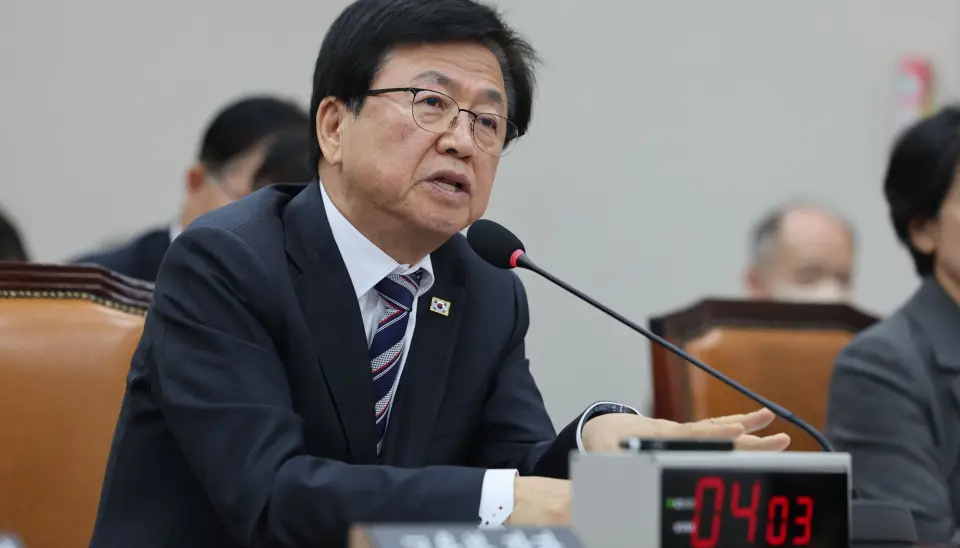
During a parliamentary hearing on Monday, Choi was asked whether he was confident that authorities could identify candidates attempting to cheat on examination day. “Due to my age, I am not confident I could,” the 72-year-old Minister replied.
His response attracted public criticism, adding to questions about the government’s readiness to address the threat posed by concealed electronic devices and AI-assisted cheating.
Choi also did not appear at press conferences in the days leading up to Thursday’s examination. Instead, a vice-minister announced the preventive measures on behalf of the government.
Teachers’ unions criticised the authorities’ response as belated, arguing that the measures should have been introduced earlier.
Although the examination concluded without major incidents, the identification of 111 electronic-device-related misconduct cases showed the scale of the challenge facing examination officials.
Choi’s resignation brings an end to his tenure as Education Minister amid renewed debate about examination security and the growing risks artificial intelligence poses to traditional assessment systems.
The scandal has also highlighted the pressure on South Korea to protect the credibility of an examination that remains central to university admissions, career opportunities and social mobility.