The Ghana Health Service (GHS) began a five-day Yellow Fever Reactive Vaccination Campaign in the Wa West, Sissala East and Sissala West districts of the Upper West Region on Wednesday, 14th October 2026, to halt the spread of an ongoing outbreak.
The campaign, which ends on Sunday, 18th October 2026, aims to vaccinate about 244,869 people aged nine months to 60 years. Trained health workers are stationed at health facilities, public venues and mobile outreach points across the three districts.
The campaign is a reactive vaccination exercise, which means it responds directly to a confirmed outbreak rather than forming part of routine immunisation. Its main objective is to stop the transmission of yellow fever and protect the population from further infection.
The target group is wide. Every resident aged between nine months and 60 years in the three districts is eligible, regardless of previous health-service contact. By covering the whole eligible population within a short window, health authorities aim to build the level of community protection needed to contain the outbreak.
“Vaccination remains the most effective means of preventing yellow fever and controlling outbreaks.”
Ghana Health Service
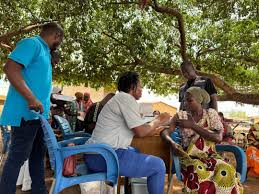
GHS says it has designed the exercise around convenience. Trained health workers have been deployed to health facilities, and temporary vaccination posts have been set up at strategic public locations. These include markets, bus stations, churches and mosques, schools, and other public spaces.
The posts place vaccination in the daily routines of residents, so people can be immunised while trading, travelling, worshipping or attending school, without making a special trip to a clinic.
Mobile Teams Reach Remote Communities
Beyond fixed posts, mobile vaccination teams are visiting settlements, towns and villages across the three districts. This is aimed at residents in remote communities, where distance and transport costs often limit access to health services.
By going to these communities directly, GHS aims to leave no eligible person unvaccinated, since gaps in coverage can allow a virus to keep circulating.
Everyone vaccinated during the campaign receives a yellow vaccination card as official proof of vaccination. GHS is urging the public to keep these cards safe. They may be requested at health facilities and schools, and during travel, where proof of yellow fever vaccination is often required.
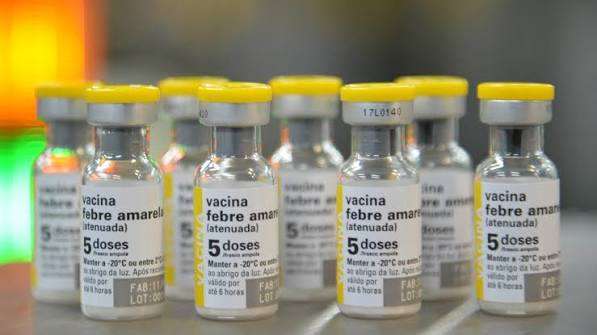
Residents who lose the card could face delays or extra procedures when asked to show proof of immunisation, so the Service advises keeping it in a secure place.
One Dose, Lifelong Protection
GHS stresses that a single dose of the yellow fever vaccine provides lifelong protection. No booster is needed, so every person who takes part in the campaign is protected for life.
Yellow fever is a viral disease spread by infected mosquitoes. It can cause fever, headache, muscle pain and vomiting, and in severe cases jaundice and bleeding. Because there is no specific cure, prevention through vaccination is the most reliable defence.
Controlling mosquito breeding sites, such as stagnant water around homes, supports this effort but cannot replace immunisation.
The Service says the campaign will succeed only if enough people take part. High coverage is what stops transmission, and low turnout leaves room for the virus to spread. GHS is therefore appealing to all eligible persons in Wa West, Sissala East and Sissala West to come forward.
It is also asking parents and guardians to bring their children who are nine months and older, and community leaders, religious heads, teachers and opinion leaders to encourage others to participate.
“Public participation is essential to stopping the spread of the outbreak and protecting the well-being of the population.”
Ghana Health Service
What Residents Should Do
With the campaign now in its second day, residents have until Sunday, 18th October 2026 to be vaccinated. GHS advises people to visit the nearest health facility or temporary vaccination post, or wait for a visiting mobile team.
They should also collect and safely keep the yellow vaccination card after being vaccinated, and encourage family members, neighbours and colleagues who are eligible to be vaccinated.
The campaign runs for just five days, and its success depends on how many residents act before it closes. For the Upper West Region, the exercise is both a response to the current outbreak and a chance to secure lifelong protection for hundreds of thousands of people in a single week. GHS is urging every eligible resident of the three districts to get vaccinated before the campaign ends on Sunday.
READ MORE: CHASS Calls on Government for Emergency Intervention in Education Problems