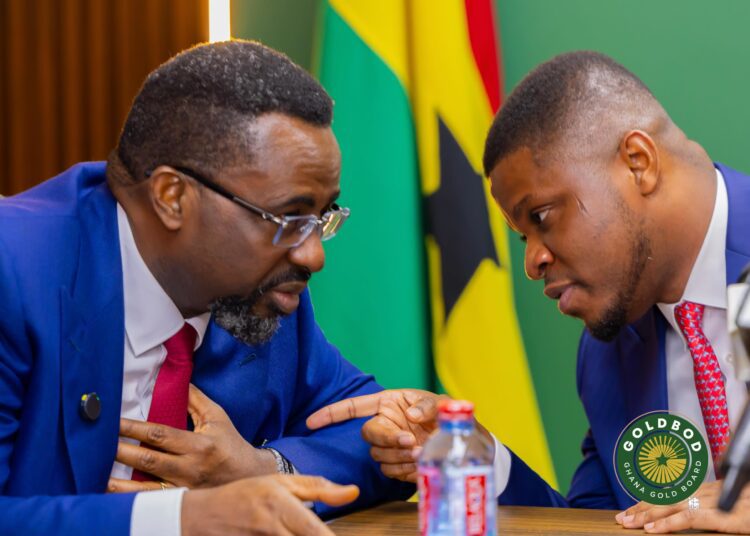
Dr Johnson Asiama, the Governor of the Bank of Ghana (BoG), praised the Ghana Gold Board (GoldBod) during a high-level meeting in Bangkok, Thailand, commending its exceptional role in supplying foreign exchange and stabilizing the domestic currency market.
This commendation highlights the emerging alignment between the central bank and the newly integrated mineral management agency, underscoring how strategic structural interventions can rapidly alter the nation’s monetary landscape.
“I have been wondering why we had not set up GoldBod long ago,” he stated, expressing deep admiration for the prompt operational outcomes that have justified the institution’s establishment under current economic pressures.
Expanding on this development, the central bank head noted that the collaborative arrangement acts as a complementary shield rather than a displacement of core central bank duties, allowing monetary authorities to concentrate heavily on international reserve accumulation.
Since the beginning of October 2026, the newly formulated framework has enabled Gold Board to channel vital foreign exchange inflows directly into commercial banks via its GoFX platform, injecting approximately US$452 million through bi-weekly sales structured with real-time audit trails and electronic processing.

Macroeconomic Stabilisation and Reserve Accumulation Targets
The strategic evolution of Ghana’s extractive sector management is intrinsically tied to aggressive macroeconomic targets designed to safeguard the local currency against external shocks.
Under its revised foreign exchange framework, GoldBod has set an ambitious target of routing approximately US$1.5 billion through its operations for October alone, splitting the volume evenly between commercial bank liquidity support and central bank reserve enhancement.

Furthermore, Dr Asiama assured institutional investors, fund managers, and brokers that the monetary authority retains absolute market readiness, stating that “the central bank remained ready to intervene in the foreign exchange market whenever necessary to maintain orderly trading conditions and contain excessive volatility.“
This dual approach guarantees that while commercial entities access vital liquidity, the nation remains securely on track to achieve six months of import cover by December 2026 under the existing Policy Coordination Instrument.
The Imperative Need for the GoldBod Initiative
The establishment of GoldBod addresses critical structural deficits that historically exposed Ghana’s economy to severe external vulnerabilities, particularly steep fluctuations in global commodity pricing.
For decades, foreign exchange earned from artisanal and large-scale mineral exploitation frequently bypassed official domestic intermediation channels, leaving the cedi exposed to rapid depreciation whenever global gold prices suffered downturns or import demands surged.

By institutionalizing a transparent framework where mineral export proceeds directly generate domestic cedi liquidity for licensed aggregators while simultaneously feeding institutional reserves, the state has effectively transformed raw resource wealth into a macroeconomic buffer.
This intervention directly mitigates chronic foreign exchange shortages, empowers commercial banks with predictable dollar supplies, and insulates the broader financial ecosystem against adverse global financial developments.
Transparency, Regulatory Oversight, and Investor Confidence
Operational integrity remains a cornerstone of the GoldBod framework, underpinned by rigorous regulatory oversight from the Bank of Ghana to ensure absolute market confidence.
The specialized GoFX platform incorporates advanced technological safeguards, including electronic submission portals, strict time-stamping, and comprehensive audit trails that grant the central bank real-time visibility over every single transaction executed.
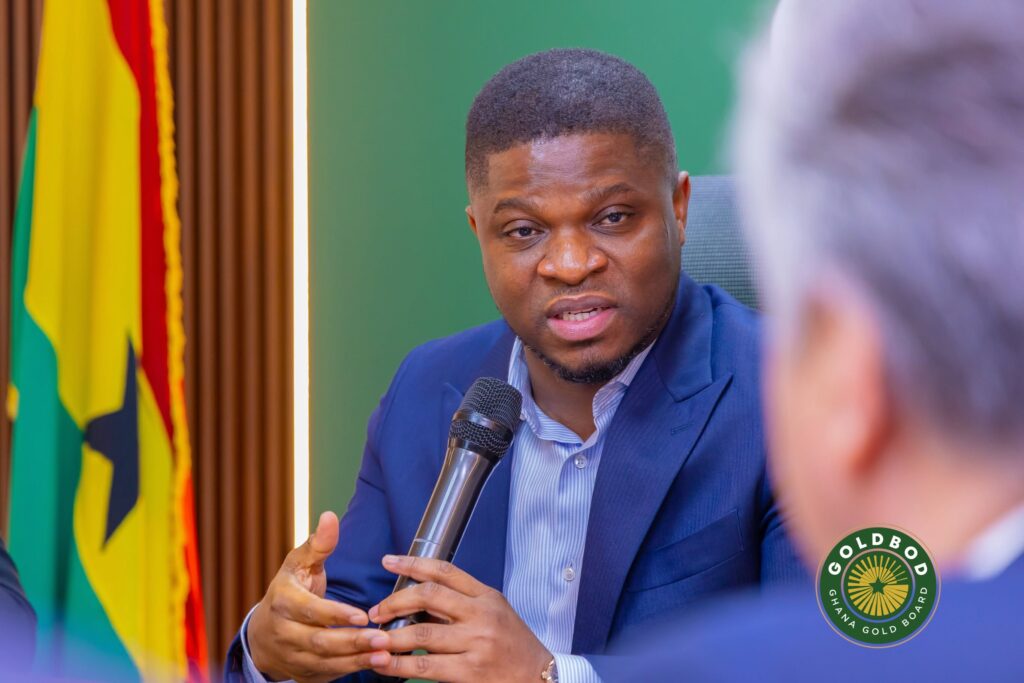
Addressing global investors at the Conrad Hotel during the annual IMF/World Bank meetings, Dr Asiama emphasized that these institutional safeguards are vital for building enduring economic resilience.
As the country navigates complex global financial currents, the seamless synergy between monetary policy and mineral resource monetization continues to project a resilient outlook for Ghana’s sustainable fiscal future.
READ ALSO: Starlets Coach Hints at Rotation Ahead of Burkina Clash