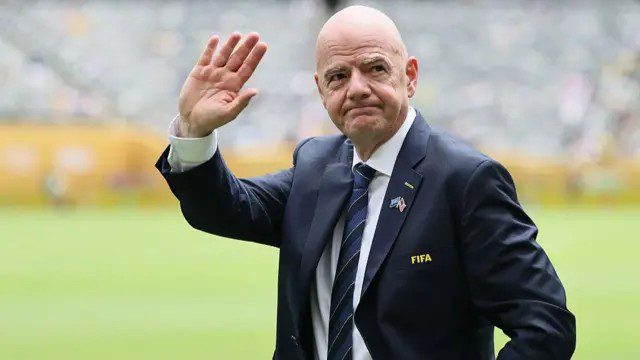
FIFA president Gianni Infantino has admitted mistakes in the rollout of the controversial FIFA Forward Enterprise (FFE) proposal following a backlash from several influential football confederations over plans to attract private investment into the commercial operations of the world governing body’s competitions.
Infantino made the admission after FIFA Council meeting on Thursday, October 15, acknowledging shortcomings in the communication and consultation processes surrounding the proposal, which was eventually abandoned following widespread opposition.
The controversy has further strained relations between his administration and sections of the international football community as he prepares for a potential fourth term in office.
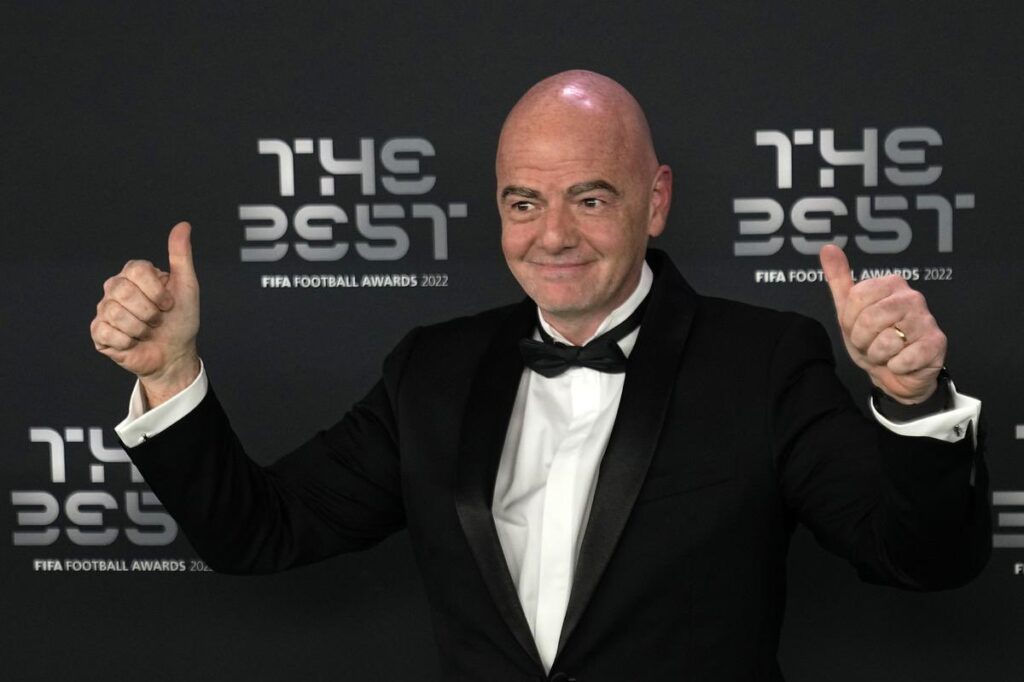
Addressing the media after the meeting, Infantino apologised for how the initiative was introduced, although he maintained that the proposal was intended to generate additional funding for FIFA’s member associations rather than replace existing development support. “First of all, I apologise for the mistakes that we made in relation to the communication and consultation process related to the FIFA Forward Enterprise project, which then led to many consequences,” the FIFA President stated.
The FFE proposal sought to establish a commercial enterprise through which FIFA could attract private investors to its competition-related business, including commercial rights associated with the World Cup and other tournaments. The initiative was presented as a means of unlocking additional financial resources to support football development across FIFA’s 211 member associations.
However, the plan encountered significant resistance, particularly from UEFA, CONCACAF and the Asian Football Confederation (AFC), with concerns surrounding consultation, governance and the potential implications of private investors acquiring stakes in FIFA’s commercial operations.
The backlash ultimately forced FIFA to abandon the proposal, intensifying scrutiny of the decision-making process within Infantino’s administration. The episode also raised questions about the extent to which the continental confederations had been consulted before the initiative was presented publicly.
Infantino, however, insisted that the proposal had never been finalised and that its underlying objective was to increase investment in football development worldwide. “It was a proposal, so in no way a done deal, just a proposal that actually intended to enable FIFA to invest more in our member associations as opposed to replacing support from existing resources,” he explained.
FFE Fallout Deepens FIFA’s Political Divisions
Despite Infantino’s attempt to clarify the initiative’s intentions, the controversy has added to the divisions within FIFA ahead of the organisation’s 2027 presidential election.
UEFA has emerged as a prominent source to Infantino’s leadership, while CONCACAF and the AFC have also expressed reservations about his role.
Reports suggest that European football officials are exploring potential candidates who could challenge Infantino when FIFA members vote for their next president.
The resistance comes as Infantino seeks his fourth term at the helm, with the abandoned FFE proposal becoming a significant point of contention in discussions about FIFA’s governance and the distribution of power within the organisation.
In contrast, the Confederation of African Football (CAF) has maintained strong support for Infantino, potentially providing him with a crucial political advantage as the presidential contest approaches.
Meanwhile, former Tottenham Hotspur defender Ramon Vega declared his intention to contest the FIFA presidency last week, emerging as a potential challenger to the incumbent. However, his participation in the election will depend on securing the required nominations from FIFA member associations, and it remains unclear whether he can assemble sufficient backing to mount a credible challenge.
Infantino, who became FIFA president in 2016, is seeking another term as the organisation prepares for its next electoral cycle. The extent to which the FFE controversy influences the positions of member associations could prove significant in determining the strength of his opposition.
FIFA Proposes $6.35 Billion Development Funding
While acknowledging the shortcomings surrounding the FFE proposal, Infantino also announced progress on a separate initiative aimed at increasing financial support for football development.
The FIFA Council agreed to the proposed FIFA Surplus Solidarity Programme, which would use a portion of FIFA’s financial reserves to more than double planned development funding for the 2027-2030 cycle, bringing the total to $6.35 billion.
Under the proposal, all 211 FIFA member associations would receive $25 million over the four-year period, representing a substantial increase from the $1 million allocated per association when Infantino assumed office in 2016.
“Let me say that in 10 years since I am FIFA president, we have gone from $1 million per FIFA member association to $25 million per FIFA member association all across the world.”
Gianni Infantino, FIFA President
The programme’s details are expected to be finalised by the FIFA Council in December 2026 before being submitted to the FIFA Congress for approval alongside the budget.
Infantino described the proposed investment as an important step towards strengthening football development across the world, with the additional funding expected to support member associations in expanding their activities and infrastructure.
The initiative represents a separate funding proposal from the abandoned FFE plan, which had sought to attract private investment into FIFA’s commercial operations.
FIFA Council Considers Governance Reforms
Beyond the financial proposals, Thursday’s meeting also addressed potential changes to FIFA’s governance framework, an issue that has attracted renewed attention following the FFE controversy.
Infantino confirmed that a working group would be established in collaboration with the continental confederations to examine possible reforms. Member associations and other stakeholders will also be invited to submit proposals for consideration. “Looking at the future and at the governance of FIFA and its governance framework, a working group will be established together with the confederations to look at potential governance reforms,” he said.
The FIFA Council also tasked the organisation’s Legal Committee with assessing the FIFA Disciplinary Code, with a decision expected at its next meeting in December 2026. Separately, the Football Social Responsibility Committee will examine the FIFA Peace Prize and present its recommendations at the same meeting.
Infantino described the Council discussions as constructive, adding that the administration would provide written responses to questions raised by Council members.
Nevertheless, the effectiveness of the proposed reforms and Infantino’s ability to rebuild confidence among his critics remain uncertain. With the 2027 presidential election approaching and reports of potential challengers gaining attention, the fallout from the FFE proposal could continue to shape the political landscape within FIFA.
For Infantino, the challenge now extends beyond acknowledging mistakes in the initiative’s rollout. He must also address concerns over consultation and governance while seeking to maintain the support needed to secure another term as FIFA president.
READ ALSO: Parliamentary Health Committee Calls on Government to Train Specialised Nurses