The Federation of International Football Association (FIFA) has officially abandoned its controversial FIFA Forward Enterprise (FFE) proposal after mounting opposition from several continental confederations made it clear the initiative no longer enjoyed the unity required to move forward.
FIFA President Gianni Infantino confirmed the decision in a statement, saying the project would not proceed despite its original objective of strengthening member associations and expanding investment in football development across the world.
The proposal, which had dominated discussions within global football in the week, was designed to create a new commercial entity that would manage FIFA-owned competitions including the men and women’s world cups and attract private investment to unlock fresh revenue streams. FIFA argued that the additional resources would ultimately benefit member associations, particularly those in developing football nations.
However, what began as a consultation process quickly evolved into one of the most divisive governance debates in recent FIFA history, with concerns raised over commercial control, transparency and the long-term ownership of football’s most valuable assets.
The collapse of the proposal follows coordinated resistance from several influential confederations, leaving FIFA without the broad consensus Infantino had insisted was necessary before any decision could be taken.
In the end, the growing divisions proved too significant for the world football governing body to ignore.
Infantino Says Unity Must Come Before Reform
Explaining the decision, Infantino maintained that the project’s primary goal had always been to strengthen football globally, particularly in countries where financial support is most needed. “The FIFA Forward Enterprise project was intended to provide a basis for further strengthening our FIFA Member Associations and our sport worldwide, especially in those countries where support is most needed,” he said.
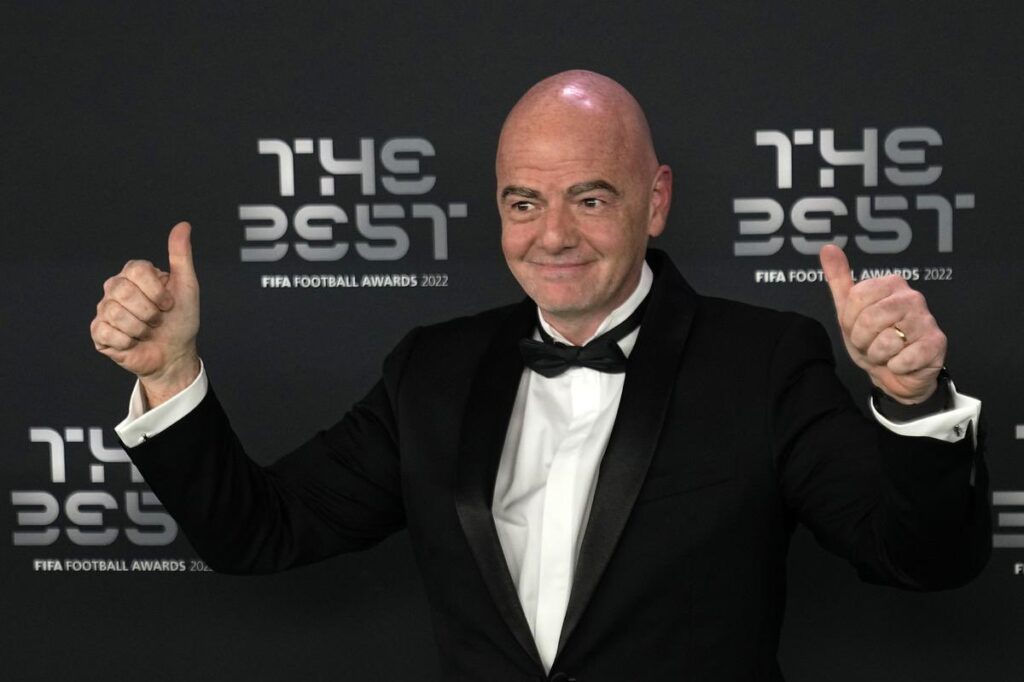
He stressed that FIFA had never intended to impose the proposal, noting that it was always conditional on receiving the backing of a majority of FIFA’s member associations following consultations with the FIFA Council, the six confederations and other stakeholders.
But after listening to feedback throughout the process, the FIFA President acknowledged that the proposal had become too divisive to continue. “Having listened carefully to all the views, it has become clear that the project has created divisions of a nature that, regardless of the level of support, are no longer in the interest of the objective set out in the first place.”
He added that FIFA’s mission has always centred on unity rather than conflict and said that: “Our purpose has always been and will always be to unite and improve. As a result, this proposal will not proceed.”
The FIFA president also pledged to begin fresh discussions with football’s stakeholders in the coming days and weeks with the aim of rebuilding consensus and continuing efforts to grow the game, particularly in countries that rely heavily on FIFA development funding.
Confederation Resistance Left Proposal Without a Path Forward
The decision comes after an unprecedented wave of opposition from football’s major confederations.
UEFA was the first to publicly reject the proposal, arguing that the FIFA World Cup and other FIFA competitions should never be treated as investment products. Europe’s governing body warned that introducing private ownership into football’s premier competitions risked undermining the sport’s long-term integrity and governance.
CONCACAF soon followed with its own opposition, aligning itself with UEFA and significantly weakening FIFA’s chances of securing a majority among its 211 member associations.
The decisive blow arrived when the Asian Football Confederation (AFC), representing 47 member associations, also opted against the proposal. With Asia joining Europe and North and Central America in rejecting the plan, the prospect of achieving the necessary support effectively disappeared.
CAF, CONMEBOL and the Oceania Football Confederation (OFC) never publicly declared their positions before FIFA withdrew the proposal. Their silence ultimately became irrelevant as the growing resistance from the other confederations had already stripped the initiative of its political momentum.
The FFE proposal had sought to establish a commercially focused enterprise responsible for managing FIFA’s commercial rights and operational delivery while attracting billions of dollars in private investment.
FIFA argued that the model would generate new income capable of accelerating infrastructure projects, grassroots football, youth development and financial support for member associations around the world.
Critics, however, viewed the proposal as a fundamental shift in how football’s biggest competitions would be governed. They questioned whether introducing outside investors into FIFA’s commercial operations could eventually compromise the independence of the organisation or place commercial returns ahead of the interests of the global game.
Infantino’s decision to withdraw the proposal before a formal vote can therefore be seen as an acknowledgment that institutional unity carries greater value than pushing through a deeply contested reform. While FIFA may revisit aspects of commercial expansion in the future, any new initiative is likely to require far broader consultation and stronger safeguards to win the confidence of football’s stakeholders.
For now, the withdrawal marks a significant political setback for FIFA’s leadership but also demonstrates a willingness to step back when consensus proves unattainable. As Infantino seeks to reunite football’s governing bodies, attention will now shift from commercial restructuring to finding alternative ways of increasing investment without fracturing the global football community.