The International Association for Structural Geology and Tectonics (IASGT), in collaboration with the Department of Earth Science at the University of Ghana, the Centre for Exploration Targeting at the University of Western Australia, and the Agate Project, has convened a landmark gathering in Accra aimed at fundamentally altering how the continent discovers and extracts its natural wealth.
As global demand for gold, lithium, and essential green-transition minerals accelerates, this high-level assembly of earth scientists asserts that Africa’s ultimate competitive advantage rests in its scientific comprehension of subterranean structures rather than mere reliance on unrefined mineral wealth.
By fostering high-level technical discourse and international research partnerships directly on African soil, the event creates a crucial platform to transform early-stage exploration and establish regional geoscience autonomy.
“In many parts of West Africa, and especially in Ghana, these faults provide pathways for fluids rising from deep within the Earth. Those fluids transport gold, lithium, and other critical minerals. Structural geology helps us understand why the rocks we see at the surface are there today. ”
Prof. Mark Jessell of the University of Western Australia.
Expanding on this vision, the conference underscores how advancing structural geology allows geoscientists to map complex subsurface rock deformations, trace fluid migration pathways, and pinpoint deeply buried, high-grade ore deposits across West Africa’s Birimian greenstone belts.
Historically, high geological risk and insufficient baseline mapping have inflated exploration expenditures, leaving vast swathes of the continent under-explored.
By training local researchers in cutting-edge field techniques and modern spatial modeling, African institutions can drastically shorten discovery timelines, enhance mine safety, and optimize resource extraction, thereby laying the structural foundation for the continent’s upcoming mining expansion.
Closing the Scientific Divide to Build In-Country Research Capacity
A core imperative highlighted during the Accra sessions is the necessity of dismantling long-standing inequities in global academic research.
Historically, prominent geological symposia have taken place predominantly across Western Europe and North America, severely restricting direct access for researchers based in developing nations.
Prof. Manish Mamtani of the Indian Institute of Technology (IIT) Kharagpur emphasized that IASGT is deliberately reversing this trend by bringing globally recognized scholars directly to developing regions.
He noted that while participation from South America, Africa, and Asia has traditionally remained low, hosting international conventions locally ensures that local academic ecosystems and early-career geologists benefit directly from world-class expertise.
This institutional empowerment is essential for domestic mineral sovereign stewardship. Head of the Department of Earth Science at the University of Ghana, Prof. Prince Ofori Amponsah, articulated that hosting the IASGT aligns seamlessly with institutional goals focused on driving impactful research.
By solidifying institutional ties with renowned centers like the University of Western Australia’s Centre for Exploration Targeting, Ghana is actively curbing the classic brain-drain phenomenon. Instead of compelling top-tier students to seek technical training overseas, the country is consolidating a permanent, regional center of academic excellence capable of training the next generation of African exploration leaders.
Integrating Structural Geology with Artificial Intelligence and Deep-Crust Mapping
As the mining sector rapidly adopts digital transformation, conference experts cautioned against treating technology as a total replacement for fundamental field geology.
Prof. Mamtani observed that while artificial intelligence and machine learning are revolutionizing data interpretation, the accuracy of predictive algorithms remains bound to the quality of empirical geological fieldwork. Advanced computational models require robust physical interpretations of rock mechanics and structural mapping to generate reliable target generation.
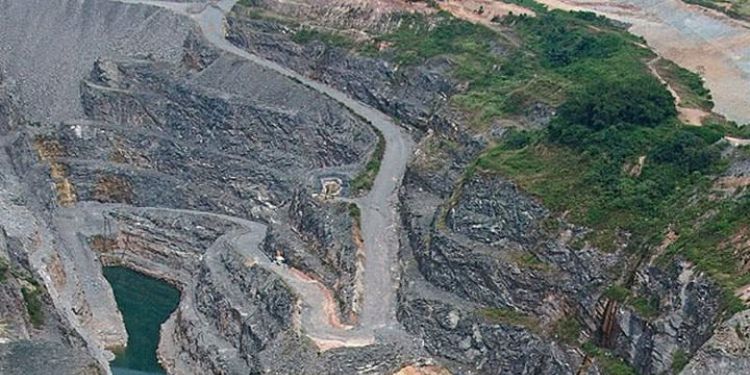
Prof. Mark Jessell of the University of Western Australia elaborated on how structural deformation dictates where valuable mineral systems concentrate within the Earth’s crust.
In West Africa, structural faults act as vital conduits for deep-seated hydrothermal fluids carrying precious and critical metals like gold and lithium upward.
Understanding these fault networks enables exploration teams to predict economic deposits hidden beneath dense cover. Furthermore, Prof. Jessell argued that the future of economic geology lies at the convergence of multi-disciplinary teams, stating that closer “collaboration between geologists and computer scientists is equally important” as industry partnerships for modern exploration success.
Leveraging Industry Synergies for Risk Reduction and Infrastructural Resilience
The commercial viability of this scientific surge is further reinforced by robust backing from major commercial operators. Corporate stakeholders including Asante Gold Corporation, AngloGold Ashanti’s Obuasi Mine, and Turaco Gold supported the conference, demonstrating a clear shift toward science-led target generation as near-surface deposits become exhausted.
Daniel Apau of Asante Gold noted that the event offered an “excellent capacity building” platform, reiterating that “the more you explore using knowledge, the more you find” across West Africa’s lucrative mineral terrain.
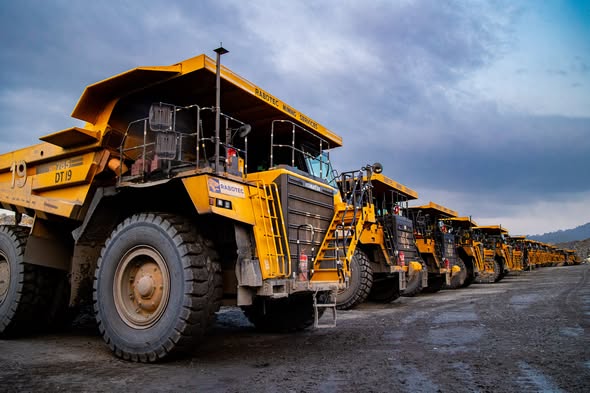
Beyond immediate commercial extraction, structural geophysics plays a vital role in national infrastructure preservation and disaster mitigation.
Prof. Tolulope Olugboji from the University of Rochester highlighted that geophysical mapping provides essential subsurface insights necessary for civil engineering, groundwater management, and seismic hazard evaluation.
With coastal West Africa situated near active fault lines, investing in geophysical instrumentation serves a dual mandate: safeguarding municipal infrastructure against seismic threats while simultaneously unlocking the concealed mineral reserves that will power Africa’s economic future.
READ ALSO: FIFA Forward Enterprise Proposal Abandoned After Severe Backlash