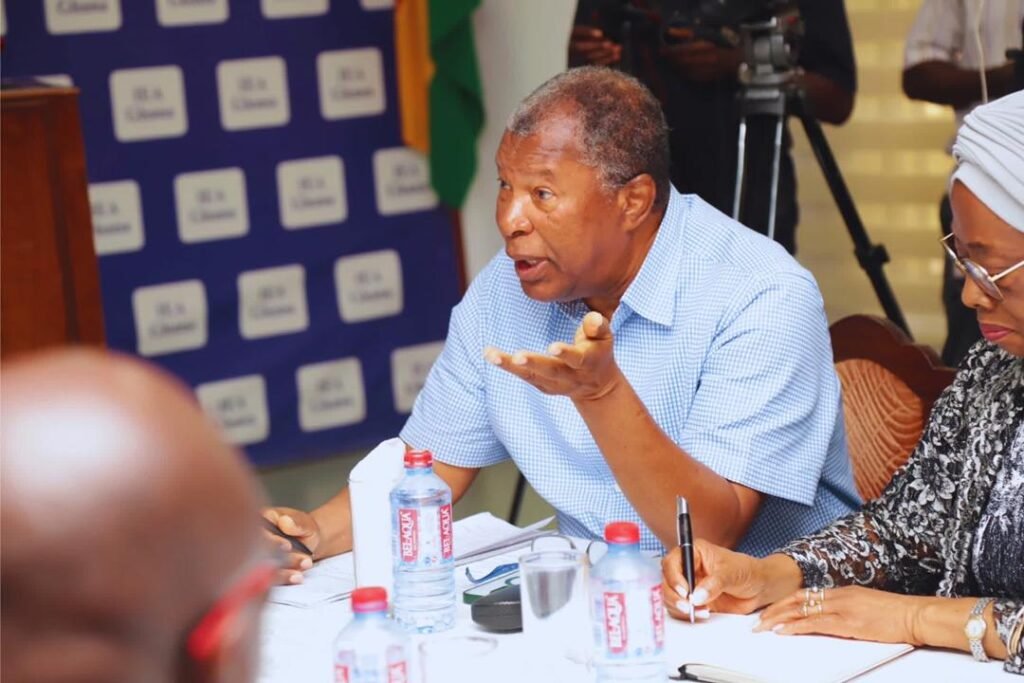
Prof. Alexander Bilson Darku, Director of Research at the Institute of Economic Affairs (IEA), has stated that the Ghanaian mining sector remains a major contributor to economic stabilization, but its full potential can only be unlocked through a rigorous commitment to local value addition policies.
He emphasized that while the extractive industry continues to anchor the macroeconomy, prioritizing downstream processing over raw mineral exportation is essential to expand the domestic labor market.
According to the policy think tank, systematically implementing value-addition strategies will ensure that the natural resources sector actively generates sustainable, high-paying employment opportunities across the national economy.
“Mining sector is also a major contributor to the economic stabilization. We consider that this could enhance job creation if the value addition policy that we now have are followed through to create value in the economy so that they will be able to employ more people in the economy. Furthermore, we see that agriculture, a major employer in the economy, grew at 4%, far lower than any of the other major sectors.”
Prof. Alexander Bilson Darku, Director of Research at the Institute of Economic Affairs (IEA)
Expanding on this position, the IEA highlighted that the real economic value of natural resources lies in downstream industrialization rather than the mere extraction and exportation of raw gold and minerals.

Prof. Darku noted that although extraction boosts GDP figures, raw resource export yields minimal direct labor engagement relative to the sector’s total revenue.
By enforcing existing value addition policies such as local gold refining, jewelry manufacturing, and industrial mineral processing Ghana can build integrated supply chains that retain capital locally, stimulate linked manufacturing sub-sectors, and absorb thousands of unemployed skilled and unskilled workers into the formal economy.
Macroeconomic Risk Management and Resource Reliance
Addressing broader structural challenges, the IEA raised concerns over the country’s over-reliance on raw gold exports to maintain balance-of-payments equilibrium and foreign exchange stability.
While acknowledging that the establishment of the Ghana Gold Board has significantly increased gold export revenues, boosted forex inflows to defend the cedi, and supported central bank reserve accumulation, Prof. Darku warned that depending heavily on a single primary commodity exposes the economy to severe external price shocks.
To manage resource development risks effectively, the Institute advocated for a broader, multi-pronged macroeconomic strategy that pairs mineral sector reforms with targeted import substitution, aggressive export promotion, and strict foreign exchange market enforcement.

Furthermore, the think tank called for an urgent policy realignment toward agriculture and private sector credit delivery to ensure balanced, inclusive national growth. Observing that agriculture Ghana’s largest employment driver grew by a modest 4%, lagging behind all other major economic sectors, the IEA urged monetary authorities to ensure that reductions in the Monetary Policy Rate (MPR) translate directly into affordable lending for private enterprises.
Additionally, while welcoming the government’s operationalization of the Sinking Fund to demonstrate debt repayment credibility, the Institute stressed that funding consistency, legal protections against political diversion, and seamless integration into broader public debt management plans are vital to restoring long-term fiscal stability.
Transformative Economic Impact of Mineral Value Addition
Transitioning Ghana from a primary resource exporter to an integrated mineral processing hub represents a vital paradigm shift for long-term national solvency. Historically, exporting raw bullion leaves up to 80% of total economic rents in foreign refining jurisdictions, depriving the local economy of substantial multiplier effects.
Establishing local gold refineries, metallurgical processing units, and specialized industrial facilities directly creates complex value chains.
These industrial hubs generate secondary employment across logistical transport, chemical engineering, equipment maintenance, industrial technology, and specialized financial services, effectively turning extractive enclaves into engines of widespread economic growth.
Beyond direct job creation, local value addition strengthens Ghana’s external balance sheet and stabilizes its volatile domestic currency.
Processed and refined mineral products command higher unit prices on the international market, generating significantly higher foreign exchange earnings per ounce extracted.
Retaining these refined assets domestically enables the Bank of Ghana to build foreign reserves efficiently, cushioning the cedi against global volatility, dampening imported inflation, and lowering debt servicing costs for foreign-denominated obligations.
Higher domestic retention ensures profits remain in local financial institutions, expanding domestic tax bases and giving the government the fiscal space needed to fund vital public infrastructure.
READ ALSO: Government Declines MTN’s GHS20 Million Offer for xenophobic Victims