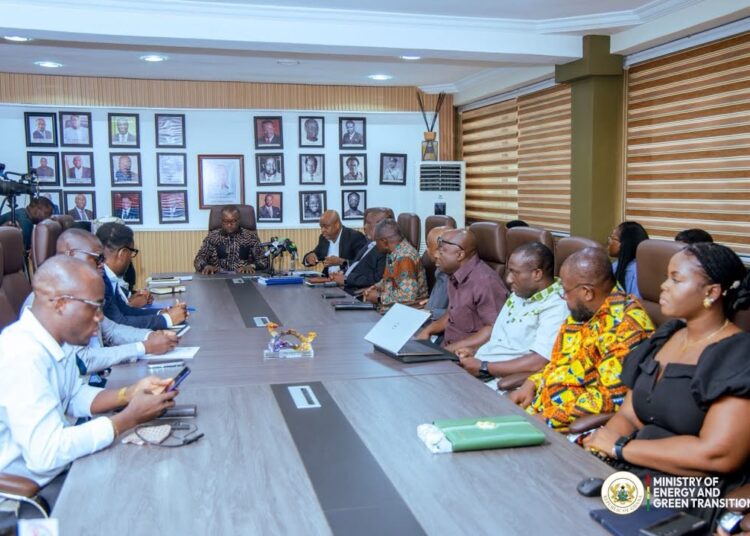
Hon. John Abdulai Jinapor, the Minister of Energy and Green Transition, has promised a thorough government review of the critical investigative findings regarding the Akosombo Substation fire incident.
Reflecting standard reporting guidelines, the sector minister formally acknowledged the intensive technical evaluation submitted by the specialist panel, signaling a decisive step toward restoring full systemic operational security.
In an authoritative address confirming receipt of the brief, the Minister emphasized that the state intends to execute an exhaustive administrative assessment of the document to pinpoint operational deficits.
This baseline determination establishes a definitive roadmap through which the state aims to reinforce institutional accountability, correct identified infrastructural vulnerabilities, and implement long-term structural changes necessary to safeguard the integrity of the national electricity grid.
“Government will carefully review the report and take the necessary actions to address its recommendations. Our focus remains on ensuring accountability where required, preventing future occurrences, and safeguarding the integrity of the national electricity transmission system. We remain committed to maintaining a stable and secure power supply while continuously improving the systems that support national development.”
Hon. John Abdulai Jinapor, the Minister of Energy and Green Transition

Dwelling on this administrative milestone, Hon. Jinapor highly commended the engineering panel, explicitly praising the “Ing. Amuna Committee for their diligence, professionalism, and commitment in carrying out this important assignment.”
This ministerial reception transitions the grid emergency from an active crisis investigation into a highly structured phase of policy formulation and system remediation.
To ensure the findings translate into concrete utility safeguards, the Ministry of Energy and Green Transition has directed all subsidiary power corporations and regulatory authorities to immediately design a legally enforceable operational blueprint.
This upcoming roadmap integrates heavily reinforced engineering safety protocols, targeted transmission station equipment upgrades, advanced risk management matrices, and mandatory routine performance evaluations of all high-voltage distribution networks nationwide.
By prioritizing structural adjustments over temporary fixes, the state aims to transition the country’s power grid into a more resilient configuration capable of absorbing severe operational shocks.
The Strategic Urgency for Complete Implementation
An independent analytical assessment of the national power infrastructure indicates that fully executing the engineering panel’s recommendations is a non-negotiable prerequisite for economic stability.
Energy experts note that the Akosombo grid node functions as the backbone of the domestic electricity transmission architecture, making its complete operational recovery a matter of absolute national security.
Delaying or partially adopting the technical remedies outlined by the investigators could leave adjacent high-voltage transmission lines exposed to cascading thermal overloads and catastrophic grid failure.
Furthermore, strict adherence to the expert findings provides the state with an empirical framework to address deep-seated engineering deficiencies that have historical origins in delayed preventative maintenance cycles.

System analysts emphasize that a transparent, meticulous rollout of the safety blueprints will directly lower structural risk profiles, lower the frequency of unscheduled load shedding, and protect heavy industrial consumers from expensive power disruptions.
Implementing these findings establishes a predictable, highly dependable operating environment that is essential for driving long-term industrialization and maintaining consumer confidence across commercial sectors.
Institutional Oversight and Preventative Auditing
Enforcing systemic accountability requires a fundamental re-engineering of institutional oversight mechanisms within the country’s power transmission departments.
Moving forward, the Ministry’s directive establishes a rigorous regime of periodic technical audits intended to eliminate institutional inertia and ensure compliance with global energy industry best practices.
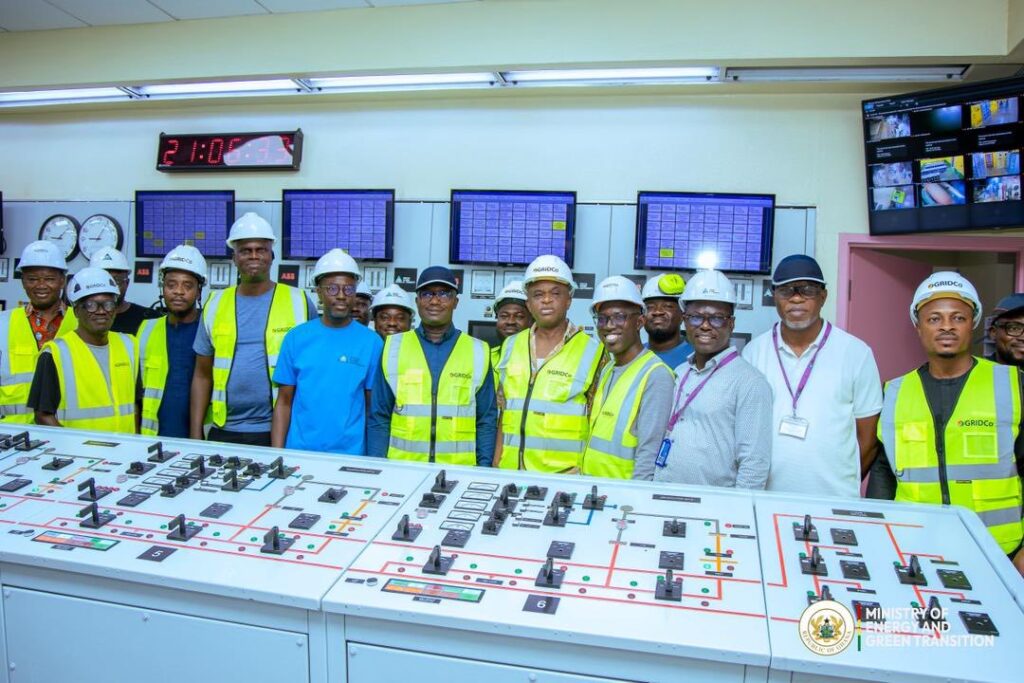
These mandatory technical evaluations will function as an early warning diagnostic system, enabling grid technicians to identify and isolate equipment abnormalities before they develop into hazardous operational failures.
By anchoring future power sector investments to data-driven audit metrics, regulatory bodies can accurately allocate capital toward the most vulnerable transmission segments.
This structured approach moves national utility management from a reactive crisis response model to an active asset preservation system.
Industry observers maintain that establishing clear legislative timelines for executing these safety protocols will hold utility executives directly accountable, thereby minimizing human error and ensuring optimal resource allocation.
National Transmission Grid Integrity and Upgrades
The long-term stabilization of the domestic energy economy depends heavily on the systemic modernization of older power installations like the Akosombo Substation.
Engineering data indicates that upgrading heavy transmission infrastructure with modern automated fire suppression systems, digital thermal sensors, and rapid-acting circuit isolators is critical to preventing similar utility disasters.
These capital-intensive technology upgrades are designed to isolate localized electrical faults instantly, preventing localized damage from destabilizing the broader interconnected national grid.

Moreover, aligning these structural overhauls with international environmental and engineering standards ensures the transmission grid remains resilient against shifting climate patterns and increasing industrial demand.
As power demands grow, a reinforced and modern distribution infrastructure forms the foundation for reliable clean energy integration, ultimately supporting sustainable economic growth across the sub-region.
The Ministry concluded by noting that comprehensive public updates will be officially released immediately following the completion of the cabinet’s internal evaluation and the finalization of the state’s strategic deployment program.
READ ALSO: Jose Mourinho Appointed for a Second Real Madrid Spell