The government has activated parts of Ghana’s National Export Development Strategy (NEDS) to complement efforts to boost exports and restructure the foundation of Ghana’s economy.
As promised by the government upon assuming office, the NEDS was adopted in 2025 to link past government initiatives and avoid national losses. Over the next few years, the government is focusing on leveraging the African Continental Free Trade Area (AfCFTA), modernizing trade infrastructure (ports, cold chains), digitizing processes, and increasing support for Small and Medium Enterprises (SMEs), especially youth- and women-led, under the new leadership at the Ghana Export Promotion Authority (GEPA).
The government’s strategy includes tripling AfCFTA certification for businesses, launching an Accelerated Export Advisory Committee, and focusing on value addition to boost non-traditional exports toward the US$ 25.3 billion target by 2029, despite initial funding gaps.
Ghana’s Initial Export Drive
According to the Ghana National Export Development Strategy (NEDS), Ghana will grow its Non-Traditional Exports (NTEs) over 10-year, increasing exports from US$ 2.8 billion in 2020 to US$ 25.3 billion in 2029. These gains, as initially planned, will be accompanied by “a deep structural transformation that positions Ghana as a competitive export-led industrialized economy if NEDS is fully funded and implemented.”

Ghana’s exports are dominated by raw materials and a limited range of manufactured goods. As a result, it derives low foreign exchange revenues while promoting wealth, jobs, and export value chains for destination countries. In 2020, the government decided to turn the Ghanaian economy around with NEDS.
GEPA therefore launched NEDS and “The 10-Point Agenda for Industrial Transformation” policy document to transform the economy from a raw commodity export base to a manufacturing, industrial export-driven economy. The strategy was infused into the flagship programs of the then government.


Industrialization thrives on economies of large-scale production. AfCFTA provides a larger market than Ghana and a preferential trade arrangement for intra-African trade.
This requires a market considerably larger than Ghana’s limited market and makes it imperative to explore exporting to the global market.
Incorporated into the Economic Transformative Agenda
After a change in leadership at both GEPA and the government, a new drive through NEDS is underway, following the failure to achieve the main objective of NEDS.
Beyond plans to triple certified companies under AfCFTA rules and expand readiness training for businesses to trade across the continent, the government is boosting infrastructure to connect businesses, markets, and ideas.
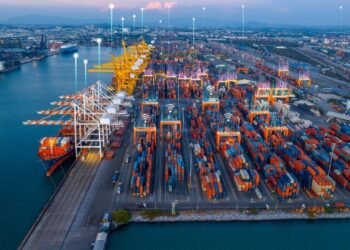
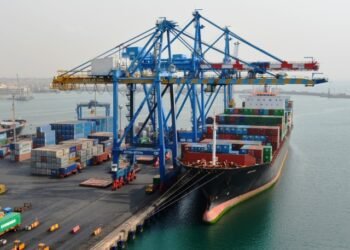
The infrastructure interventions include modernizing ports, developing inland ports (such as Mpakadan and Boankra), and expanding cold chains for fisheries and horticulture. Both Mpakadan and Boankra are sites for significant inland port projects in Ghana that are currently under construction and yet to be fully operational. The projects will ease congestion at seaports and facilitate trade with the northern parts of the landlocked Sahelian nations.

There is also the implementation of a digitized export processing system (trade) and fast-track border inspections to improve efficiency.
A major push toward value addition, where raw materials are processed to increase export value and competitiveness, is underway. The government is also building diversification across sectors and sub-sectors of the economy. This, according to the government, will move Ghana beyond traditional exports to tap into new markets and products.
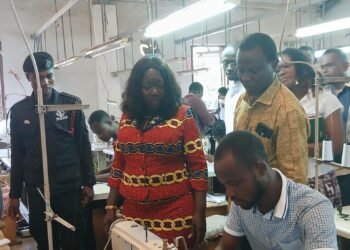
SME empowerment is also a strategic priority, with plans to train and support small businesses, particularly women and youth, to participate in continental trade.
With these strategies come revealing challenges. Ghana’s export drive through value addition lacks adequate funding (beyond the initial US$ 5 million annual funding for GEPA). Meeting ambitious targets remains a challenge, according to recent reports. The current government must cover GEPA’s maximum output cost to situate the program’s transformative mark.
According to the government, 2025 marked a period of intensified action and strategic repositioning for Ghana’s export sector, aiming to harness its potential through enhanced infrastructure, digital tools, and deeper regional integration under AfCFTA.
The coming year will see many initiatives running, as a proper foundation has already been established in 2025.