
Oil prices edged lower on Monday as markets weighed the geopolitical shock of the United States capturing Venezuelan President Nicolas Maduro against a backdrop of ample global supply.
While the dramatic weekend raid raised fresh uncertainty around the future of one of the world’s major oil-producing nations, traders appeared more focused on fundamentals that continue to cap price upside.
Brent crude futures fell to about $60.44 a barrel at the time of writing, while U.S. West Texas Intermediate (WTI) crude was trading around $56.97 a barrel. Both benchmarks were volatile in early Asian trade, opening lower before briefly recovering, only to surrender gains as investor caution returned.
In a global oil market already characterized by plentiful supply, analysts say Venezuela’s current export volumes are not large enough to materially tighten balances in the short term. Existing sanctions have already constrained the country’s oil shipments, limiting the scope for further downside shocks.
“We see ambiguous but modest risks to oil prices in the short-run from Venezuela depending on how U.S. sanctions policy evolves.”
Goldman Sachs
This assessment reflects the view that most of the bearish or bullish impact from Venezuela is already priced in, unless there is a significant shift in sanctions enforcement or relief.
Volatile Start as Markets Assess Political Upheaval
The early swings reflected uncertainty over how the arrest of President Maduro could reshape Venezuela’s oil exports. Investors initially reacted to the scale of the political event, but sentiment quickly cooled as analysts concluded that near-term supply risks remain limited.
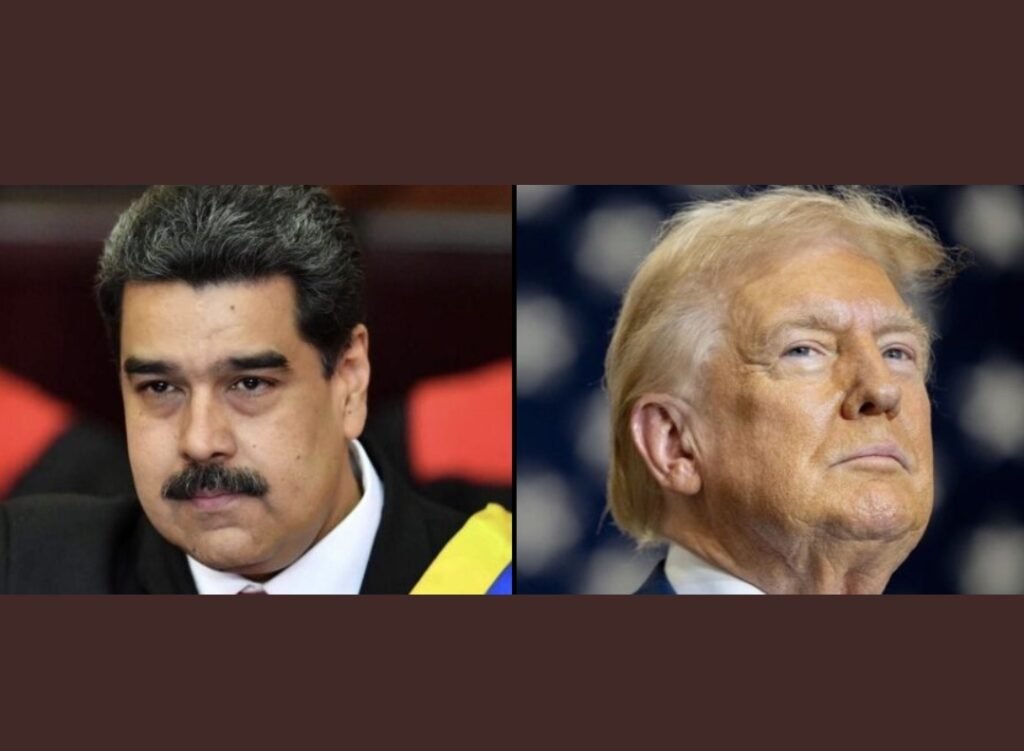
The United States confirmed that Maduro was detained in New York on Sunday following what officials described as a targeted operation.
President Donald Trump later said Washington would take control of the oil-producing nation, while stressing that the U.S. embargo on all Venezuelan oil “remained in full effect.”
Despite the dramatic rhetoric, the immediate impact on physical oil flows has so far been minimal.
Regime Change Could Alter Long-Term Outlook
While short-term price reactions have been muted, analysts warn that the longer-term implications could be more profound. Senior officials in Maduro’s government, who have described the detentions of Maduro and his wife, Cilia Flores, as a kidnapping, remain in control of state institutions and have pledged unity.
However, analysts say a potential regime change could reshape the oil market outlook beyond 2026.
“A regime change in Venezuela would immediately represent one of the largest upside risks to the global oil supply outlook for 2026–2027 and beyond.”
JP Morgan
Such a shift could open the door to increased production if sanctions are lifted and foreign investment returns.
Crucially for markets, the U.S. operation did not damage Venezuela’s oil production or refining infrastructure. Output continues uninterrupted, easing fears of sudden supply losses.
Helima Croft, head of commodities research at RBC Capital, noted that Venezuela’s true market impact hinges on policy choices rather than physical damage.
She said full sanctions relief could unlock “several hundreds of thousands of barrels per day of production,” potentially adding meaningful supply to global markets over time.
Still, Croft cautioned that political instability could also cut both ways. “All bets are off in a chaotic change of power scenario like what occurred in Libya or Iraq,” she said, highlighting the risk of prolonged disruption if governance breaks down.
Broader Geopolitical Risks in Focus
Beyond Venezuela, markets are also digesting a broader escalation in geopolitical rhetoric from Washington. President Trump suggested the United States could consider further military interventions in Latin America, warning that Colombia and Mexico could face action if they fail to curb illicit drug flows into the U.S.
Analysts are also closely watching Iran, another major OPEC producer, after Trump threatened to intervene in response to a crackdown on protests, further raising regional tensions.
While these developments add layers of uncertainty, traders so far appear reluctant to push prices higher without clear evidence of sustained supply disruption.
For now, oil markets seem anchored by strong supply fundamentals, steady OPEC+ output and muted demand growth expectations. The arrest of President Maduro has injected political risk into headlines, but traders are waiting for concrete changes to oil flows before repricing the market.
As one analyst noted, geopolitical shocks may drive short-term volatility, but in a well-supplied market, fundamentals continue to dominate price direction.
In the days ahead, attention will remain fixed on U.S. sanctions policy, the stability of Venezuela’s oil sector and whether geopolitical tensions translate into real barrels lost from the market.
READ ALSO: Gov’t’s 24-Hour Economy’s Community Impact Hinges on MLGCRA as Unifier