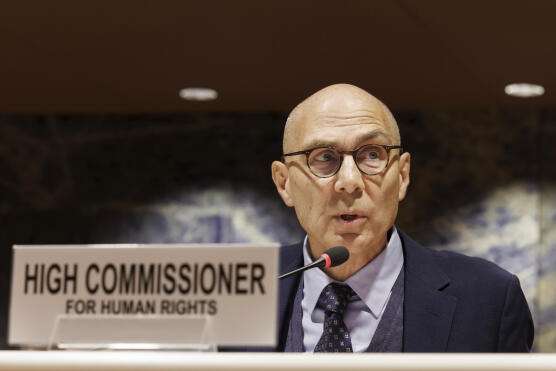
The United Nations Rights Office has said that it is “deeply worried” about what comes next for Venezuela following the US capture of President Nicolas Maduro.
It noted in a statement that it is clear that the operation undermined a fundamental principle of international law that states must not threaten or use force against the territorial integrity or political independence of any state.
The statement acknowledged the Maduro government’s “appalling human rights record” but said that US intervention could have damaging consequences both for Venezuela and the rest of the world. “We fear that the current instability and further militarization in the country resulting from the U.S. intervention will only make the situation worse,” the statement noted.
It added that the future of Venezuela must be determined by the Venezuelan people alone, with full respect for their human rights, including the right to self-determination, and sovereignty over their lives and their resources.
This comes after top diplomats at a UN Security Council meeting yesterday were largely critical of the US operation to capture Venezuelan President Nicolás Maduro.
Members of the United Nations Security Council (UNSC), including key US allies, warned that the abduction of Maduro and his wife by US special forces could be a precedent-setting event for international law as the 15-member bloc met for an emergency meeting yesterday.


Criticism came from several quarters – Latin American countries, with the notable exception of Argentina, traditional US adversaries Russia and China, as well as less powerful countries like Pakistan and Uganda. Even Washington’s European allies were reluctant to throw their full support behind their longtime security partner.
Caracas’ UN envoy Samuel Moncada said Maduro’s capture was driven by the US’ desire to access Venezuela’s resources, and threatened both Venezuela’s sovereignty and “the credibility of international law.”
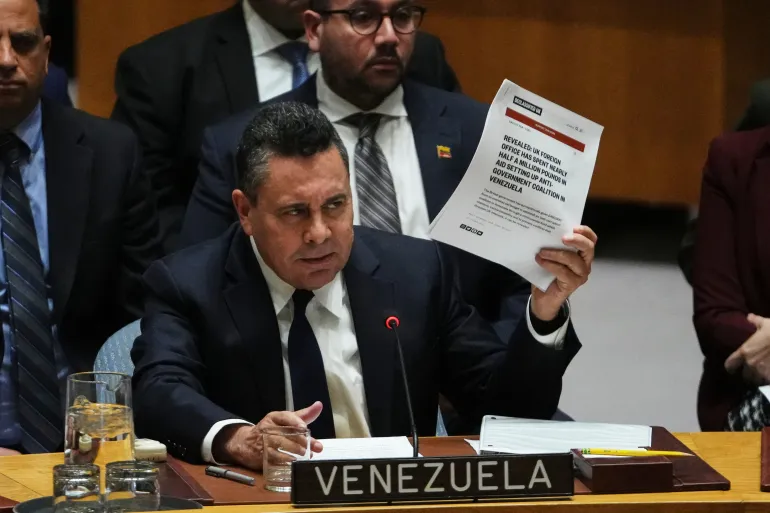
He condemned the US operation as “an illegitimate armed attack lacking any legal justification.”
Chile, Brazil, Mexico, Cuba, Colombia all condemned the US’ actions. “[The US] imposes the application of its laws outside its own territory and far from its coasts, where it has no jurisdiction, using assaults and the appropriation of assets,” Cuba’s Ambassador, Ernesto Soberon Guzman, said, adding that such measures negatively affected Cuba.
Brazil’s UN envoy said that the operation “crossed an unacceptable line” and violated international law.
Russia’s Ambassador, Vassily Nebenzia, said that the US cannot “proclaim itself as some kind of a supreme judge, which alone bears the right to invade any country, to label culprits, to hand down and to enforce punishments irrespective of notions of international law, sovereignty and non-intervention.”
He also warned that Washington’s actions could generate “fresh momentum for neocolonialism and for imperialism.” Pakistan’s envoy cautioned that the operation could set “dangerous precedents.”
Washington’s European allies offered a more tempered approach. James Kariuki, the UK’s Ambassador to the UN, said London saw Maduro’s claim to power as “fraudulent” and would push for a peaceful transition towards a legitimate government, but also reiterated the importance of international law.
France struck a similar tone, saying that the US operation “chips away at the international order.”
The French Deputy Ambassador, Jay Dharmadhikari noted that the military operation that has led to the capture of Maduro runs counter to the principle of peaceful dispute resolution and runs counter to the principle of non-use of force.
US Envoy To UN Defends Maduro’s Capture
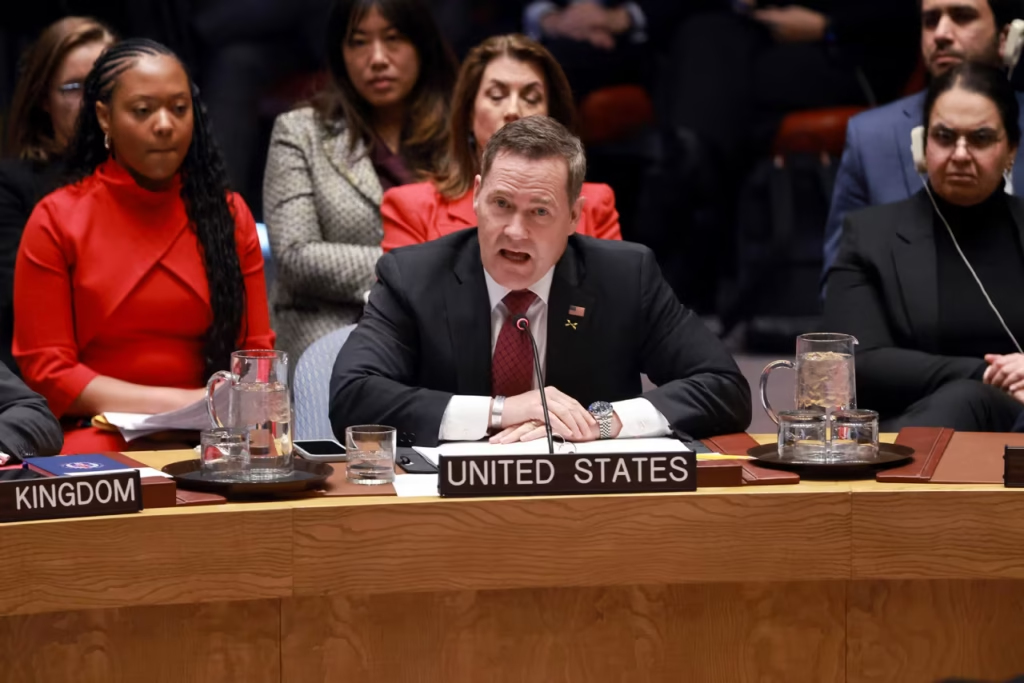
Mike Waltz, the US Envoy to the UN, characterized the move as a “surgical law enforcement operation facilitated by the US military against two indicted fugitives of American justice.”
He called Maduro a “narco-terrorist” who was “responsible for attacks on the people of the United States, for destabilizing the western hemisphere and illegitimately repressing the people of Venezuela.”
Argentina backed the US’ “decisive action” in Venezuela.
The White House defended its wave of air strikes on Venezuela, and in the waters near it, and Maduro’s abduction as necessary to protect US national security, amid unproven claims that Maduro backed “narcoterrorist” drug cartels.
READ ALSO: Venezuelan Crude Flows Face Market Frictions, Not Simple US Shift – Energy Chamber Chair