Despite recent improvements, the World Bank has called on the government of Ghana to be steadfast in reform implementations begun in 2025 to strengthen the stability the country has achieved.
According to the World Bank, the consolidation of the macro-economic and -financial stability of the country requires consistent progress in its transformation agenda to emphasize the same level of commitment as seen in 2025. Consistency, the Bank says, is key to growth.
“Strengthening macro-financial stability requires steadfast implementation of the reform agenda to reinforce fiscal discipline, enhance public financial management, advance sector reforms—particularly in energy—and maintain prudent monetary policy to contain inflation and exchange rate volatility.”
World Bank
Ghana’s Commendable Economic Turnaround
Ghana revised its Public Procurement and Financial Management Law, after fiscal slippage in 2024, to tighten control, thwart further slippages, and restore fiscal rules.
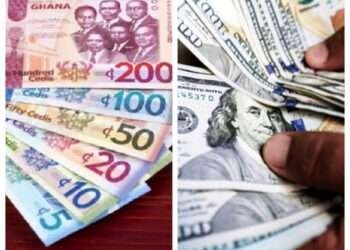
The government also rationalized and practiced a tightened monetary policy in 2025, complemented by disinflation and improved market sentiment. The Cedi’s unprecedented appreciation also eased inflation, lowered energy and public debt, and other macroeconomic indicators.
Disinflation accelerated in 2025, with headline inflation falling to 6.3 percent in November from 23.5 percent in December 2024. The broad-based decline rests on the Cedi’s 40.67 percent appreciation in 2025, as well as current account surplus and Bank of Ghana foreign exchange (FX) interventions.
Fiscal performance strengthened in the third quarter of 2025, with a primary surplus of 1.9 percent of GDP by October 2025, exceeding the 1.5 percent annual target. This reflected expenditure rationalization and lower interest costs, despite a small revenue shortfall (5.5 percent, approximately GHȼ 6.7 billion) due to collection challenges.
Ghana has also been able to advance its Debt restructuring with parliament’s approval of indicative terms for US$2.8 billion in official creditor agreements in June 2025. Progress with commercial creditors on the remaining debt is underway, with finalization expected in line with the International Monetary Fund (IMF) program.
The restructuring is part of a broader strategy to achieve debt sustainability, with targets including reducing the debt-to-GDP ratio to below 55 percent by 2028 and the debt service-to-revenue ratio to under 18 percent from 2028 onwards.
External debt service in 2025 ended with US$709 million in Eurobond payments, with total payments in 2025 hitting approximately US$1.4 billion. The banking sector is gradually recovering. The Bank of Ghana (BoG) saw substantial asset growth in 2025, particularly in international reserves, accumulating roughly $5 billion to reach around US$13.8 billion by year-end, driven significantly by its domestic gold purchase program, adding over 10 tons of gold and supporting a stronger cedi.

After a decline, private sector credit growth picked up in 2025, reaching around 13.3 percent year-on-year by August 2025, up from approximately 8 percent mid-year, supported by improved investor sentiment and macro conditions. Non-Performing Loans (NPL) declined to 19.5 percent by October 2025, down from 22.7 percent in October 2024, driven by better bank performance and loan restructuring efforts.
The economic momentum continued throughout the year, with 5.5 percent in the third quarter of 2025 exceeding the year’s projection of 4.3 percent by the World Bank. This growth was led by agriculture (8.6 percent) and services (7.6 percent), and driven by information and communication, and education activities. Therefore, strong agricultural performance, resilience in services, fiscal consolidation efforts, and increased investor confidence boosted Ghana’s growth momentum in 2025.

Industry, however, slowed to 0.8 percent, especially due to weaker oil and gas output. On the expenditure side, growth was led by private consumption, while strong export gains were offset by imports. The external sector strengthened, driven by robust gold exports exceeding total imports in 2025. The current account posted a surplus of US$239 million. Gross international reserves rose to US$11.6 billion in the third quarter of 2025 (4.8 months of imports), supported by 38.04 tons of gold reserves by the end of October 2025.
Huddles for Ghana in 2026
The World Bank also estimates 2026 as the year to test Ghana’s resilience and economic gains. As the economic managers are being applauded, global economic uncertainties loom, particularly affecting gold, oil, and cocoa markets. Consequently, tighter financial conditions could weigh on the economy.

Ghana is urged to build its economy to depend less on commodities in growth determination. The real sectors must lead Ghana’s growth conversations to be supported by the commodities’ strength. 2025 reforms must be continued and fully established to promote economic growth from within and cushion against externalities.
The World Bank pronounced that “entrenching fiscal discipline, completing debt restructuring, and prudent monetary policy to manage inflation and exchange rate volatility are a priority for stability. Sustaining energy and cocoa sector reforms, improving the business environment, and investing in infrastructure and adaptation will bolster growth and jobs.”
READ ALSO: GoldBod, Cocoa and Repatriation Drive New FX Lifeline for Ghana