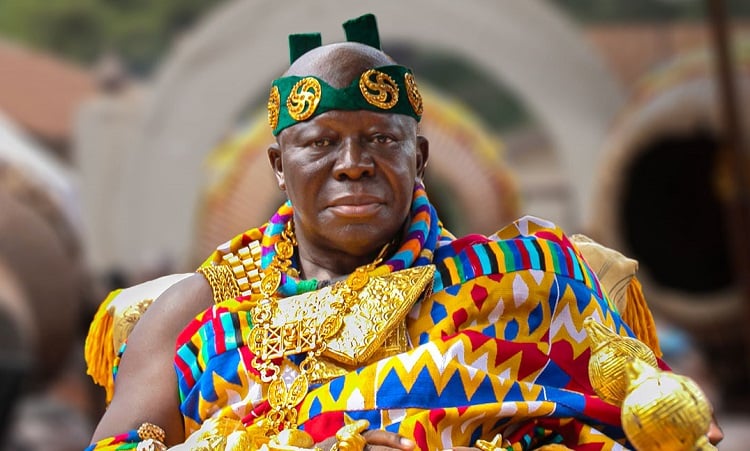
The Asantehene, Otumfuo Osei Tutu II, has called for a fundamental shift in Ghana’s policing philosophy, advocating for a transition from “forceful displays of authority,” to a model built on cultural awareness and community trust, during a landmark courtesy visit to the Inspector General of Police (IGP), Christian Tetteh Yohuno, at the Police Headquarters in Accra.
Addressing a high-powered delegation of the Police Management Board, the Asantehene expressed profound appreciation for the “selfless professionalism,” and sacrifices made by personnel across the country, emphasizing that the future of public safety lies in the integrity of individual officers rather than the equipment they carry.
“It is fair to say that through it all, the police service has maintained a level of professionalism and commitment we should be proud of. Today, we say Ayekoo [congratulations] to the Police for faithful service to the nation, Ayekoo for your selfless sacrifices, in the most difficult terrains, Ayekoo for the safety in our streets.
“But the future of public order lies not in louder sirens but in stronger values supported by competent, disciplined law enforcement”
Asantehene, Otumfuo Osei Tutu II
Despite the logistical and systemic challenges facing the institution, Otumfuo noted that the Ghana Police Service has remained a critical pillar in maintaining the nation’s international reputation as a beacon of safety in a volatile sub-region. However, he was quick to point out that maintaining this status requires a deeper, more nuanced approach to public order.

Traditional-Police Alliance
A central theme of the King’s address was the need for a structured and institutionalized partnership between the Police Service and traditional authorities. Otumfuo argued that chiefs are the primary custodians of peace at the local level and should be viewed as strategic allies rather than passive observers in the security apparatus.
By leveraging the moral authority of traditional leaders, the Asantehene believes the police can foster a higher degree of legitimacy, particularly in rural and peri-urban communities where chieftaincy remains the most accessible form of governance.
He urged the IGP to consider a curriculum overhaul within police training depots that emphasizes the “customs and values of the communities where officers are deployed.”
According to the monarch, an officer who understands the cultural fabric of a community is less likely to resort to the unnecessary use of force and more likely to secure the cooperation of the citizenry in crime-fighting efforts.
“I have come to join you for deeper institutionalised collaboration between traditional authorities and the Ghana Police Service. Let chiefs serve as allies in community policing. This synergy will not only enhance law enforcement effectiveness but also promote trust and mutual respect between the service and the public”
Asantehene, Otumfuo Osei Tutu II
In a direct appeal for de-escalation, the Asantehene emphasized that the prioritization of dialogue and mediation over confrontation should be seen as a sign of institutional intelligence rather than weakness.
He noted that modern security challenges – including chieftaincy disputes and land conflicts – often require a diplomatic touch that forceful policing cannot provide. By adopting a “mediation-first” protocol, the police can prevent localized tensions from spiraling into larger national security threats.
IGP Responds
Responding to the monarch’s visit, IGP Christian Tetteh Yohuno described the Asantehene as a “modern-day King Solomon,” whose mediation skills in conflict zones like Dagbon and Bawku have been instrumental to national peace.
In a decisive move following the King’s recommendations, the IGP announced that the Police Administration will introduce a dedicated course on Ghanaian tradition and culture into the nation’s police training curriculum. This initiative marks a pivot away from “imported European policing models,” toward a more indigenous, community-oriented framework.
“This visit challenges us to return to our history, re-embrace indigenous knowledge systems, and strengthen community- and tradition-based policing. We will integrate traditional customs into our training to ensure officers police with more empathy, legitimacy, and respect”
IGP Christian Tetteh Yohuno
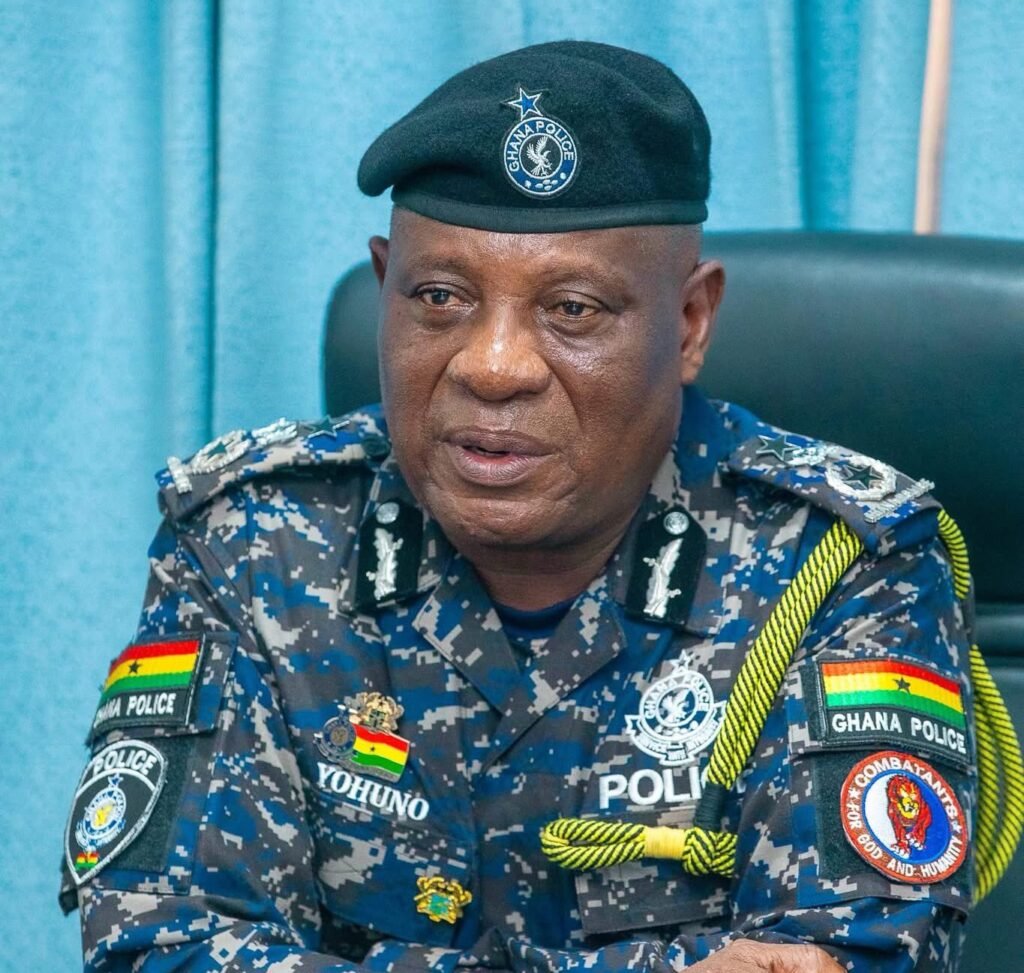
The historic Accra engagement sets a high bar for institutional reform in the police service as 2026 commences. With the Asantehene’s endorsement and the IGP’s commitment to cultural integration, the path toward a more value-based police force appears firmly established.
For the Ghanaian public, the hope is that these words translate into streets that are safe not because of the presence of sirens, but because of the presence of trust.
READ ALSO: Private Legal Practitioner Sues GoldBod, Demands Release of Information on Gold Sourcing