The World Bank has urged the government of Ghana to also focus on poverty alleviation alongside job creation ambitions as the economy regains its stability.
According to the World Bank, Ghana’s economic progress gained in the past year has often been implied to translate to job creation to support the youth, but less on its ability to target poverty reduction. The Bank argued that poverty reduction should be tabled alongside growth and job creation projects and initiatives to either reduce the adverse impact of reforms on the poor or contribute measures to reduce poverty.
“As the economy stabilizes, attention should be paid to job creation and measures to mitigate the impact of shocks and reforms on the poorest, especially from electricity tariff increases.”
World Bank
Inflation Impacts Poverty
The World Bank has reviewed past poverty levels with the rate at which the prices of goods and services within the country increase. Over the past four years, when inflation reached its peak and the pace of economic growth reduced, the poverty levels increased substantially.

In 2024, though the inflation rate was still high, the Ghanaian economic growth began to show signs of recovery compared to the previous years. This new trend, though, could not reduce the poverty level, but reduced its pace of growth. High prices still affected households in Ghana, and their ability to feed and fend for themselves
“An increasing number of Ghanaians had been falling into poverty since 2022 because of high inflation and slow growth.
“Since 2024, economic growth partially offset the impact of inflation, halting the increase in poverty, even though high food prices were still affecting households.”
World Bank
Sectoral Growth and Poverty Reduction in Ghana
The World Bank noted that the improvement in economic activities and outlook in the country’s recent history is making impactful waves. The growth within the sectors of the Ghanaian economy, noted for their high level of informalness, has particularly sustained the poor.

The agriculture and services sector has experienced significant growth over the past year and shift dynamics over time. Since they have direct contact with the poor, they directly affect poverty reduction.


“Significantly lower inflation and improved growth in 2024 and in 2025, particularly in agriculture and services, benefited poorer households.”
World Bank
Ghana’s economic growth has historically been strong, achieving middle-income status in 2011 and halving its poverty rate between 1991 and 2012. However, in recent years, growth has become less pro-poor, and progress in poverty reduction has slowed or reversed due to limited structural transformation and macroeconomic instability.

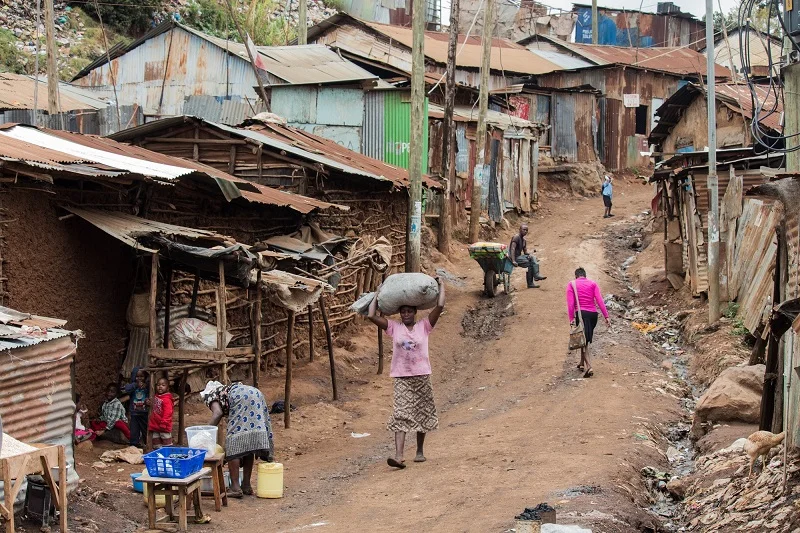
Though its share of GDP has declined, agriculture remains a critical driver of the economy and employment, mainly for the rural folks where most of the poor reside. Growth in this sector has a significant impact on poverty reduction in the country due to its high labor absorption capacity.
The service sector’s share of GDP has been consistently high, though its growth rate has varied over time due to externalities like the COVID-19 pandemic. A lot of the rural people engage in trade in the markets that support their living standards, but it is not enough for many to thrive on.
The World Bank, therefore, insists that poverty alleviation should be added to the growth and development conversation. This is to ensure that the progress seen in 2025 becomes an established pattern.
“Poverty at the lower-middle-income poverty line (US$4.2/day, 2021 PPP) is estimated at 53.3 percent in 2025, a four-point decrease, or over 600,000 fewer people in poverty, compared to the previous year.”
World Bank
Poverty Projections
The World Bank estimates a stable poverty level in 2026 due to the economic achievements gained and the country’s promising future in 2026. However, a rise in the poverty level is projected in 2027 due to a projected dip in agriculture and service sector growth.

“With inflation easing, poverty is projected to remain stable in 2026 but rise slightly to 55.2 percent at the Lower-Middle-Income Countries (LMIC) poverty line in 2027 due to lower nominal growth in agriculture and services, where most poor people work.”
World Bank
However, “sustained poverty reduction will depend on economic stabilization and inclusive growth, while strengthening social programs like LEAP will help protect the poorest from adverse fiscal measures,” the World Bank diagnosed.
As Ghana outperformed all growth projections in 2025, consistency in growth and the expansion of all the sectors of the economy to impact the lives of households will project more confidence and well-being for the people in the rural areas.
READ ALSO: G4R Costs: BoG Losses Predates GoldBod Establishment