Tag: Structural Transformation

  • Ghana’s Farm Employment Share Falls to 34.6% as Jobs Shift

    Ghana’s Farm Employment Share Falls to 34.6% as Jobs Shift

    Agriculture’s share of Ghana’s total employment has fallen to 34.6 per cent in 2025 from 71.8 per cent in 1991, according to International Labour Organization modelled estimates published through the World Bank.

    The 37.2-percentage-point decline means agriculture’s employment share has fallen by about 51.8 per cent relative to its 1991 level, marking one of the clearest long-run changes in the structure of Ghana’s labour market.

    The decline does not mean the absolute number of people working in agriculture has necessarily halved. The indicator measures agriculture’s share of all employment, so population growth and expansion in other sectors can reduce the percentage even when agricultural headcounts remain sizeable.

    What the series does show is that Ghanaian employment has become progressively less concentrated in farming, forestry and fishing. That shift is especially relevant in 2026 because the government has framed the current economic phase as a move ‘from stability to jobs’.

    The policy challenge is no longer simply to move workers out of agriculture, but to ensure that workers entering services and industry find jobs with higher productivity, stronger earnings and greater security. The Vaultz’s earlier productivity test highlighted why that distinction matters for living standards.

    Farm Share Halves

    The long-run trend is persistent. The agriculture employment share stood at 64.0 per cent in 2000, fell below half to 48.8 per cent in 2010, declined to 43.4 per cent in 2015 and reached 37.4 per cent in 2020 before falling to 34.6 per cent in 2025. The ILO employment data therefore point to structural reallocation rather than a one-off labour-market movement.
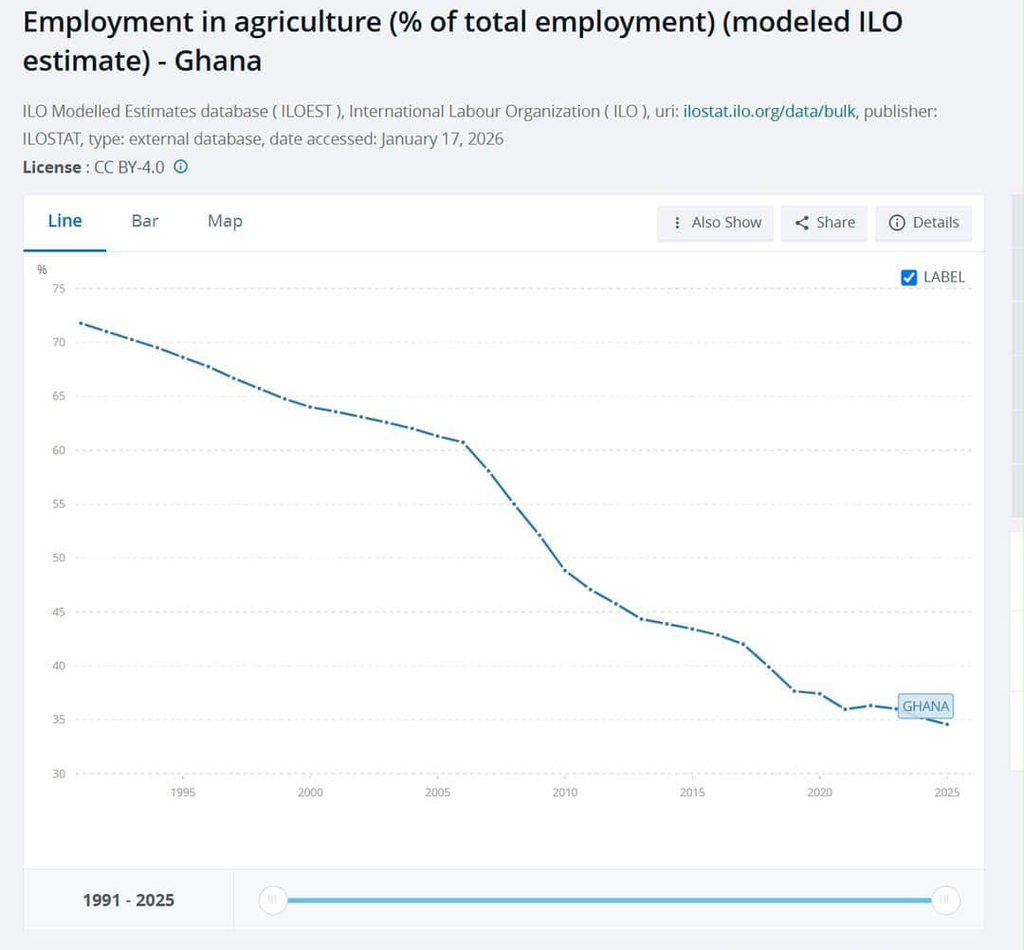
    The pace has not been perfectly smooth. Agriculture’s share rose slightly in 2022 before resuming its downward path, but the longer trend is unmistakable. Compared with 1991, agriculture’s share of national employment has fallen by roughly half as other sectors have absorbed a larger proportion of Ghana’s workforce.

    Services Take Lead

    Ghana Statistical Service survey evidence points in the same direction, although the estimates are not directly interchangeable with the ILO modelled series. In the third quarter of 2025, GSS put services at 44.5 per cent of employment, agriculture at 37.2 per cent and industry at 18.3 per cent.

    Across the first three quarters, services employed about 6.0 million people, agriculture 5.0 million and industry 2.5 million. The economic implication is more important than the ranking itself. A fall in agriculture’s employment share is normally associated with structural transformation only when labour moves towards activities that generate more output per worker.

    If workers leave farms mainly for low-productivity informal services, the economy changes sectoral composition without capturing the full productivity gain usually associated with industrialisation and modern services.

    Regions Diverge Sharply

    The national average also conceals large regional differences. GSS data show agriculture accounted for 71.8 per cent of employment in the Savannah Region in the third quarter of 2025, while the share was only 3.6 per cent in Greater Accra. Services, by contrast, accounted for 74.0 per cent of Greater Accra employment.
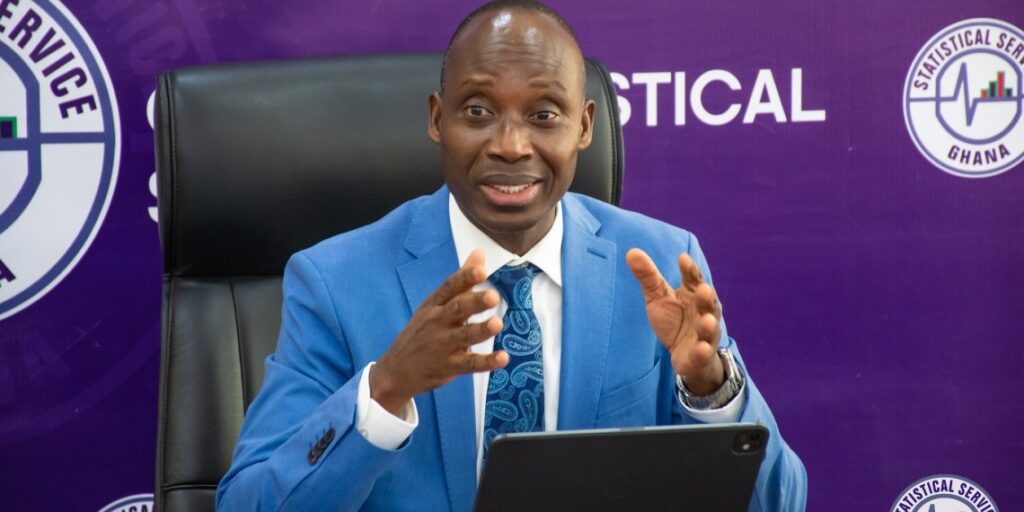
    Government Statistician Dr. Alhassan Iddrisu
    Government Statistician Dr. Alhassan Iddrisu

    That divergence means Ghana’s employment transition is occurring at different speeds. Policies that support high-value services, manufacturing and logistics in urban centres may have limited effect in regions where agriculture still employs most workers. In those areas, raising farm productivity, agro-processing and market access remains central to structural change rather than separate from it.

    Productivity Becomes Test

    The fall in agriculture’s employment share should therefore not be interpreted as evidence that farming is becoming economically unimportant. Ghana’s current strategy is simultaneously trying to raise agricultural output and reduce import dependence.

    Recent food output gains show why fewer workers relative to the total labour force can coexist with a policy push for more domestic production if productivity rises.

    That is the desirable transformation: agriculture producing more value with a smaller share of national labour, while industry and modern services absorb workers into activities with higher earnings and stronger productivity. The alternative is a numerical shift in employment shares without a corresponding improvement in job quality.

    Jobs Define Next Phase

    Ghana’s 2026 Budget makes that question current by placing job creation alongside commercial agriculture, agribusiness, infrastructure and economic transformation. The employment data provide a useful benchmark for judging that agenda.
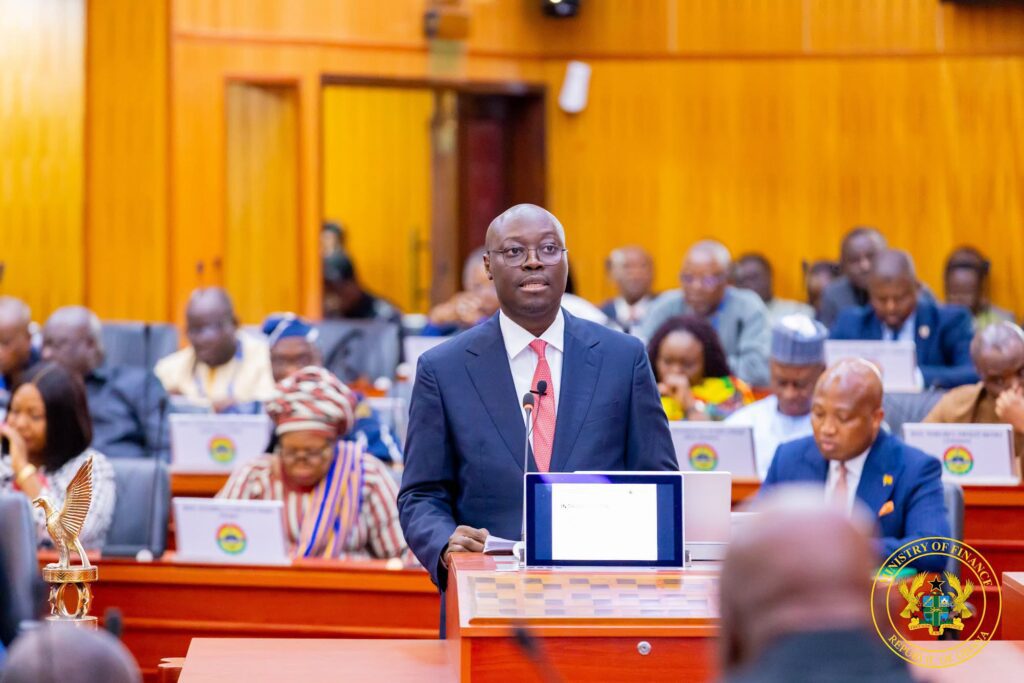
    Finance Minister Dr Cassiel Ato Forson
    Finance Minister Dr Cassiel Ato Forson

    The country has already moved a long way from the labour structure of the early 1990s; the harder task is determining what workers are moving into. If the next phase creates productive firms, stronger manufacturing, modern services and more efficient agriculture, the decline in farm employment share will represent deeper structural transformation.

    If most new jobs remain informal and low-productivity, Ghana may continue to shift labour between sectors without securing the income gains that should accompany economic transformation.

  • Ghana’s Growth Model Faces Productivity Test

    Ghana’s Growth Model Faces Productivity Test

    Ghana’s economy has expanded substantially over the past three decades, but new national productivity evidence raises a harder question about the quality of that growth.

    The Productivity, Employment & Growth Report 2025, jointly produced by the Ghana Statistical Service and the International Labour Organization, shows that labour productivity increased by roughly 240 percent over the period examined.

    Yet the country’s growth process has relied heavily on adding labour and capital rather than consistently extracting more output from each unit of those resources.

    That distinction goes to the centre of Ghana’s development challenge. An economy can raise gross domestic product by employing more people, constructing more buildings, acquiring more machinery or expanding extractive activity.

    But sustained increases in living standards ultimately depend on productivity: workers, firms and institutions producing more value with the resources already available. Without stronger efficiency gains, investment can lift output while leaving wages, competitiveness and household incomes behind.

    The timing is especially important as government prepares to translate macroeconomic stabilisation into a new phase of production and investment. Ghana’s US$10 billion New Economy programme is being framed around agriculture, agro-processing, infrastructure, jobs and private capital.

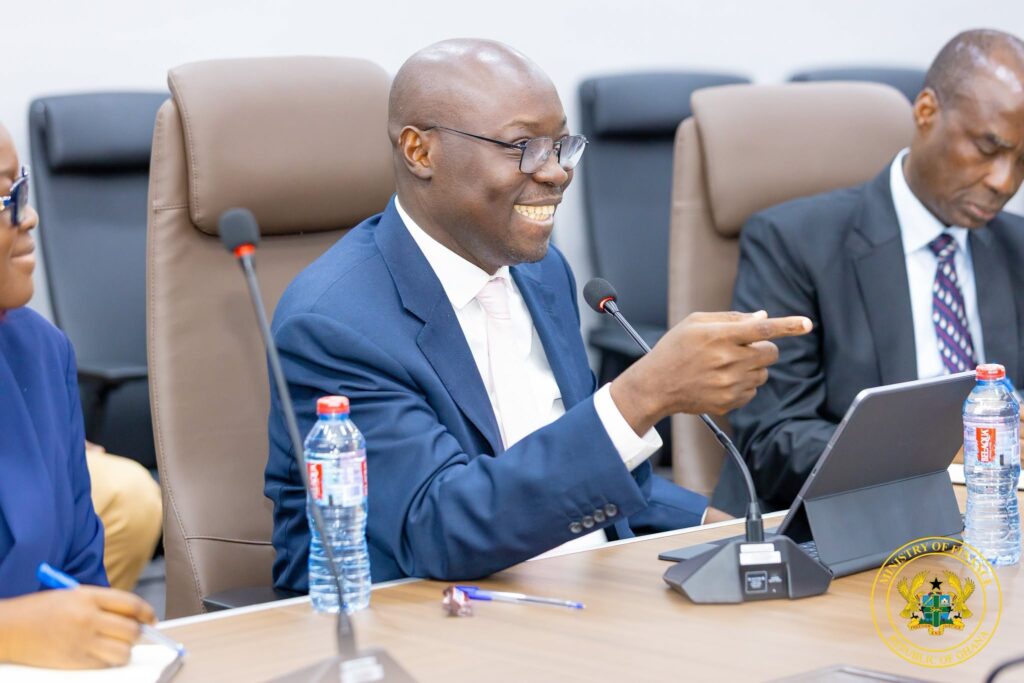
    Finance Minister Dr Cassiel Ato Forson makes a point during talks with the National Development Planning Commission on the New Economy programme in Accra. Photo: Ministry of Finance
    Finance Minister Dr Cassiel Ato Forson makes a point during talks with the National Development Planning Commission on the New Economy programme in Accra. Photo: Ministry of Finance

    The productivity report suggests that the programme should be judged not only by how much money is mobilised or how many projects are launched, but by whether those resources generate measurable efficiency gains across firms and workers.

    Growth Has Relied More on Inputs Than Efficiency

    The report, launched during the 2026 National Labour Conference in Ho, covers productivity and employment trends from 1991 to 2022 and provides detailed evidence for 17 economic sub-sectors. Labour productivity increased by about 240 percent between 1991 and 2019, equivalent to average annual growth of roughly 3.2 percent.

    Yet multifactor productivity, which captures efficiency gains from technology, innovation, skills and better organisation, contributed only about 0.5 percentage point to annual growth on average. The contrast suggests that Ghana has expanded output faster than it has improved the efficiency with which labour and capital are used together.

    This matters because input-driven growth eventually confronts limits. More capital can raise output when workers lack equipment, infrastructure or technology, and a growing labour force can expand production when jobs are available.

    However, if technology, skills, management quality and institutional efficiency do not improve at the same time, each additional unit of investment tends to generate smaller gains. The economy then requires increasingly large injections of capital simply to sustain the same growth rate.

    Government Statistician Dr Alhassan Iddrisu
    Government Statistician Dr Alhassan Iddrisu

    For fiscal policy, the implication is equally important. Public investment should not be assessed primarily by the size of allocations or the number of projects completed.

    Roads, irrigation systems, industrial parks, digital infrastructure and training programmes justify their economic cost when they reduce production constraints, lower unit costs and enable private firms to produce more competitively.

    Productive Sectors Employ Too Few Workers

    The report also exposes a structural mismatch between where Ghana generates high levels of productivity and where most Ghanaians work. Agriculture’s share of employment fell from about 53 percent in 2000 to 33 percent in 2021, while services rose from roughly 32 percent to 53 percent. Industry remained near 15 percent.

    Across the sub-sectors examined, the highest-productivity activities still tend to employ relatively small shares of the labour force. Industrial output has expanded strongly, helped by mining and petroleum, but these capital-intensive activities do not absorb labour on the scale required by Ghana’s growing workforce.

    This is why headline GDP growth can coexist with persistent employment pressure. A cedi of additional output generated by an extractive project can raise national income without creating the same number of jobs as expansion in competitive manufacturing, agro-processing or modern services.

    The report identifies manufacturing, electricity and water supply, transport and storage, and commercial agriculture among the areas where productivity and employment have advanced together.

    Dr Cassiel Ato Forson, Minister of Finance interacting with traders at the Makola Market
    Dr Cassiel Ato Forson, Minister of Finance, interacting with traders at the Makola Market

    These are especially important because the policy challenge is not simply to move workers out of low-productivity activities, but to expand productive sectors that can absorb workers at scale.

    The same concern already sits behind the government’s effort to shift policy from stabilisation towards production. As Vaultz News previously reported on the New Economy consultations, the real test will be whether investment creates productive capacity that survives beyond public support.

    The new productivity evidence makes that test more demanding: job creation should be accompanied by rising output per worker, better technology use and stronger firm-level competitiveness.

    Informality Weakens the Productivity-Income Link

    Nearly eight out of every ten Ghanaian workers remain in informal, low-productivity employment, according to the report. That concentration limits the speed at which national productivity gains translate into higher incomes because many informal firms operate with little capital, limited access to finance, weak technology adoption and narrow markets.

    The report further indicates that earnings have not kept pace with labour productivity. Economically, a persistent gap between what workers produce and what they earn can weaken the household channel through which growth becomes improved living standards.

    It can also complicate wage bargaining: firms cannot sustainably raise real wages faster than productivity over long periods, but workers are unlikely to experience growth as inclusive when productivity advances without comparable gains in purchasing power.

    Closing that gap requires more than administratively raising wages. The durable route is to strengthen the productive base underneath wages by improving skills, technology, access to reliable infrastructure, business formalisation and firm expansion. Higher productivity creates the economic space for wages to rise without automatically increasing unit labour costs or weakening competitiveness.

    New Economy Spending Needs Productivity Scorecards

    The productivity report should therefore influence how Ghana evaluates the next cycle of public and private investment. Large headline commitments can attract attention, but the appropriate economic scorecard is the return generated from each cedi of capital, each worker employed and each public intervention.

    For agriculture and agro-processing, that means tracking yields per hectare, post-harvest losses, processing utilisation, value added per worker and the ability of firms to compete without permanent protection.

    For infrastructure, it means measuring reductions in transport time, logistics costs, power interruptions and other bottlenecks that affect production. For skills programmes, the relevant outcomes include employment, earnings and worker productivity after training rather than enrolment alone.

    The National Development Planning Commission’s expected oversight of the New Economy programme creates an opportunity to embed these measures from the start. If productivity indicators are absent, Ghana risks repeating a familiar pattern in which investment raises the capital stock but does not sufficiently improve the efficiency of the economy.

    Ghana Needs Efficiency-Led Growth

    Ghana’s 240 percent increase in labour productivity over three decades is significant, but the broader evidence warns against treating that achievement as proof that the growth model has fully transformed.

    Productivity gains remain uneven, high-productivity sectors employ too few people, informality remains dominant and earnings have not captured the full benefit of rising output per worker.

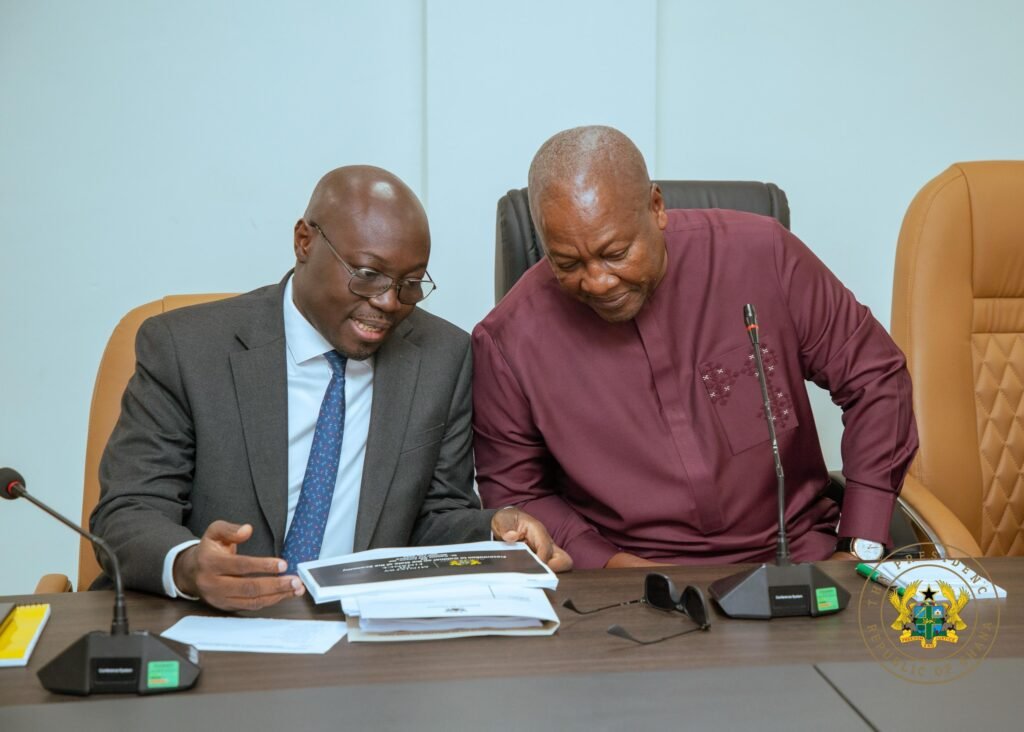
    President John Dramani Mahama (R) and Finance Minister Dr Cassiel Ato Forson (L)
    President John Dramani Mahama (R) and Finance Minister Dr Cassiel Ato Forson (L)

    The next stage of economic policy therefore has to move beyond accumulating inputs. Capital must be paired with technology, skills and better management; infrastructure must lower the cost of production; public spending must crowd in competitive private investment; and workers must be able to move into firms and sectors where their labour generates more value.

    That is the productivity test facing Ghana’s growth strategy. The country does not merely need a larger economy. It needs an economy that converts each cedi invested, each hour worked and each technological improvement into more output, better jobs and stronger real incomes.

    If the New Economy programme can deliver that shift, Ghana’s next phase of growth will be built less on adding resources and more on using them better.

    READ ALSO: Gov’t Positions Economic Zones as Drivers of Jobs and Exports
  • Mahama Inaugurates Presidential Advisory Group on Economy

    Mahama Inaugurates Presidential Advisory Group on Economy

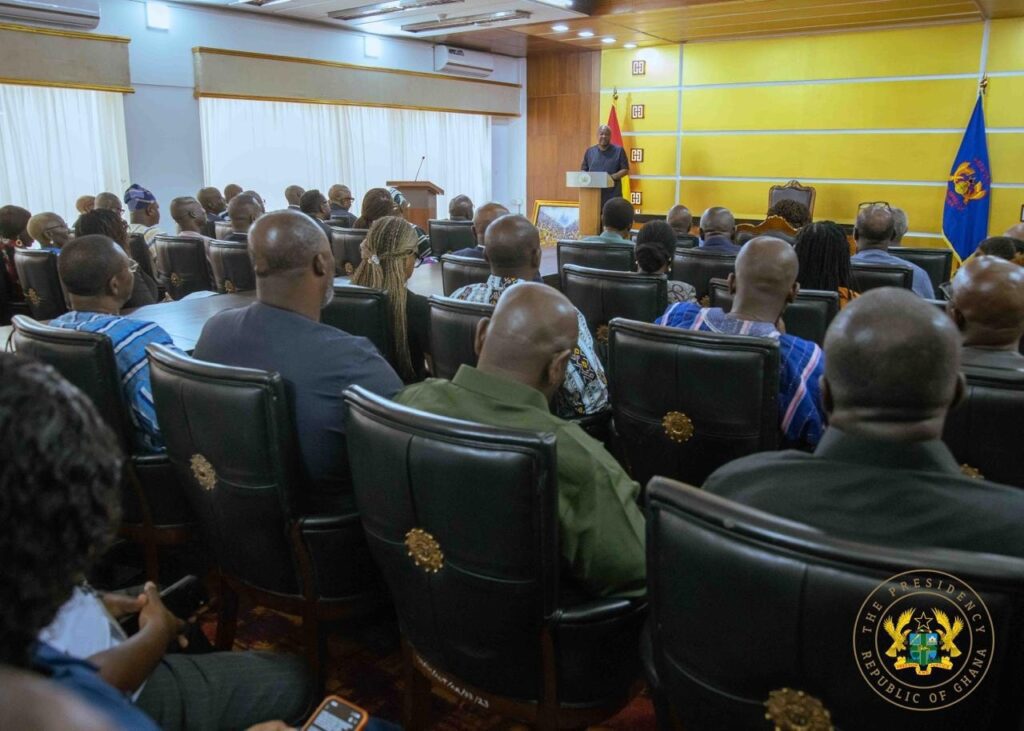
    President John Dramani Mahama has inaugurated the Presidential Advisory Group on the Economy, marking a renewed effort to strengthen economic governance and restore long term stability.

    Speaking at the Jubilee House during the group’s inaugural meeting, the President described the moment as both consequential and demanding, urging members to approach their task with honesty, independence, and a deep sense of national responsibility.

    He thanked the appointees for accepting the call to serve, noting that their collective experience and expertise come at a time when Ghana faces complex economic challenges that require careful judgment rather than easy solutions.

    According to the President, the establishment of the advisory body reflects the need for clear thinking and disciplined policy choices as the country works to consolidate recent gains and address lingering vulnerabilities.

    He stressed that the group’s work would be central to shaping decisions that affect livelihoods, investor confidence, and Ghana’s standing in the global economy.

    “The mandate of PAGE, as outlined in your letters of appointment and accompanying public release, is both clear and consequential. You are expected to provide strategic counsel on macroeconomic management, fiscal consolidation, debt sustainability, and the coherence between fiscal and monetary policy.”

    President John Dramani Mahama

    Their remit also includes advising on structural transformation, industrial development, competitiveness, and export led growth strategies that can reposition the economy for sustainable expansion.

    President John Dramani Mahama Inaugurates Presidential Advisory Group on Economy

    Beyond macroeconomic issues, the group will offer counsel on sectoral development, private sector growth, policy guidance, investment mobilisation, and job creation.

    President Mahama said PAGE would also support the design and implementation of flagship initiatives such as the 24 hour economy and the Accelerated Export Development Programme, alongside other productivity-enhancing reforms.

    In addition, the group will periodically assess economic performance, propose policy adjustments where necessary, and contribute expert input to Ghana’s engagements with bilateral and multilateral partners, international financial institutions, and investors.

    Reporting Structure and Institutional Coordination

    PAGE will report directly to the President, submitting advisory memoranda, briefs, and strategic reviews as required. President Mahama emphasised that this direct reporting line underscores the importance of frank and evidence based advice grounded in the long term national interest.

    “PAGE is not new to our governance architecture. It existed under the late President, Professor John Evans Atta Mills, and also during my earlier tenure in office. And it returns today expanded and strengthened to reflect the evolving complexity of our economy.”

    President John Dramani Mahama

    The current configuration, however, has been expanded and strengthened to reflect the evolving complexity of the economy. The President explained that the structure allows for streamlined economic governance by eliminating overlapping bodies, including the former economic management team.

    The Vice President, Professor Naana Jane Opoku Agyemang, who is a member of PAGE, will chair meetings in the President’s absence in line with constitutional responsibilities.

    PAGE will operate alongside the Economic Policy Coordinating Committee, jointly chaired by the Minister for Finance and the Governor of the Bank of Ghana. President Mahama encouraged close coordination among these bodies to promote efficiency, coherence, and cost effective governance.

    President John Dramani Mahama Inaugurates Presidential Advisory Group on Economy

    Principles Guiding the Composition of PAGE

    In constituting the advisory group, the President said he was guided by three key principles. The first is experience and institutional memory. Some members have served across different administrations, including during his earlier tenure, providing continuity that allows the country to build on what has worked while avoiding past mistakes.

    The second principle is diversity of expertise and sectoral balance. The group brings together professionals with backgrounds in fiscal policy, monetary management, capital markets, private enterprise, academia, and the real economy.

    The third principle is gender and generational balance. President Mahama stressed that economic policy must reflect the full breadth of national talent, noting that the group includes women, young professionals, seasoned practitioners, and respected elders whose perspectives will enrich deliberations.

    “This breadth is not symbolic; it is strategic. I do not want this committee to misunderstand my optimism in the advice you will offer as an endorsement of an easy task ahead. We are all qualified and experienced enough to know that we face a tough road ahead, regardless of the progress we may have chalked up to date”.

    President John Dramani Mahama

    Confronting Hard Economic Truths

    While expressing confidence in the group’s capacity, President Mahama cautioned against any assumption that the task ahead would be easy. He acknowledged that Ghana has once again found itself in debt distress after previously exiting the Highly Indebted Poor Countries initiative with a commitment never to return.

    He said that experience should have permanently reshaped the country’s fiscal culture, yet buffers and stabilisers were allowed to dissipate, leaving citizens exposed to painful domestic debt restructuring.

    The President also pointed to policy inconsistency and investor uncertainty in the petroleum sector, which contributed to declining crude oil output despite earlier investments and ambitions to consolidate gains before the energy transition.

    President John Dramani Mahama Inaugurates Presidential Advisory Group on Economy

    He cited uneven management of state owned enterprises, where weak governance frameworks and political interference undermined institutions that once provided stability and credibility.

    In the cocoa sector, he noted that the failure to secure sustainable funding for Cocobod weakened its long standing capacity to syndicate financing effectively. President Mahama said these observations were not meant to assign blame but to draw lessons in responsibility and humility from Ghana’s economic history.

    Correction Without Amnesia

    At the heart of the President’s message was the call for what he described as correction without amnesia. He urged members of PAGE to learn from both successes and failures, using that knowledge to rebuild credibility, restore fiscal discipline, attract investment, and re anchor expectations.

    The goal, he said, is to re establish Ghana as a serious, predictable, and competitive economy. He emphasised that the task goes beyond short term recovery. It requires institutional reform, structural transformation, and a permanent reset of the culture of economic governance.

    PAGE’s advice will be sought on major milestones including the national budget, mid year reviews, monetary policy developments, and medium term plans. The group will meet at least once every quarter and will also convene in emergencies when circumstances demand swift action.

    Composition and Expectations

    The Presidential Advisory Group on the Economy is chaired by President Mahama and comprises twelve experts drawn from diverse fields. In addition to the Vice President, notable members include economist Kwame Pianim, industrialist Sir Samuel Esson Jonah, business leader Togbe Afede, and former Finance Minister Dr Kwabena Duffuor.

    President John Dramani Mahama Inaugurates Presidential Advisory Group on Economy

    Technical support will be provided by the Minister for Finance, Dr. Cassiel Ato Forson, the Governor of the Bank of Ghana, Dr Johnson Asiama, the Special Advisor to the President on the Economy, Seth Tekper, and Dr Nii Moi Thompson, the Chair of the National Development Planning Commission.

    In formally inaugurating the group, President Mahama called for rigorous analysis, constructive debate, and solutions that place Ghana firmly on a path of recovery, resilience, and inclusive growth.

  • Complement Job Creation with Poverty Alleviation Measures – World Bank

    Complement Job Creation with Poverty Alleviation Measures – World Bank

    The World Bank has urged the government of Ghana to also focus on poverty alleviation alongside job creation ambitions as the economy regains its stability.

    According to the World Bank, Ghana’s economic progress gained in the past year has often been implied to translate to job creation to support the youth, but less on its ability to target poverty reduction. The Bank argued that poverty reduction should be tabled alongside growth and job creation projects and initiatives to either reduce the adverse impact of reforms on the poor or contribute measures to reduce poverty.

    “As the economy stabilizes, attention should be paid to job creation and measures to mitigate the impact of shocks and reforms on the poorest, especially from electricity tariff increases.”

    World Bank

    Inflation Impacts Poverty

    The World Bank has reviewed past poverty levels with the rate at which the prices of goods and services within the country increase. Over the past four years, when inflation reached its peak and the pace of economic growth reduced, the poverty levels increased substantially.

    In 2024, though the inflation rate was still high, the Ghanaian economic growth began to show signs of recovery compared to the previous years. This new trend, though, could not reduce the poverty level, but reduced its pace of growth. High prices still affected households in Ghana, and their ability to feed and fend for themselves

    “An increasing number of Ghanaians had been falling into poverty since 2022 because of high inflation and slow growth.

    “Since 2024, economic growth partially offset the impact of inflation, halting the increase in poverty, even though high food prices were still affecting households.”

    World Bank

    Sectoral Growth and Poverty Reduction in Ghana

    The World Bank noted that the improvement in economic activities and outlook in the country’s recent history is making impactful waves. The growth within the sectors of the Ghanaian economy, noted for their high level of informalness, has particularly sustained the poor.

    The agriculture and services sector has experienced significant growth over the past year and shift dynamics over time. Since they have direct contact with the poor, they directly affect poverty reduction.

    “Significantly lower inflation and improved growth in 2024 and in 2025, particularly in agriculture and services, benefited poorer households.”

    World Bank

    Ghana’s economic growth has historically been strong, achieving middle-income status in 2011 and halving its poverty rate between 1991 and 2012. However, in recent years, growth has become less pro-poor, and progress in poverty reduction has slowed or reversed due to limited structural transformation and macroeconomic instability.

    Though its share of GDP has declined, agriculture remains a critical driver of the economy and employment, mainly for the rural folks where most of the poor reside. Growth in this sector has a significant impact on poverty reduction in the country due to its high labor absorption capacity.

    The service sector’s share of GDP has been consistently high, though its growth rate has varied over time due to externalities like the COVID-19 pandemic. A lot of the rural people engage in trade in the markets that support their living standards, but it is not enough for many to thrive on.

    The World Bank, therefore, insists that poverty alleviation should be added to the growth and development conversation. This is to ensure that the progress seen in 2025 becomes an established pattern.

    “Poverty at the lower-middle-income poverty line (US$4.2/day, 2021 PPP) is estimated at 53.3 percent in 2025, a four-point decrease, or over 600,000 fewer people in poverty, compared to the previous year.”

    World Bank

    Poverty Projections

    The World Bank estimates a stable poverty level in 2026 due to the economic achievements gained and the country’s promising future in 2026. However, a rise in the poverty level is projected in 2027 due to a projected dip in agriculture and service sector growth.

    Poor rural area

    “With inflation easing, poverty is projected to remain stable in 2026 but rise slightly to 55.2 percent at the Lower-Middle-Income Countries (LMIC) poverty line in 2027 due to lower nominal growth in agriculture and services, where most poor people work.”

    World Bank

    However, “sustained poverty reduction will depend on economic stabilization and inclusive growth, while strengthening social programs like LEAP will help protect the poorest from adverse fiscal measures,” the World Bank diagnosed.

    As Ghana outperformed all growth projections in 2025, consistency in growth and the expansion of all the sectors of the economy to impact the lives of households will project more confidence and well-being for the people in the rural areas.

  • Ghana’s Persistent Poverty Situation Could Hinder ‘Reset’ Agenda

    Ghana’s Persistent Poverty Situation Could Hinder ‘Reset’ Agenda

    Ghana’s current economic pursuit of a reset agenda stems from a long history of persistent poverty that seems to linger, and its alleviation efforts have dwindled over the years.

    Experts agree that the economy of Ghana is in dire need of a reset, and with a strong popular mandate and a significant parliamentary majority, the new government is uniquely positioned to lay the foundations to foster broader-based economic growth and structural transformation.

    The World Bank recounts the stalled nature of poverty over the last decade and warns of hindrance to the restructuring of the economy if not addressed.

    “Despite slower but continued increases in GDP per capita, poverty reduction paused after 2012. Between 2012 and 2016, the last two years with reliable household survey data, poverty at the national absolute poverty line fell only marginally from 24.2 to 23.4 percent as growth ceased to be pro-poor.”

    World Bank

    According to the World Bank, consumption growth for the bottom 40 percent of the population declined significantly. The growth elasticity of poverty has remarkably decreased, reflecting limited job opportunities in high-productivity activities and a largely capital-intensive industrial development.

    Ghanaians are reluctant to invest in their education and skills due to limited business opportunities and job creation in the formal sector. The failure of governments to build adequate human capital and pursue private sector opportunities has increased interest in public sector employment due to wage premiums.

    Ghana’s public sector, however, “can only absorb a small segment of the labor force, and thus, the majority of Ghanaians float between underemployment in agriculture and informal service sector jobs,” the Bank noted. The informal sector and self-employment have absorbed a large share of the labor force, even in higher income quintiles.

    The Reversal Mandate

    Recent economic underperformance in Ghana due to high inflation and slower economic growth reversed past gains in poverty reduction. The COVID-19 pandemic and Russia-Ukraine war marked an inflection point for poverty in Ghana, and a subsequent increase in food and fuel prices, and reduced household purchasing power, especially for the poor and middle class.

    As a response to the global situation, inflation spiked, borrowing costs increased, investment risk heightened, foreign and domestic investment reduced, businesses suffered, and more unemployment was created.

    Ghana’s weak fiscal structure was revealed in terms of weak revenue collection, inefficient expenditures, significant energy sector shortfalls, and high debt levels. The government could not mitigate the impact of these shocks on the population, especially the poor and most vulnerable, who also have more limited mechanisms to cope with the shocks by themselves.

    “These factors have led to a stagnation of income per capita at around US$2,200. The international poverty rate (US$3.00 in 2021 purchasing power parity) is estimated to have increased marginally to 40 percent in 2023 from 39 percent in 2017.”

    World Bank

    The new government set out to provide greater governance and transparency to place public debt on a sustainable path, convert the natural resource curse into a blessing, and regain the trust of its citizens, ‘which remains among the lowest in Africa.’

    With about 500,000 young people entering the labor force annually – contributing to a young working population of nearly 7 million by 2030 – these efforts by the government can recapitalize the ‘demographic dividend’ and build a wheel that successive administrations could utilize.

    Possible Hinderance to the Reset – Exclusivity

    The absence of economic convergence, disparities in service delivery, and environmental degradation in Ghana have caused persistent socioeconomic inequalities across Ghana’s regions.

    Inequalities in poverty and social outcomes are stark between the regions in the Northern part of Ghana, where absolute poverty rates remain above 50 percent, and the rest of the country. These spatial inequities reflect both income sources and disparities in service delivery.

    “More than 80 percent of Ghana’s poverty incidence is in rural areas. Agriculture remains the dominant employer in the three Northern Regions, with farmers mainly engaged in rain-fed traditional subsistence agriculture, which is disproportionately affected by volatile rainfall patterns and increasing crop failures due to climate change.”

    World Bank

    In terms of access to education, health, and infrastructure (electricity, roads, water, and sanitation), there is a huge gap between poor and rich districts. Ghana has witnessed rapid urbanization, which has resulted in disparities within cities. The swift pace of urbanization has strained the country’s infrastructure and public services, which have not kept up with the increasing demand.

    “Although urban poverty rates have dropped over the last decade, the number of urban poor has not decreased. Poverty is more prevalent in lower-elevation slums, where communities experience higher fertility, lower school attendance, and very low access to sanitary services.”

    World Bank

    The slums in Ghana are vulnerable to natural disasters, especially floods, which threaten housing, transportation, electricity, water, and sanitation.

    The government’s reset agenda must consider the specific needs of Ghana’s regions, cities, and communities to ensure that infrastructure is not only planned and implemented but also effectively addresses the population’s unique requirements to combat poverty.

  • World Bank Endorses Ghana’s ‘Reset,’ Spurs Upheaval

    World Bank Endorses Ghana’s ‘Reset,’ Spurs Upheaval

    The World Bank has recognized the pressing need for a ‘reset’ agenda at this opportune time in Ghana’s economic history and urges the government to break from past traits.

    The World Bank, in its latest report titled “2025 Policy Note: Transforming Ghana in a Generation,” noted that the new government, barely a year old, should focus on providing new governance and institutional reforms, and promoting macroeconomic, structural, and social policies.

    The government, according to the World Bank, can achieve its goal of a reset if the new reforms are successfully implemented, ensuring inclusive growth that positively impacts the lives of the populace.

    “[World Bank] recognized the urgent need to ‘reset’ the economy, through new governance and institutional reforms, alongside comprehensive macroeconomic, structural, and social policies. If successfully implemented, the government’s vision can achieve the goal of a broad-based growth and poverty reduction.”

    World Bank Report

    The Pivotal Moment for Ghana

    Ghana has, between 2000 and 2010, achieved significant economic growth with reduced poverty and a promising future, according to the report. The years that followed reversed the economic fortunes of the country as growth declined and programs to reduce poverty stalled, leading up to the 2022 macroeconomic crisis.

    One of many demonstrations over the 2022 economic crisis

    As part of its history, Ghana has fully depended on raw natural resources with little or no effort in structural transformation. This has reduced the potential growth of the economy and characterized average productivity expansions. The productive sector of the economy, which should lead in creating employment opportunities, gave way to jobs in the low-productivity sectors.

    According to the World Bank report, the Ghanaian economy has been built on the informal sector, ‘crude’ mining, and agriculture. “Consequently, income per capita has stagnated at around US$2,200 over the past 10 years, and the progress in human development has been reversed, with poverty now afflicting more than one-quarter of the population,” the report added.

    The report declared that poor governance has been the main reason for the economic struggle the country has faced, leading to the 17 different programs with the IMF for relief.

    “Ghana’s history is marked by persistent governance issues that have obstructed policy reforms and prevented structural transformation and hindered economic diversification, thereby perpetuating a ‘boom and bust’ cycle.

    “Sudden macroeconomic stops and crises have led the country to request a record 17 programs with the International Monetary Fund (IMF), remaining under active IMF programs for 40 out of its 68 years of history.”

    World Bank Report

    With the increasing ease of accessing the capital market, governments have been shortsighted while promoting fiscal indiscipline, inefficiency, mismanagement, and delayed crucial reforms. This, according to the report, weakened the social contract.

    The report stated emphatically that “deterioration of global conditions due to the COVID-19 pandemic and the Russian Federation’s invasion of Ukraine was not the cause of the 2022 macroeconomic crisis; rather, it merely exposed an economy already beset with deep structural vulnerabilities and precarious macroeconomic conditions.”

    The condition, mode, timing, and situation of the current government have birthed the best opportunity to truly reset the country and forge a new path to prosperity.

    “Seizing this opportunity with an urgent reset. With a strong popular mandate and a significant parliamentary majority, the new government is uniquely positioned to lay the foundations to foster broader-based economic growth and structural transformation.”

    World Bank Report

    The New Charted Course

    Charting a new course for Ghana will require an efficacious and “delicate balance between short-term macroeconomic stabilization, medium-term economic recovery and job creation, and long-term structural transformation in a sustainable manner.”

    In the short term, the current achievements of the government must be sustained and consolidated with a credible posture and policy. The report alluded to the fact that the Ghanaian economy is still fragile in the current economic situation.

    The World Bank urged the government to restore macro-financial stability to reduce debt and borrowing while ensuring the State-Owned Enterprises (SOEs) live within their means. The short-term period should be used to implement the hard reforms to address the underlying causes, the report projects. Reforms in key sectors like energy, gold, and cocoa will define the next stage.

    The medium-term plans, as designed by the Report, should focus on job creation by building reform momentum and consolidating consensus to promote social cohesion. With a youthful population, the government’s focus should be on quality job creation and promoting private sector investment. The government’s flagship programs, like the 24-Hour economy, can be useful tools for creating jobs.

    The Long-term plan, according to the World Bank, requires moving quickly to “create a platform for higher and more broad-based growth,” adding that, “given that realizing the benefits of necessary structural reforms will take time, the new government should immediately frontload the long-awaited structural reforms without further delays.”

    The government must address the infrastructure deficit and financial challenges while building human capital and attracting Foreign Direct Investment (FDI) in productive sectors.

    According to the World Bank report, “a dynamic, broad-based, and growing economy provides the necessary foundation to maintain fiscal surpluses, reducing the vulnerability to economic shocks and ensuring the sustainability of public debt.”

    The report concluded that the new government must be founded on good governance and swift institutional reforms.

  • Ghana Risks Economic Fragility Without Structural Transformation– Prof. Bokpin Warns

    Ghana Risks Economic Fragility Without Structural Transformation– Prof. Bokpin Warns

    Renowned economist Professor Godfred Bokpin has raised fresh concerns about Ghana’s economic resilience, pointing to the country’s continued dependence on raw commodity exports and the lack of structural transformation as critical risks to long-term sustainability.

    Despite more than six decades of independence, Ghana continues to rely heavily on the export of unprocessed primary commodities. According to Prof. Bokpin, over 70% of Ghana’s export earnings still come from raw materials such as gold, cocoa, and crude oil — a pattern that has remained virtually unchanged since independence in 1957.

    Speaking at a forum themed “Ghana at Risk: The Economic Fallout of Distant Conflicts,” Prof. Bokpin noted, “From Independence, more than 70 percent of our export earnings are still driven by primary commodities. We are still talking about the same percentage now, and when we say we have done well, it’s more of the same. So how do you talk about resilience?”

    He explained that this economic model leaves the country exposed to external shocks and vulnerable to global price fluctuations, as it does not benefit from value addition or a diversified export base.

    The economist acknowledged that Ghana’s economy is currently reaping some benefits from high gold prices, which have been buoyed by geopolitical uncertainties and global economic instability. However, he cautioned that this temporary windfall creates a false sense of security.

    “The economy is only resilient because the negative events we are seeing now tend to disproportionately benefit gold. But what if the crises had come from the perspective of commodities? What would have happened to us?”

    Professor Godfred Bokpin

    Prof. Bokpin emphasized that Ghana’s reliance on gold as a buffer against economic shocks is unsustainable. He argued that a true resilient economy should be able to withstand a broad range of shocks, not just benefit when one commodity performs well.

    The Missing Structural Shift

    Prof. Bokpin was unequivocal in his assessment: Ghana has failed to undergo the necessary structural transformation to build a diversified and robust economy.

    “So over the years, decades, we have not really structurally transformed this economy; we haven’t diversified the economy,” he charged. According to him, the country’s economic policy has been largely cosmetic, often driven by short-term political gains rather than long-term national interests.

    He criticized the lack of bold economic reforms and the continued prioritization of extractive industries over manufacturing and technology-led sectors that could create jobs and enhance domestic productivity.

    Data-Driven Long-Term Planning Needed

    One of the central issues raised by Prof. Bokpin is the absence of a coherent, long-term national development strategy. He called for a more data-driven approach to governance and policy formulation.

    “We don’t use microdata to inform national policy formulation and implementation. Our growth pattern has been quite erratic. The economy is yet to find its level in terms of steady growth that is anchored and able to withstand shocks.”

    Professor Godfred Bokpin

    He noted that regional disparities — particularly in infrastructure, education, healthcare, and food inflation — underscore the urgent need for targeted, data-informed development planning.

    Prof. Bokpin, meanwhile, advocated for region-specific development strategies that recognize the unique strengths and needs of Ghana’s diverse regions. From agriculture in the north to mining in the west and tourism in the central and coastal belts, each region has untapped potential that should be nurtured through investment and policy support.

    “Agriculture, for instance, must be prioritized to address food inflation and ensure food security,” he stated, adding that reducing import dependency would not only stabilize the local economy but also improve rural livelihoods.

    Prof. Bokpin called for a bipartisan national consensus on economic development, urging political leaders, civil society, and the private sector to align around a long-term vision.

    “The reason our growth has been volatile is because we haven’t adopted a long-term perspective,” he said. “The short-term nature of our planning does not allow us to build the kind of economic fundamentals that will allow us to withstand shocks.”

  • Asah Asante Criticizes Ministry of Aquaculture, Calls for Structural Reforms

    Asah Asante Criticizes Ministry of Aquaculture, Calls for Structural Reforms

    Political scientist and Head of the Centre for European Studies at the University of Ghana Dr. Kwame Asah Asante has raised significant concerns about the performance and policy direction of the Ministry of Fisheries and Aquaculture.

     In a detailed critique, he highlighted the lapses in policy implementation, market development, and evaluation systems within the ministry.

     His remarks call for urgent structural reforms to transform the sector into a viable contributor to national economic growth and employment creation.

    Dr. Asah Asante criticized the ministry for failing to sustain an ambitious aquaculture program initiated by the previous administration.

    According to him, past regimes sought to empower citizens by providing the necessary resources for backyard fish farming. He recounted;

    “They were given even seed, with some taking as many as 100 bags. One bag of fish feed costs almost 400 Ghana cedis depending on the type, and the cost of one fingerling ranges from 2 to 3 Ghana cedis. It was a brilliant program aimed at addressing unemployment.’’

    Dr. Kwame Asah Asante Political Scientist, University of Ghana

    He argued that the program’s success depended on a well-developed market strategy, which the ministry failed to provide. “When you produce the fish, who is there to buy? That is the main headache of farmers,” he stressed.

    Dr. Asah Asante identified the absence of marketing strategies as the root cause of the ministry’s struggles. He explained that many fish farmers, after investing time and resources into fish production, were unable to sell their produce. He queried;

    “All these good things you have done, and you are dependent on one lady who buys and comes at her convenience. I told the ministry that they must sit up and find sustainable solutions to this.’’

    Dr. Kwame Asah Asante Political Scientist, University of Ghana

    Dr. Asah Asante proposed that the government should invest in infrastructure and logistics to create sustainable market systems for aquaculture.

    He suggested that vans should be provided to collect fish directly from farmers, value should be added through processing, and excess produce could be exported. He emphasized; “If done effectively, this can create jobs and remove many unemployed youths from the streets.’’

    Hon. Emelia Authur, Minister of Fisheries and Aquaculture

    A major flaw in the ministry’s operations, according to Dr. Asah Asante, is the lack of monitoring and evaluation mechanisms.

     He pointed out that the absence of these systems has left the ministry unaware of the challenges faced by fish farmers and the inefficiencies in policy implementation.

    “This would have been obvious to a ministry that has a monitoring and evaluation department. But from what we glean from yesterday’s [Wednesday] meeting, it tells you there is nothing like that.’’

    “If there is a monitoring system and a system that evaluates, obviously, they will pick signals. But the absence of these systems has rendered the program ineffective.’’

    Dr. Kwame Asah Asante Political Scientist, University of Ghana

    Recommendations for Reforms

    Dr. Asah Asante called on the newly appointed leadership of the Ministry of Aquaculture to implement comprehensive reforms.  He reiterated;

    “The new regime must tie marketing to their programs. It is common sense that they do that. Otherwise, the whole program will be an exercise in futility.’’

    Dr. Kwame Asah Asante Political Scientist, University of Ghana

    Additionally, he suggested that the ministry should prioritize value addition and exportation as part of its long-term strategy. He suggested;

     “Government must give vans to people, go around the city of Accra, let people buy the fish, put them in a cold house, add value, and export what you want to export. I tell you; you will get a lot of youth off the street.’’

    Dr. Kwame Asah Asante Political Scientist, University of Ghana
    Vetting Process of Hon. Emelia Authur – Minister of Fisheries and Aquaculture

    Dr. Asah Asante also expressed disappointment with the parliamentary vetting process for nominees responsible for the Ministry of Aquaculture.

     He observed that critical issues, such as the lack of market access for fish farmers, were not adequately addressed during the vetting process of Hon. Emelia Authur – Minister of Aquatic culture.

    He suggested that the vetting panel was either fatigued or inadequately informed about the critical issues affecting the sector.

    Dr. Kwame Asah Asante’s critique highlights the systemic challenges within the Ministry of Aquaculture, particularly the lack of market access, monitoring systems, and comprehensive policies. He queried;

    “The ministry must not deceive itself into believing that it is encouraging people to engage in aquaculture when there are no resources or market systems to sustain their efforts.’’

    Dr. Kwame Asah Asante Political Scientist, University of Ghana

    He has urged the ministry to address these issues urgently to ensure that the aquaculture sector fulfills its potential in creating jobs and contributing to the economy.