• About
  • Advertise
  • Privacy Policy
  • Contact
Tuesday, September 8, 2026
  • Login
The Vaultz News
  • Top Stories
  • News
    • General News
    • Education
    • Health
    • Opinions
  • Economics
    • Economy
    • Finance
      • Banking
      • Insurance
      • Pension
    • Securities/Markets
  • Business
    • Agribusiness
    • Vaultz Business
    • Extractives/Energy
    • Real Estate
  • World
    • Africa
    • America
    • Europe
    • UK
    • USA
    • Asia
    • Around the Globe
  • Innovation
    • Technology
    • Wheels
  • Entertainment
  • 20MOBPL2DNew
  • Jobs & Scholarships
    • Job Vacancies
    • Scholarships
No Result
View All Result
The Vaultz News
  • Top Stories
  • News
    • General News
    • Education
    • Health
    • Opinions
  • Economics
    • Economy
    • Finance
      • Banking
      • Insurance
      • Pension
    • Securities/Markets
  • Business
    • Agribusiness
    • Vaultz Business
    • Extractives/Energy
    • Real Estate
  • World
    • Africa
    • America
    • Europe
    • UK
    • USA
    • Asia
    • Around the Globe
  • Innovation
    • Technology
    • Wheels
  • Entertainment
  • 20MOBPL2DNew
  • Jobs & Scholarships
    • Job Vacancies
    • Scholarships
No Result
View All Result
The Vaultz News
No Result
View All Result
in Economy

NDPC Oversight Raises Stakes for Ghana’s US$10bn New Economy

Collins Baffourby Collins Baffour
September 8, 2026
Reading Time: 6 mins read
Add as Preferred on Google
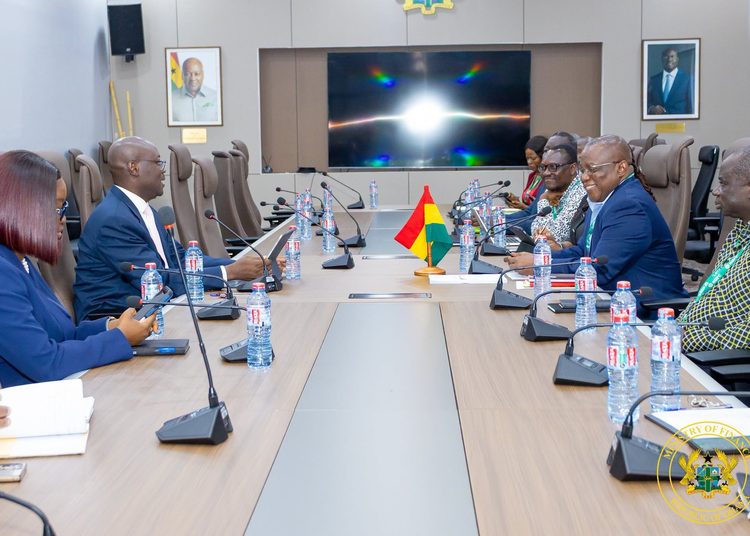
Dr Cassiel Ato Forson and his team face the NDPC delegation led by Chairman Dr Nii Moi Thompson at the Ministry of Finance in Accra. Photo: Ministry of Finance

Dr Cassiel Ato Forson and his team face the NDPC delegation led by Chairman Dr Nii Moi Thompson at the Ministry of Finance in Accra. Photo: Ministry of Finance

Ghana’s planned US$10 billion New Economy programme is moving from political ambition towards an accountability framework, with the National Development Planning Commission expected to track and assess implementation as government prepares to unveil the full programme in the 2027 Budget in November.

Finance Minister Dr Cassiel Ato Forson disclosed the Commission’s role after meeting its leadership on Monday, 7 September. The development matters because the economic value of the programme will depend less on the size of the headline investment than on whether spending and private capital produce measurable gains in productivity, jobs, exports and household incomes.

Oversight Turns Ambition Into Measurable Targets

NDPC already has a constitutional and statutory role in monitoring, evaluating and coordinating national development policies, programmes and projects. Bringing that mandate into the New Economy programme creates an opportunity to judge implementation against outcomes rather than announcements.
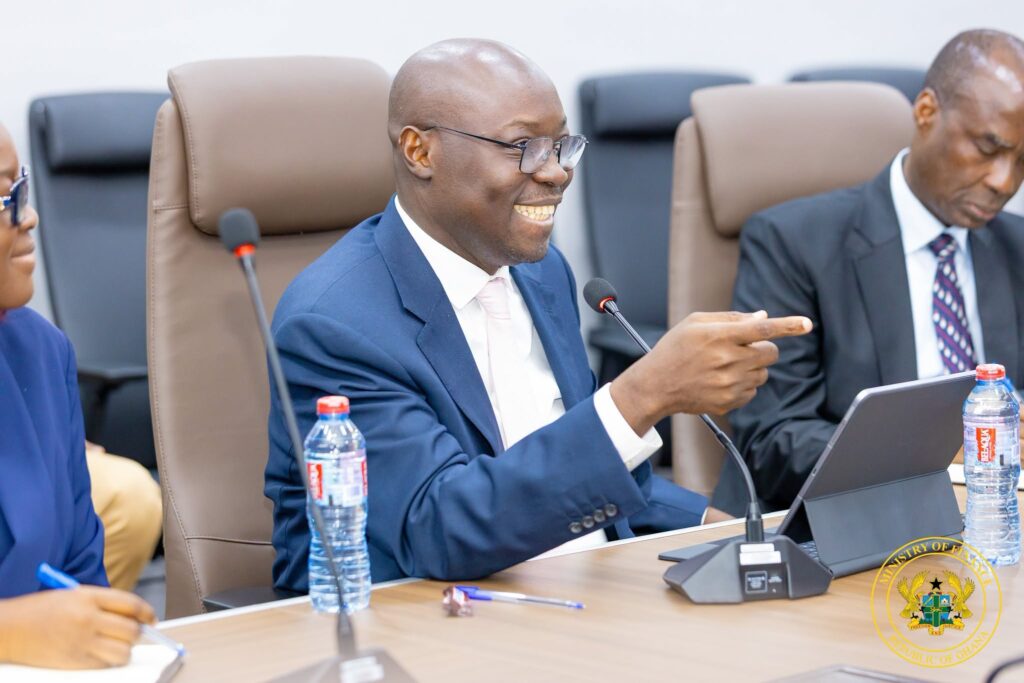
Finance Minister Dr Cassiel Ato Forson makes a point during talks with the National Development Planning Commission on the New Economy programme in Accra. Photo: Ministry of Finance

A credible scorecard would need clear baselines, annual targets, timelines and responsible institutions. For irrigation, for example, expenditure alone says little about economic return. More informative measures include additional land under reliable cultivation, crop yields, farm incomes, post-harvest losses and the volume of produce reaching processors.

ADVERTISEMENT

That distinction is important for taxpayers. Large programmes can absorb resources while delivering weak returns when projects are delayed, poorly sequenced or disconnected from private demand. Regular monitoring can expose such gaps early enough for policy to change.

US$10bn Needs a Transparent Financing Map

President John Dramani Mahama has said the New Economy will involve US$10 billion in investment over four years across seven priority sectors, equivalent to about US$2.5 billion annually. Agriculture and agro-processing will receive US$5 billion, or half of the planned envelope.

The unresolved question is how much will come directly from the budget and how much will be financed through private investment, public-private partnerships, development finance or borrowing. Those sources carry different implications for public debt, future taxes and the cost of capital.

Ghana’s fiscal rules require an annual primary surplus of at least 1.5 percent of GDP on a commitment basis. The programme therefore has to expand productive capacity without weakening the discipline that helped restore macroeconomic stability.

Public money is most defensible where it removes constraints, such as irrigation gaps, feeder roads, logistics bottlenecks or unreliable infrastructure, that prevent otherwise viable private investment.
ADVERTISEMENT
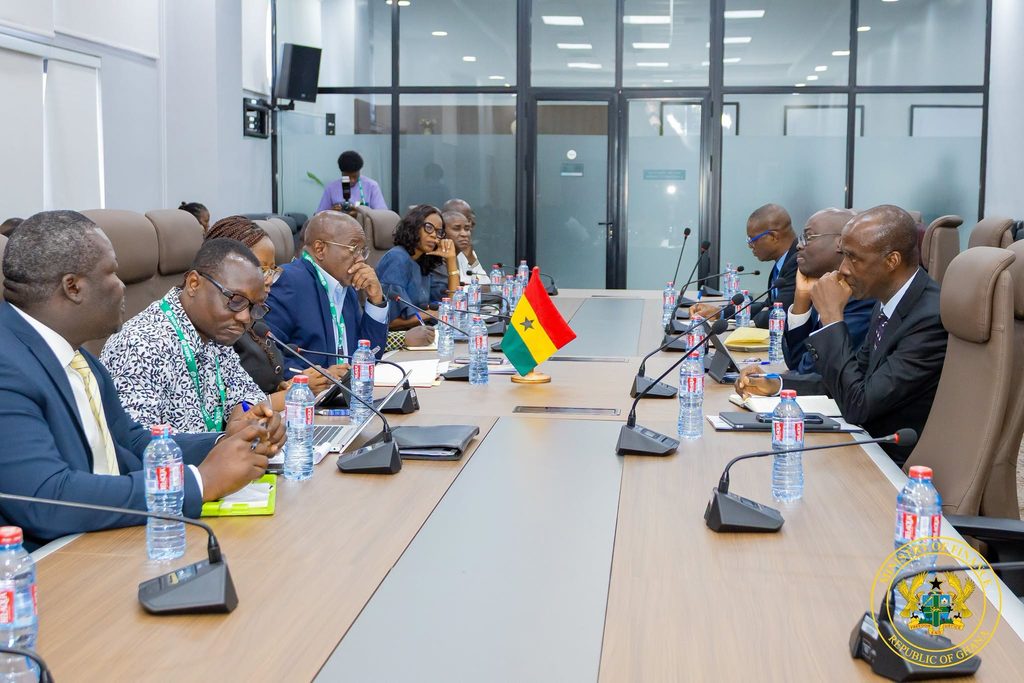
Officials from the Finance Ministry and the National Development Planning Commission during the engagement on the New Economy programme. Photo: Ministry of Finance

Agriculture Allocation Needs an Economic Return

Putting half of the programme into agriculture and agro-processing gives the policy a direct connection to food prices, rural incomes, employment and Ghana’s import bill. Yet higher production alone will not guarantee transformation.

More tomatoes without storage, processing or reliable buyers can depress farm-gate prices. A new factory without dependable raw materials can leave expensive machinery underused.

NDPC’s assessment will therefore need to follow the entire value chain, from productivity and market access to processing utilisation, local sourcing, exports and farmer incomes.

ADVERTISEMENT

Import substitution also requires discipline. Replacing imports with domestic products is economically useful when local production becomes competitive on price, quality and reliability. If protection simply leaves households and firms paying permanently higher prices, the economy has shifted costs rather than solved the underlying productivity problem.

Jobs and Exports Will Be the Hardest Scorecard

Employment will be one of the programme’s most visible political promises. Ghana Statistical Service data show that unemployment among people aged 15 to 35 averaged 21.9 percent during the first three quarters of 2025, compared with 12.8 percent nationally.
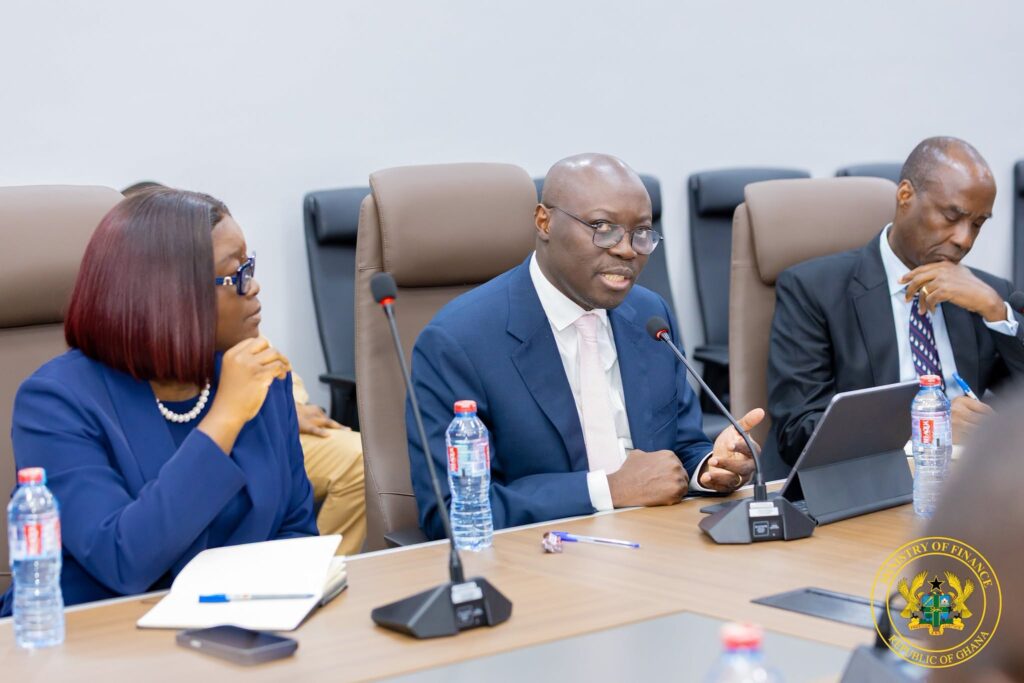
Dr Cassiel Ato Forson sets out the New Economy programme, with the NDPC expected to track its implementation and assess progress. Photo: Ministry of Finance

That makes job quality as important as job counts. Temporary construction employment can support incomes, but structural transformation requires firms that remain competitive after projects are completed. Useful indicators should therefore include sustained jobs, real earnings, labour productivity, new private investment and business survival.

The same logic applies to the external economy. If new production replaces avoidable imports and creates competitive exports, Ghana can reduce recurring pressure on foreign exchange and strengthen the cedi through underlying trade flows rather than temporary support.

For businesses, that framework can also reduce policy uncertainty. Investors are more likely to commit capital when project selection, infrastructure priorities and performance rules are transparent.

Monitoring therefore has a second economic function: it can improve credibility by showing whether public intervention is actually lowering the risks and costs faced by productive firms.

Ghana enters this transition with annual inflation at 5.0 percent in August and real GDP growth of 6.4 percent in the first quarter of 2026. Those official indicators provide a stronger platform, but stability is valuable only when it supports productivity and rising living standards.
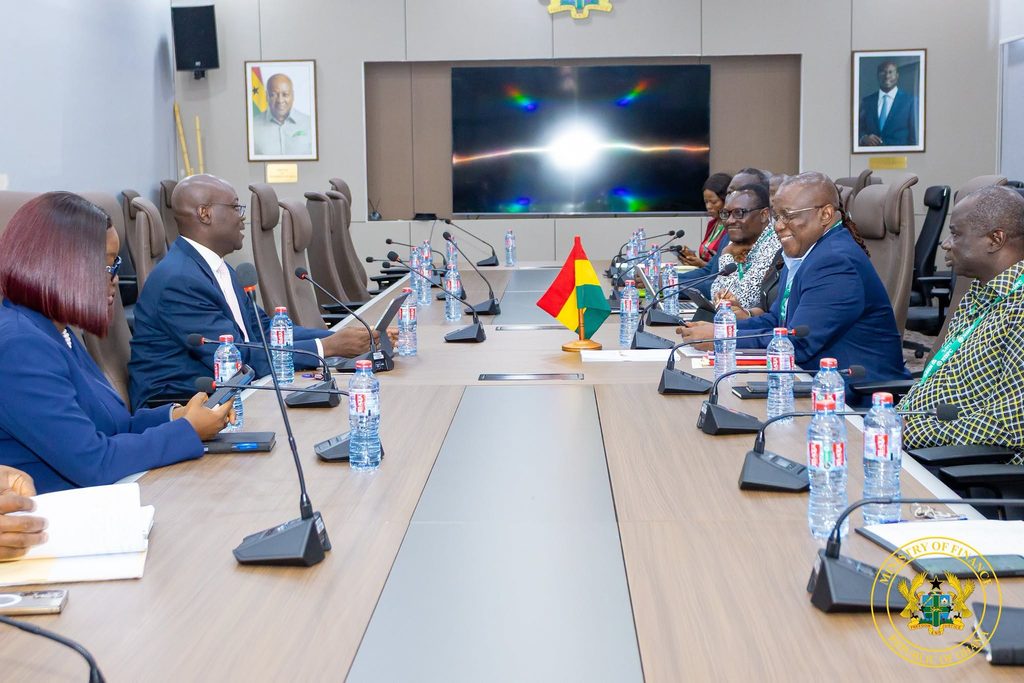
Dr Cassiel Ato Forson and his team face the NDPC delegation led by Chairman Dr Nii Moi Thompson at the Ministry of Finance in Accra. Photo: Ministry of Finance

November’s Budget should therefore be judged not only by how the US$10 billion is allocated, but by whether government publishes a financing structure, measurable targets and a credible mechanism for correcting underperforming interventions.

NDPC oversight strengthens that architecture. For households, the final score will remain simpler: better-paying jobs, more stable food prices and incomes that rise with a more productive economy.

READ ALSO: Ghana Repatriates Nearly 5,000 Citizens From Crises Worldwide Since 2025

ADVERTISEMENT

Sign Up to Our Newsletter

Fresh updates, Straight to your inbox

Tags: Cassiel Ato ForsonGhana EconomyJob creationNDPCNew Economyprivate investmentProductive InvestmentPublic Finance
Please login to join discussion
Previous Post

Houthi Attacks Injure 73 In Saudi Arabia

Next Post

Sam Smith’s Hazel Eyes Misses Billboard 200 With Weak Debut

Related Posts

Workers on a pharmaceutical production line in Ghana
Economy

Pooled Procurement Could Scale Ghana’s Pharmaceutical Industry

September 7, 2026
GPRTU commercial buses in Accra amid Ghana transport fare debate
Economy

Oil Shock Raises Inflation Risk in Ghana’s Transport Fare Debate

September 7, 2026
Bank of Ghana Governor Johnson Asiama and monetary policy rate
Economy

Ghana’s 5% Inflation Reopens Debate Over BoG’s 14% Policy Rate

September 5, 2026
Government Warns Stability Alone Cannot Transform Ghana’s Economy
Economy

Government Warns Stability Alone Cannot Transform Ghana’s Economy

September 4, 2026
ADVERTISEMENT

Sign Up to Our Newsletter

Fresh updates, Straight to your inbox

ADVERTISEMENT

Recent News

Executive Director of Africa Education Watch (Eduwatch),  Kofi Asare

Eduwatch Raises Policy Concerns Over 54,985 Unplaced BECE Candidates

September 8, 2026
Critical Mineral

AfCFTA Targets Cross Border Mega Projects For Continental Mineral Processing

September 8, 2026
Hon. Emmanuel Armah-Kofi Buah, Minister of Lands and Natural Resources

Lands Minister Demands Zijin’s China Mining Practice in Ghana

September 8, 2026
GSE Stocks Shed Ground as Trading Value Hits GH¢139m

GSE Stocks Shed Ground as Trading Value Hits GH¢139m

September 8, 2026
ohnson Asiedu Nketiah engages in discussion during a session at the ICDPP in Seoul, where he addressed the gathering on behalf of the African Political Parties Initiative.

Asiedu Nketiah: Political Parties Must Prepare to Govern, Not Just Win

September 8, 2026
ADVERTISEMENT
Next Post
Hazel Eyes

Sam Smith’s Hazel Eyes Misses Billboard 200 With Weak Debut

The Vaultz News

Copyright © 2025 The Vaultz News. All rights reserved.

Navigate Site

  • About
  • Advertise
  • Privacy Policy
  • Contact

Follow Us

Welcome Back!

Login to your account below

Forgotten Password?

Retrieve your password

Please enter your username or email address to reset your password.

Log In
No Result
View All Result
  • Top Stories
  • News
    • General News
    • Education
    • Health
    • Opinions
  • Economics
    • Economy
    • Finance
      • Banking
      • Insurance
      • Pension
    • Securities/Markets
  • Business
    • Agribusiness
    • Vaultz Business
    • Extractives/Energy
    • Real Estate
  • World
    • Africa
    • America
    • Europe
    • UK
    • USA
    • Asia
    • Around the Globe
  • Innovation
    • Technology
    • Wheels
  • Entertainment
  • 20MOBPL2D
  • Jobs & Scholarships
    • Job Vacancies
    • Scholarships

Copyright © 2025 The Vaultz News. All rights reserved.

This website uses cookies. By continuing to use this website you are giving consent to cookies being used. Visit our Privacy and Cookie Policy.