
Ghana’s latest attempt to contain the October diesel shock now combines a temporary tax concession with a refinery price hold, shifting the policy question from whether fuel prices will rise to how much of the external shock the government and domestic suppliers can prevent from reaching transport, production and consumer prices.
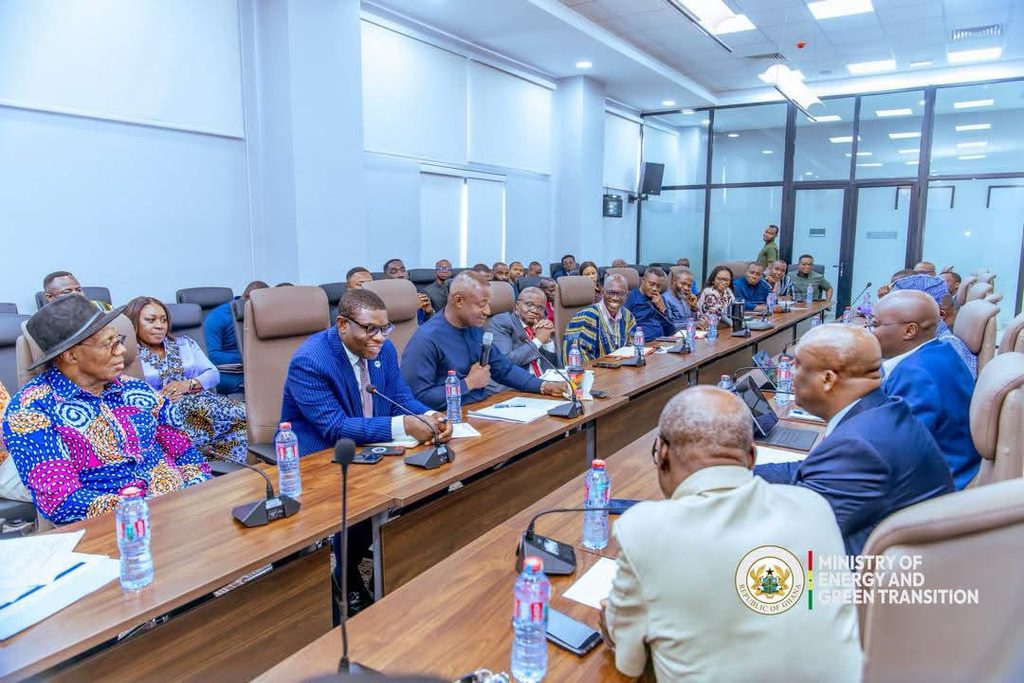
National Petroleum Authority Chief Executive Godwin Kudzo Edudzi Tamakloe said Tema Oil Refinery and Sentuo Oil Refinery agreed after an emergency meeting on Thursday, October 1, to maintain the prices at which they sold petroleum products to Bulk Distribution Companies in the previous pricing window.
The meeting was convened by Minister for Energy and Green Transition John Abdulai Jinapor under the direction of President John Dramani Mahama.
The refinery agreement adds to the government’s earlier diesel intervention, which changes the composition of the GH¢2-per-litre relief by combining lower statutory margins with a temporary suspension of the GH¢1-per-litre Energy Sector Shortfall and Debt Repayment Levy on diesel. Tamakloe said the levy suspension applies for October and could be reviewed if international market conditions change.
Refinery Hold Narrows Pass-Through
Before the intervention, the NPA’s projection placed diesel at about GH¢22 per litre for the first October pricing window. Mr Tamakloe said the combined measures should keep the pump price below GH¢20 per litre.

That is a policy target rather than a confirmed national pump price, because individual oil marketing companies retain pricing decisions within the downstream framework. The pressure behind the intervention is independently visible in the latest COPEC projection.
The Chamber of Petroleum Consumers projected diesel at GH¢22.42 per litre from a mean of GH¢18.24, while petrol was projected at GH¢17.78 from GH¢16.90. COPEC attributed the increase mainly to higher international petroleum prices and about 1.20 percent depreciation of the cedi during the pricing period.
That combination matters for Ghana because petroleum shocks arrive through both the dollar price of refined products and the exchange rate used to convert those costs into cedis. Holding refinery selling prices temporarily interrupts part of that transmission before products reach distributors and retailers.
Mr Tamakloe said TOR and Sentuo currently account for about 45 percent of local petroleum demand, while imported products still supply the larger remaining share.
Transport Costs Stay Exposed
Diesel carries an unusually broad inflation channel because it is heavily used in commercial transport, haulage, food distribution, mining, construction and parts of manufacturing. A large increase can therefore appear first in operating costs and freight charges before spreading into the prices paid by households.
The timing is sensitive. Ghana’s annual consumer inflation stood at 5.0 percent in August, 0.4 percentage points above July, according to official inflation data. The rate remains far below the levels seen during the recent inflation crisis, but a renewed fuel shock would test whether the current low-inflation environment can absorb higher transport and distribution costs without broader price pressure.
Public transport fares also rose by 8 percent from September 26. In announcing the transport fare increase, road transport operators acknowledged that government’s diesel intervention had helped moderate the adjustment. A sharp move towards GH¢22 per litre would therefore have increased pressure on the assumptions behind that settlement.
Fiscal Cushion Has Price
The anti-inflation benefit comes with a fiscal cost because suspending the GH¢1 levy reduces a revenue stream earmarked for energy-sector shortfalls and debt repayment. The trade-off is material given the size of the sector’s financing requirement.
The Ministry of Finance’s 2025 Energy Sector Support Account report shows GH¢8.81 billion in lodgements into the account, while total payments for energy-sector shortfalls and legacy debt reached GH¢22.67 billion.
The Controller and Accountant-General’s Department provided an additional GH¢12.85 billion from the Treasury Main Account. Vaultz’s earlier examination of the energy financing gap therefore provides the fiscal context for the October concession.
Government is effectively balancing two risks: allowing an imported fuel shock to feed into inflation and transport costs, or accepting lower near-term levy revenue in a sector that already requires substantial Treasury support.

The refinery price hold adds a commercial buffer to that fiscal response, but neither measure removes Ghana’s exposure to global petroleum prices or exchange-rate movements.
October Becomes Policy Test
For the first October pricing window, the immediate objective is to keep the projected diesel increase below the level that would otherwise have prevailed. The NPA’s below-GH¢20 expectation, the refinery price hold and the levy suspension together provide a short-term cushion.
The durability of that cushion will depend on what happens next in international petroleum markets and the cedi. Tamakloe has indicated that the levy could be restored depending on how market conditions develop.
That makes October a test of whether targeted relief can slow fuel-price pass-through without turning temporary protection into a larger recurring fiscal commitment.
READ ALSO: Government Reshapes GH¢2 Diesel Intervention