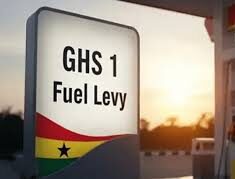
Government injected an additional GH¢12.85 billion into Ghana’s energy sector in 2025 after proceeds from the Energy Sector Shortfall and Debt Repayment Levy (ESSDRL), commonly known as the One-Cedi Fuel Levy, fell significantly short of financing the sector’s obligations.
According to the 2025 Annual Report on the Management of the Energy Sector Support Account, the levy generated GH¢8.81 billion during the year, while total spending on energy sector shortfalls and legacy debt repayments reached GH¢22.67 billion.
The figures highlight the scale of Ghana’s persistent energy-sector financing challenges despite efforts to mobilise additional revenue through fuel-related levies.
The report, submitted to Parliament by the Ministry of Finance, showed that government had to transfer GH¢12.85 billion from the Treasury Main Account to bridge the funding gap.
As a result, an additional amount of GH¢12.85 billion was paid by the Controller and Accountant-General’s Department from the Treasury Main Account, the report stated.
The Treasury support included GH¢5.16 billion to cover energy sector payment shortfalls and GH¢7.69 billion for legacy debt repayments.
Levy Outperformed Revenue Target
The report showed that collections from the ESSDRL performed slightly above expectations.
Actual collections amounted to GH¢8.66 billion, exceeding the revised target of GH¢8.62 billion by GH¢39.88 million.
Total lodgements into the Energy Sector Support Account reached GH¢8.81 billion during the year.
Together with a balance carried forward from 2024, the account had GH¢10.07 billion available for utilisation.

However, that amount was insufficient to meet the sector’s financing requirements.
Total expenditure reached GH¢22.67 billion, more than double the resources available in the account.
Of this amount, GH¢11.48 billion was used to finance energy sector shortfalls, while GH¢11.19 billion went toward servicing legacy debts accumulated across the sector.
What the Numbers Reveal
The report offers one of the clearest indications yet that Ghana’s energy sector continues to face deep-rooted financial pressures despite years of reforms, tariff adjustments and debt recovery measures.
The ESSDRL was introduced under the Energy Sector Levies Act, 2025 (Act 1135), which consolidated several petroleum-related levies into a single charge designed to support the sector and reduce outstanding debts.
Government also increased the levy by GH¢1 per litre on selected petroleum products in 2025 to generate additional revenue.
The latest figures suggest that while the levy has become a significant source of funding, it remains insufficient to address the scale of obligations facing the sector.
The report attributed the levy’s relatively strong revenue performance to increased consumption of petroleum products driven by economic activity, stable fuel prices and government measures aimed at reducing diversion of petroleum products.
Yet even with those gains, financing needs continued to outpace revenue collections.
Implications for Consumers
The findings may fuel renewed debate about whether additional levies, tariff increases or broader reforms are needed to restore financial sustainability to Ghana’s energy sector.
For consumers, the figures illustrate why discussions around electricity tariffs, fuel levies and utility-sector reforms remain politically sensitive.
Many households and businesses already contribute through electricity bills and fuel purchases.
The report now shows that taxpayers also provided billions of cedis through the national budget to support the sector.
In effect, a substantial portion of energy-sector costs continues to be absorbed by public finances rather than being fully covered through sector revenues.
This raises questions about the long-term sustainability of relying on government transfers to fill financing gaps.
Sector Reform Questions Remain
The report does not identify specific causes behind the continuing shortfalls, but the figures are likely to renew attention on longstanding concerns including utility losses, debt accumulation, collection inefficiencies and payment obligations across the energy value chain.
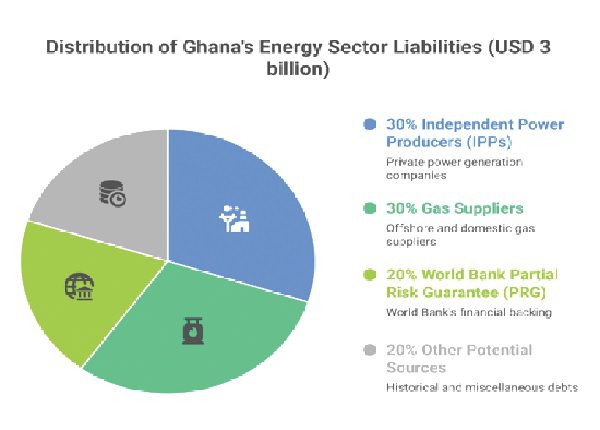
Successive governments have implemented measures aimed at reducing the sector’s financial burden, including tariff reforms, debt restructuring programmes and levy adjustments.
However, the latest numbers suggest that significant challenges remain.
The fact that a levy specifically introduced to address sector debts and financing gaps covered less than half of total obligations underscores the magnitude of the problem.
Looking Ahead
Despite generating billions of cedis in revenue, the ESSDRL was unable to eliminate the need for substantial government support in 2025.
The report concluded that additional public resources were still required to address longstanding energy-sector debts and payment shortfalls.
At the end of the year, the Energy Sector Support Account recorded a closing balance of GH¢252.23 million.
For policymakers, the figures serve as a reminder that while revenue mobilisation efforts have strengthened, the financial sustainability of Ghana’s energy sector remains a work in progress.
The central question now is whether future reforms can reduce the need for taxpayer-funded bailouts or whether government will continue to shoulder a significant share of the sector’s growing financial burden.
READ ALSO: Bono East Leaders Push For Improved NHIA Infrastructure