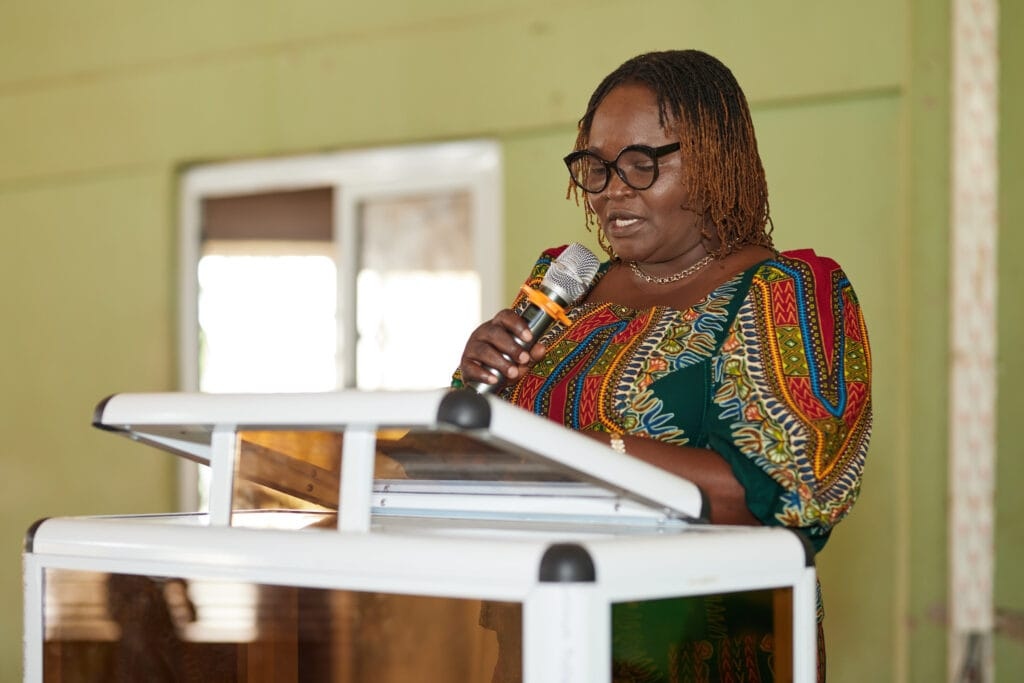
The Volta Regional Education Director, Marian J. A. Adzroe, has appealed for urgent government and stakeholder intervention to address a worsening infrastructure crisis at Peki Senior High Technical School (Peki SHTS), where students continue to study and live under dire conditions.
Speaking on the situation, Madam Adzroe disclosed that a new project has already been earmarked for the school, comprising a boys’ dormitory with sanitary facilities and a housemaster’s bungalow, all packaged as part of ongoing infrastructure support for the institution. She noted that an uncompleted dining hall project also remains outstanding at the school.
Madam Adzroe recounted a personal visit to the school during which she discovered that one of the existing structures had lost its roofing. She explained that she quickly consulted the National Disaster Management Organisation (NADMO), which provided one bundle of roofing sheets to help fix the affected structure, offering a temporary but necessary intervention while broader infrastructure plans remain pending.
She also disclosed that she had engaged a representative from the Ghana Education Trust Fund (GETFund) regarding the uncompleted dining hall project, who promised to visit the school and assess how support could be extended toward its completion
Explaining the root of the pressure on the school’s facilities, Madam Adzroe attributed the high enrolment numbers at Peki SHTS to a growing national interest in technical education, noting that many parents now want their children to receive a blend of technical and grammar education rather than one or the other.
“The high enrolment issue at Peki Senior High Technical is as a result of the trend for technical education of late, so the enrolment is high because everybody wants his or her ward to have a blend of technical and grammar education.”
Volta Regional Education Director, Marian J. A. Adzroe
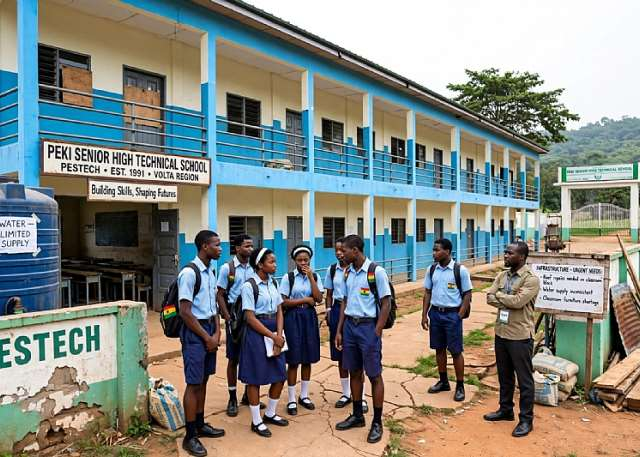
She explained that while government is working to support the school’s needs, the scale of demand has made it difficult to fully match infrastructure development with the pace of rising enrolment, even as several other schools within the region continue to receive similar support.
Call For Shared Responsibility Beyond Government
Madam Adzroe stressed that addressing the school’s challenges should not fall on government alone, noting that Volta Region has 58 schools in total, several of which have received various infrastructure projects this year, including dining halls, kitchens, dormitories, and bungalows for teachers and headmasters.
“It is not only about government, but we have other stakeholders who can also support in the interim while government comes into support, so parents are also there, they must support the missions, the environment and the community.”
Volta Regional Education Director, Marian J. A. Adzroe
She called on Civil Society Organisations (CSOs), non-governmental organisations, and community authorities to get involved in helping address the school’s immediate needs, particularly ahead of the rainy season, when the consequences of damaged infrastructure could become more severe for students.
Distancing The Issue From Political Interpretation
Madam Adzroe addressed public reaction following media coverage of the school’s conditions, noting that some members of the public had begun interpreting the situation through a political lens following the publication of the issues.
She was firm in distancing the matter from partisan politics, explaining that the school’s headmaster had similarly declined to engage extensively with the media on the matter, a caution she linked to broader anxieties within the country about the consequences of publicly exposing institutional shortcomings.
She explained that, as an old student of the school, she personally took a visiting journalist around the compound to see firsthand the conditions students were contending with, reinforcing her appeal for the public to focus on student welfare rather than political framing.
Toilet Facility Awaiting Assembly Common Fund Release
On the specific matter of toilet facilities promised by the local assembly, Madam Adzroe disclosed that she had spoken with the District Chief Executive (DCE) following the public outcry over the school’s conditions.
She explained that assembly authorities indicated they were awaiting the release of the District Assembly Common Fund into their account before any work could commence, given that the project could not proceed without the necessary funding in place.
She added that she understood the DCE had a scheduled meeting with the school’s headmaster in the coming week to discuss how to move forward on resolving the issue, though she could not confirm a definitive timeline for when construction work would actually begin.
Madam Adzroe closed her remarks with a broader appeal, describing the students at Peki SHTS as the country’s future leaders and urging individuals, NGOs, and government agencies alike to play their part in resolving the crisis.
She maintained that while government bears primary responsibility for infrastructure development, the scale and urgency of the situation at Peki SHTS calls for a coordinated, multi-stakeholder response rather than reliance on government intervention alone, particularly with the rainy season approaching and existing structural damage still unresolved.
READ MORE: Health Ministry Begins Three-Day Review of NDC Manifesto Promises