

StarOil will maintain its current petroleum product prices for the ongoing pricing window, with Chief Executive Officer Kwame Tieku saying the decision is intended to cushion consumers from higher costs at the pump.
The decision means customers of the oil marketing company will not face an upward adjustment in StarOil’s prices during the window, even as movements in international petroleum markets continue to influence Ghana’s downstream fuel market.
Mr Tieku announced the decision in a message to customers, urging StarOil consumers to continue saving through the company’s loyalty programme.
“StarOil will not increase prices for this window to help cushion petroleum consumers! Keep saving Starsavers!”
The move places StarOil among the market participants using pricing decisions to absorb part of the pressure facing petroleum consumers, at least temporarily.
Price Stability Comes Amid Downstream Pressure
Fuel pricing in Ghana remains closely tied to developments in international crude and refined-product markets, the exchange rate and other components of the domestic petroleum pricing structure.
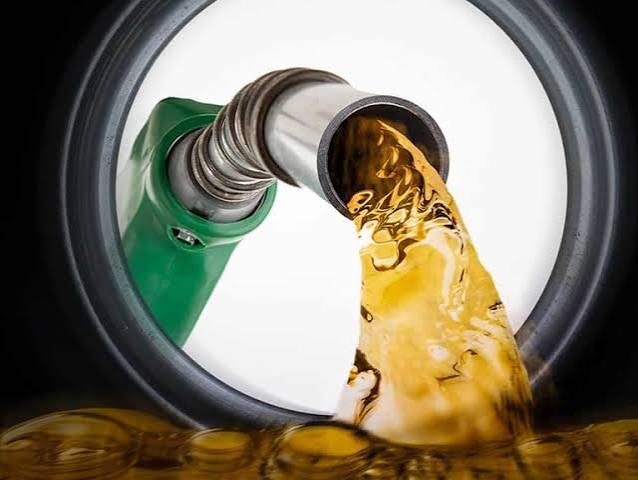
For consumers, changes in these underlying costs are eventually reflected at filling stations. Petrol and diesel prices, in particular, have implications beyond household transport expenditure because petroleum products feed directly into commercial transport, logistics, agriculture, construction and the movement of goods.
A decision by an oil marketing company to hold prices therefore has a wider consumer effect, although the extent of that relief depends on how long the company can sustain the decision and how underlying market conditions evolve.
StarOil has not, in the announcement, indicated that market pressures have disappeared. Instead, the stated objective is to provide a cushion during the current pricing window.
That distinction matters because price freezes by individual market players do not remove the underlying cost pressures affecting the downstream sector.
They effectively determine how much of those pressures are passed through to consumers at a particular point in time.
Margin Management Becomes Key
For an oil marketing company, maintaining prices when input costs are under pressure can place greater importance on margins and operational efficiency.
The downstream petroleum business operates on relatively tight commercial considerations. Companies must account for the cost of securing products, transportation, storage, station operations and other expenses while competing for customers.

Holding prices can therefore represent a deliberate commercial choice to absorb some pressure rather than immediately transferring the full impact to motorists.
StarOil’s decision is particularly relevant in a market where consumers remain highly sensitive to fuel prices. Even relatively small changes in pump prices can increase the cost of daily commuting and commercial transportation.
For businesses, higher fuel costs can also feed into operating expenses, particularly for companies dependent on road transport.
The decision to maintain prices could consequently provide short-term relief across a broader part of the economy.
Consumer Relief Versus Sustainability
The immediate benefit of a price hold is straightforward: consumers pay no more at StarOil stations during the current window.
The more important question is whether such a strategy can remain commercially sustainable if international prices or other input costs continue rising.
A prolonged gap between market costs and retail prices can eventually place pressure on margins. Oil marketing companies therefore have to balance consumer retention and affordability against the need to maintain financially sustainable operations.
StarOil’s announcement does not provide details of the financial impact of the decision or the extent of the margin the company is prepared to absorb.
It is therefore too early to interpret the price hold as a permanent shift in the company’s pricing strategy.
Rather, it represents a decision tied specifically to the current pricing window.
Competition Could Influence Market Pricing
The move also highlights the competitive nature of Ghana’s downstream petroleum market.
Oil marketing companies compete not only through the prices displayed at their stations but also through customer service, station networks, product availability, promotions and loyalty programmes.
StarOil’s decision to maintain prices gives consumers another reason to consider the company’s stations during the window, particularly where competing prices are adjusted upward.
The company’s reference to its Starsavers programme also connects the pricing decision to its broader effort to retain and reward customers.
For consumers, however, the significance of the move will ultimately be measured by the actual prices available at the pump and the value customers receive from associated loyalty benefits.
Implications For Petroleum Consumers
Fuel prices have a particularly strong transmission effect in Ghana because road transport remains central to the movement of people and goods.
When petrol and diesel prices rise, the effect can extend beyond motorists to transport operators, traders and businesses whose costs depend on logistics.

A decision to hold prices can therefore moderate some of that immediate pressure, even if only for one pricing cycle.
It could also provide consumers with a degree of predictability in managing household and business expenses.
However, the relief remains limited by the duration of the pricing window. If market conditions remain elevated, the underlying costs will continue to influence future pricing decisions.
This makes the current announcement more significant as a short-term consumer intervention than as evidence of a fundamental change in Ghana’s petroleum pricing environment.
StarOil’s Approach Puts Focus On Consumer Cushion
Mr Tieku’s announcement frames the price decision primarily around consumer protection.
That positioning comes at a time when fuel affordability remains a major concern for households and businesses, making pricing decisions by individual oil marketing companies increasingly relevant to consumers.

The approach also places pressure on the company to manage its operations efficiently enough to sustain the decision without compromising product availability or service quality.
For StarOil, maintaining prices may help strengthen customer loyalty during the current window, while for consumers, it offers immediate relief from an additional increase.
The longer-term outcome will depend on how international petroleum prices, exchange-rate conditions and domestic supply costs develop in subsequent pricing windows.
For now, StarOil’s position is clear: it will absorb the pressure for the current window rather than pass an increase on to its customers, with Mr Tieku encouraging consumers to continue benefiting from the Starsavers programme.
The decision offers a measure of relief, but its broader significance will be determined by whether market conditions allow similar pricing restraint to continue in future windows.
READ ALSO: Yaw Ampofo Ankrah Sacked as NSA Director-General, Prof. Sarpong Takes Over