The government has received loud praise for the macroeconomic stability and growth prospects, while simultaneously urged to ensure sustainability to secure the gains and growth prospects of the economy.
As the first huddle of implementing structural reforms to turn the turbulent economic situation before 2025 has been achieved, the second, according to analysts remain a challenge to Ghana – sustaining the growth of the economy
“I seriously think this path is good, but the problem is about sustainability. Sustainability is very important when you are dealing with commodities. If the commodities recede, then clearly you are going to be in a lot of trouble.”
Franklin Cudjoe, President of Imani Center for Policy and Education
Ghana’s Commodity-Led Growth Challenge
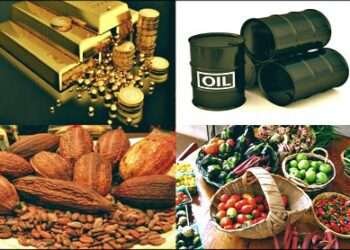
The economy of Ghana’s reliance on primary commodities – gold, cocoa, oil – creates boom-bust cycles, hindering sustainable growth and triggering fiscal instability, currency volatility, and crowding out other sectors.

Over dependence on commodities as a country also leads to severe environmental damage like deforestation and water pollution from mining, making economic diversification, value addition, and green investment crucial for long-term resilience and sustainable development.
This challenge of the country is one of the triggers for the illegal mining ‘galamsey’ that persists across the country. For a long time, Ghana has misplaced the significance of having commodities like gold as a sovereign country.
The unreliability of the commodity-led growth condition for the long term requires Ghana to redefine itself for sustainable growth.



Total dependence on commodities to promote growth and macroeconomic stability creates several harmful conditions for Ghana. Ghana becomes vulnerable to external shocks as global price swings for gold, cocoa, and oil directly impact the government’s revenue, foreign reserves, and inflation, undermining stability.
The economy also limits its value capture and wealth by exporting these commodities in their raw state while importing refined and derived products, missing out on significant value-addition within the country.
The extractives, when mined without a clear national strategy degrades the environment. The extraction of the various minerals employs the use of toxic chemicals like cyanide and mercury, as well as the destruction and pollution of the water bodies and potential agricultural soil, and worsening climate vulnerability.
Also very significant is the fact that over-reliance on commodities as a country creates crowding out of other sectors. A booming commodity sector, without an intentional strategy, draws resources (labor, capital) away from manufacturing and other non-resource sectors, hindering industrialization. This structure fuels exchange rate depreciation, high inflation, unsustainable debt, and general macroeconomic instability as seen in recent crises.
Building Sustainable Growth
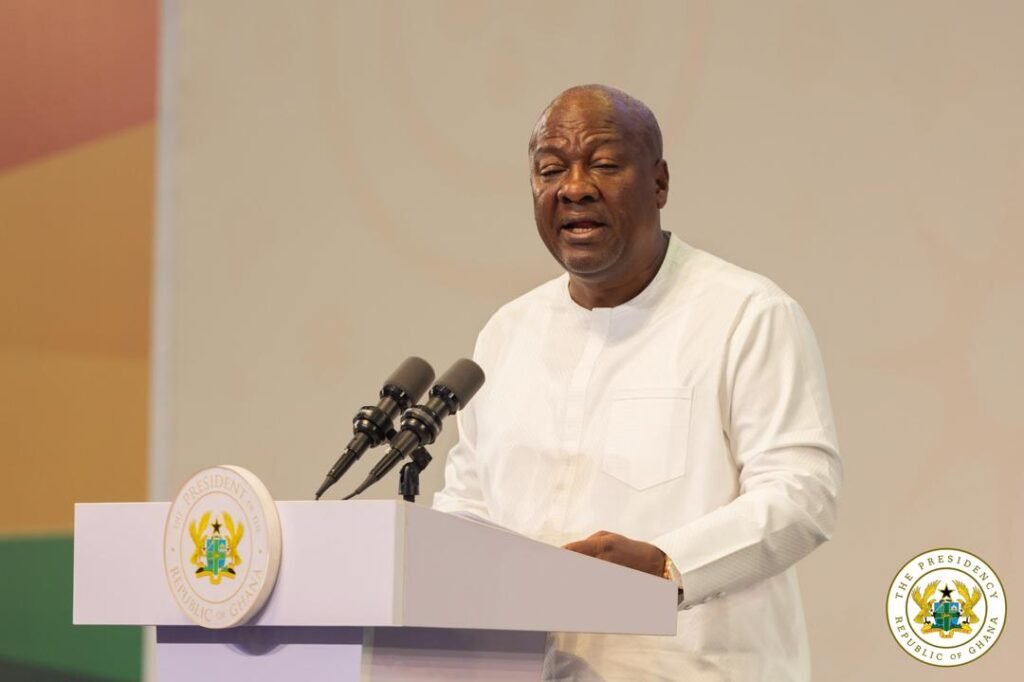
Speaking at the National Thanksgiving Day event at the forecourt of the Jubilee House to mark his first year of assuming office, on Wednesday, January 7, 2026, President Mahama noted that the outcome of the bold decisions would be a testament to the benefit the nation will derive in the foreseeable future.
The president gives a sense of a national long-term development projection and a conscious effort to promote sustainable growth and development initiatives.
“As we look back on the past year, we do so honestly. We have taken difficult decisions, we have undertaken difficult reforms, and we have laid the foundations that may not yet be visible, but are for the sustainable progress of our country.”
President John Dramani Mahama
Ghana’s economy requires economic diversification beyond commodities into manufacturing, technology, and services to create more stable, broad-based growth. This builds the economy’s resistance to external shocks for a resilient and robust economy.
Furthermore, a sustainable Ghanaian economy must embrace value addition strategies and initiatives to establish local processing of the country’s raw materials – refining gold, processing cocoa – to create jobs and boost export earnings.
The government must be consistent in its transition to the green economy, where climate-friendly policies are implemented to attract foreign investment and support sustainable practices.
Strategic sectors to sustain growth need to be prioritized. Sustainable investments must be made in renewable energy, green infrastructure, and sustainable agriculture to build new markets and inflows, as well as reduce carbon dependence.
Prioritizing social interventions to target the youth, women, and the vulnerable is also key. Improving education, healthcare, and strengthening institutions (combating corruption) fosters inclusive growth and attracts investment.
The President has hinted at these sustainable initiatives. Still, it did not constrain experts, analysts, professionals, civil societies, and Ghanaians from stressing the need for a sustainable development road map for the country. It serves as a reminder to the government to remain resolute and steadfast to its economic transformation agenda to truly “build the Ghana we want.”
READ ALSO: Cocoa Processing Company Soars 20% as GSE Closes in the Green