The ongoing discourse surrounding the review of Ghana’s 1992 Constitution continues to spark significant disagreement among key policy advisors, specifically regarding leadership maturity and the mechanisms of democratic reform.
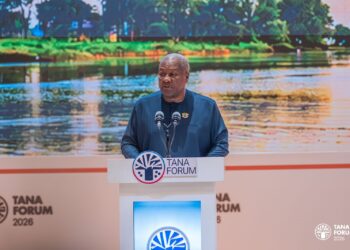
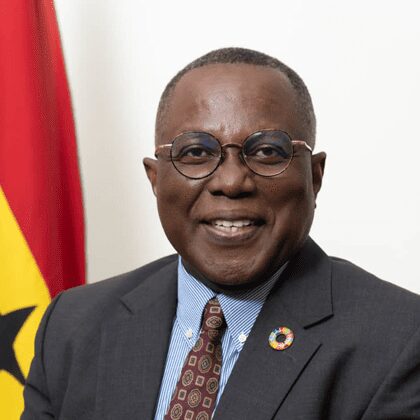
Dr. Nii Moi Thompson, the Senior Advisor to the President on Sustainable Development Goals (SDGs) and Chairman of the National Development Planning Commission (NDPC), has officially registered his opposition to proposals aimed at lowering the presidential age limit from 40 to 30 years.
“No, it doesn’t sound too appealing – 30 years. It’s one thing to be smart; you also need emotional intelligence. Note that that age doesn’t necessarily bring emotional intelligence. At that point, you are between a man and a boy, not an old man. There’s a process of maturity in leadership”
Dr. Nii Moi Thompson, Senior Advisor to the President on SDGs
Dr. Thompson’s primary concern revolved around the “process of maturity” required to handle the complexities of the highest office in the land. He argued that while technical competence or intelligence may be present in younger candidates, the emotional intelligence necessary for the presidency is often missing in those in their early thirties.
He characterized the transition period of a 30-year-old as being in a state of flux that is ill-suited for national leadership within the specific context of the Ghanaian political landscape.
According to Dr. Thompson, lowering the age limit without a robust political apprenticeship system – similar to those found in New Zealand – could expose Ghana to the dangers of populism. He pointed out that in other jurisdictions, young leaders are seasoned through a bottom-up approach within their political parties, ensuring they are well-positioned for leadership by their mid-twenties.
In contrast, he warned that the local system is more susceptible to charismatic but potentially ill-prepared individuals who could win office based on sentiment rather than seasoned judgment. He suggested that the current 40-year age requirement serves as a necessary gatekeeper for emotional and political stability.
Referendum Demands
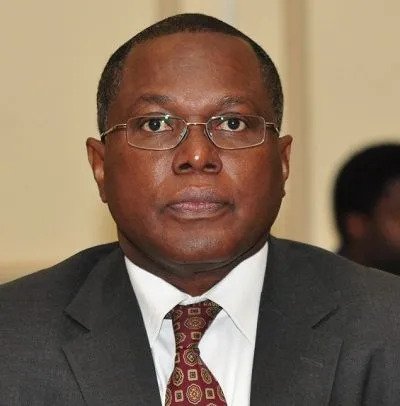
While Dr. Thompson focused on the personnel of the presidency, Oliver Barker-Vormawor, Constitutional Rights and Policy Strategy Advisor at Democracy Hub, directed his attention to the structure of the office.
He criticized the Constitution Review Committee (CRC) for categorizing the proposal to extend the presidential term to five years as a “semi-entrenched,” provision. This classification would allow Parliament to amend the term length with a supermajority, a move Barker-Vormawor views as a bypass of the Ghanaian voter.
He demanded that any extension of the presidential term be subjected to a national referendum rather than parliamentary approval, insisting that the length of the presidential term is a fundamental democratic pillar that requires the direct mandate of the people.

“I think this is a question that people should speak on. They have put the two-term under the referendum question, so anything that concerns the length of term should go together”
Oliver Barker-Vormawor, Constitutional Rights and Policy Strategy Advisor at Democracy Hub
Barker-Vormawor warned that delegating such critical decisions to the legislature could alienate the citizenry and diminish public trust in the entire constitutional reform process. He argued that the credibility of these reforms depends on the level of direct public participation in deciding the core rules of the democratic game.
Implementation Hurdles and Technical Solutions
Despite his critique of the term-length classification, Barker-Vormawor praised the CRC for identifying a practical path to unblocking decades of constitutional stagnation.
He noted that past attempts at reform failed because they tried to push dozens of complex, entrenched questions into a single, unmanageable referendum. The current strategy of first “amending how we amend the Constitution” – by regrouping provisions into entrenched and semi-entrenched categories – provides a workable technical solution.
Once this procedural change is approved by the public, most administrative and technical amendments could be handled by Parliament, leaving only core democratic questions, such as term limits and fundamental rights, for the referendum process.

“In a sense, this may be the most important recommendation of the committee,” Barker-Vormawor said, emphasizing that this strategic shift might be the committee’s most significant contribution to the governance of the fourth republic.
As the debate moves forward, the challenge for policymakers remains balancing the pragmatism of legislative efficiency with the sovereign right of the people to decide the future of their executive leadership.
READ ALSO: Gov’t Applauded for Year 1, Sustainability Calls Intensify