
President John Dramani Mahama has directed government agencies to begin the full automation of work permit and residence permit processing as part of broader efforts to modernise Ghana’s immigration and investment systems.
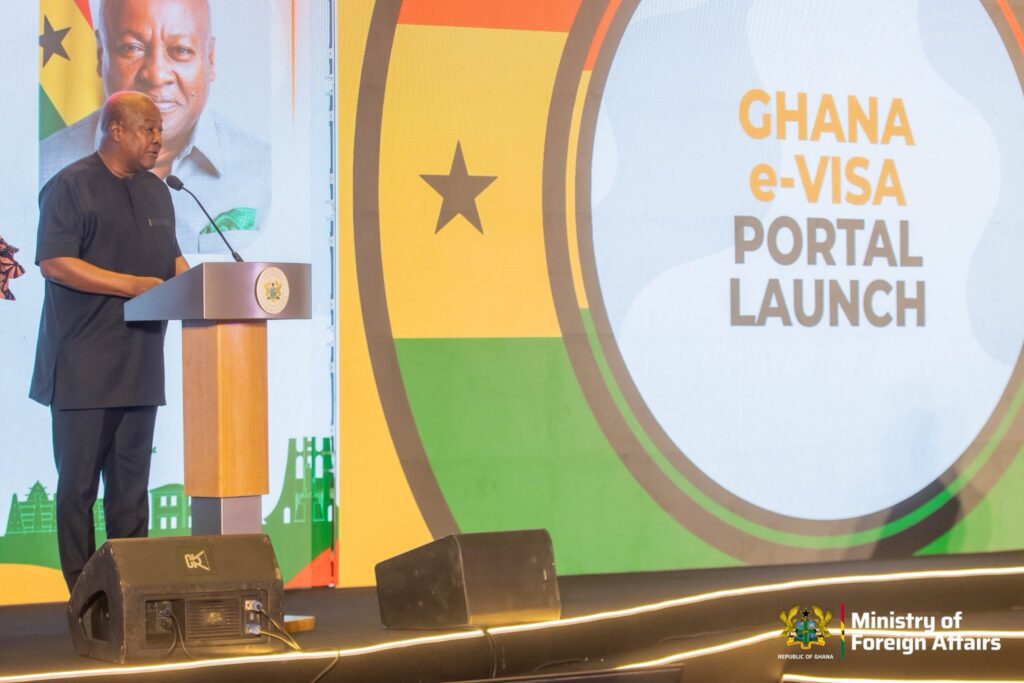
The directive was announced during the launch of Ghana’s new electronic visa platform at the Kempinski Hotel Gold Coast City, where the President said the country must move beyond outdated paper based administrative procedures toward a fully digital permitting regime.
According to him, the successful rollout of the e-visa system provides the foundation for expanding digital reforms across other critical immigration and investment-related services.
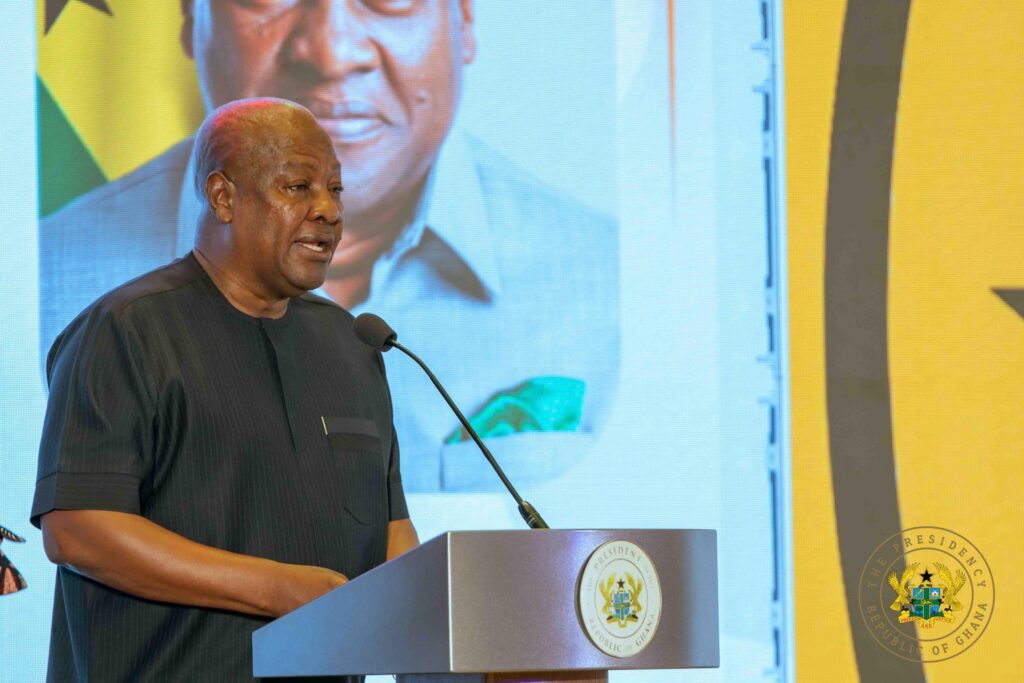
“Ladies and gentlemen, as I conclude, let me draw your attention to other areas that require end to end automation, namely the processing and issuance of work permits and residence permits”.
President of the Republic of Ghana, HE John Dramani Mahama
President Mahama explained that Ghana’s long term vision is to create an efficient, technology driven public service system capable of supporting investment, reducing bureaucracy, and improving service delivery.
Shift Away From Paper Based Processes
The President stressed that traditional manual procedures for processing permits were no longer suitable for a rapidly evolving digital economy. “You will agree with me that the time has come to move away from the traditional paper-based methods towards an e-permitting platform,” he said.
He noted that cumbersome paperwork and bureaucratic delays have historically slowed down permit acquisition processes for foreign investors, expatriate workers, and businesses operating in Ghana.
According to him, digital transformation within the immigration sector is necessary to improve efficiency and align Ghana with modern international standards.
President Mahama stated that government intends to create a seamless digital experience similar to the newly introduced e visa platform where applications, approvals, and verification processes can be completed electronically.
Agencies Directed to Expand E-Visa Infrastructure
The President instructed the Ghana Immigration Service, working through the Ministry of Interior, to collaborate with several institutions to implement the next phase of the digital transformation agenda.
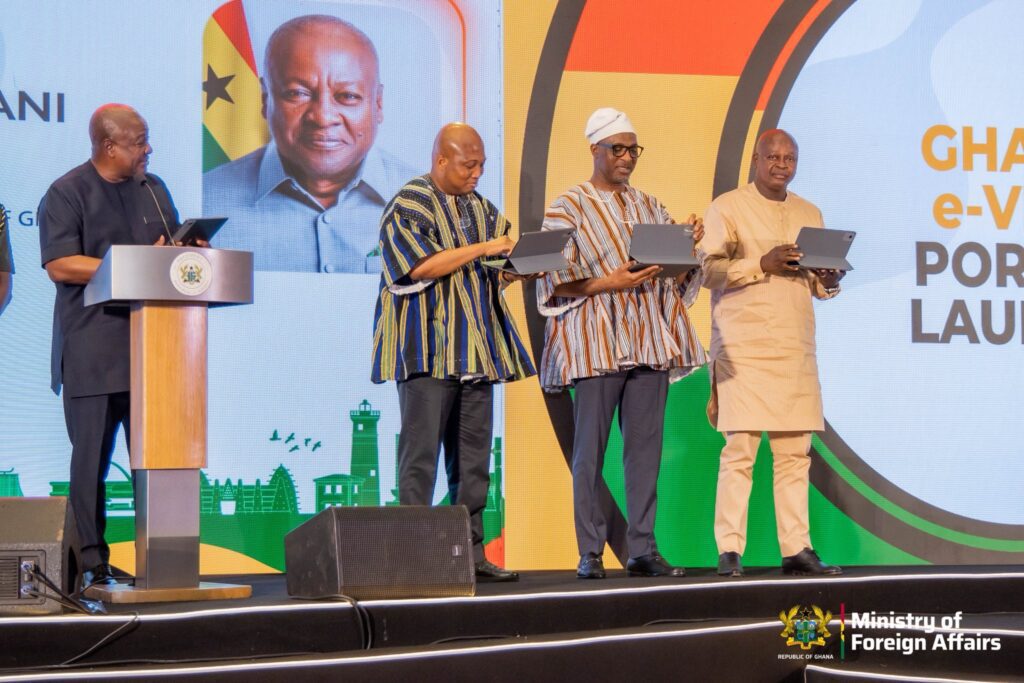
He specifically tasked the Ghana Investment Promotion Centre, the Ministry of Transport, and service providers to work together in expanding the infrastructure behind the electronic visa system to cover work permits and residence permits.
Government officials say the integration of permit systems into the broader digital immigration architecture is expected to improve coordination among agencies while reducing duplication and administrative inefficiencies.
Government Targets Faster Processing
President Mahama said the proposed reforms would significantly reduce delays associated with permit applications and approvals. “This, when completed, will significantly reduce processing time and eliminate physical bureaucracy,” he stated.
The President explained that applicants currently face multiple physical verification procedures, long waiting periods, and extensive paperwork when applying for permits.
He argued that automating the process would make permit applications more accessible, transparent, and predictable for investors and foreign nationals seeking to work or reside in Ghana.
According to him, reducing unnecessary administrative barriers is essential to improving investor confidence and supporting economic growth.
Boosting Foreign Direct Investment
A major objective behind the proposed automation drive is the government’s broader strategy to attract more foreign direct investment into Ghana. President Mahama stated that simplifying immigration and permit procedures would improve Ghana’s competitiveness as an investment destination.
The President noted that many international investors consider the efficiency of administrative and regulatory systems before deciding where to establish businesses or operations.
Government believes the digital permitting platform will make Ghana more attractive to multinational companies, entrepreneurs, researchers, and skilled professionals seeking opportunities within the country.
Economic analysts have increasingly identified bureaucratic bottlenecks and delays in permit approvals as factors that can discourage foreign investment in developing economies.
Officials say the reforms are therefore intended not only to improve convenience but also to strengthen Ghana’s overall business environment.
Strengthening Regulatory Compliance
President Mahama also indicated that the digital platform would improve regulatory oversight and strengthen compliance within the immigration system. According to him, the integration of permit systems into a centralised digital architecture would make monitoring and verification easier for authorities.
Digitisation can help reduce opportunities for fraud, eliminate unofficial processes, and improve record management across institutions. The President maintained that stronger digital systems would also improve transparency and accountability in public administration.
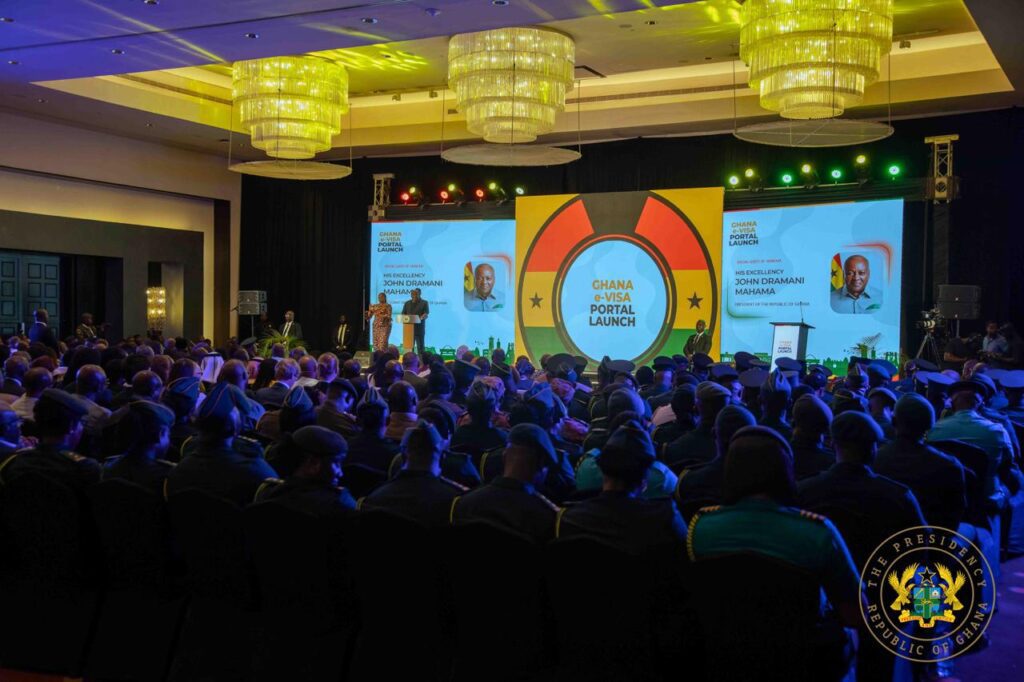
The announcement formed part of a wider digital transformation agenda that President Mahama unveiled during the launch of Ghana’s electronic visa platform.
The new e-visa system allows travellers from around the world to apply for visas online, upload supporting documents electronically, make digital payments, and receive travel authorisation remotely.
President Mahama described the e visa platform as a major step toward building a modern, efficient, and globally connected Ghana. He also announced that all African passport holders applying for business or tourist visas through the electronic platform would no longer pay visa fees.
According to him, the policy demonstrates Ghana’s commitment to African integration, free movement, and Pan-African cooperation. The electronic visa platform has already been integrated into Ghana’s Advanced Passenger Information and Passenger Name Record systems to improve border security and intelligence coordination.
The President explained that the same digital architecture could support future expansions into work permits, residence permits, and other immigration services.
Push for Modern Public Services
President Mahama reiterated that the government’s long-term vision is to build responsive, citizen-centred, and technology-driven public institutions. According to him, Ghana cannot continue relying on outdated administrative systems in a competitive global economy increasingly shaped by digital innovation.

He argued that embracing technology in immigration administration would help position Ghana as a leading destination for investment, tourism, and international business within Africa.
The President also praised Ghanaian technical experts involved in developing the e visa platform, noting that the project had been built entirely by local professionals.
Government officials say the success of the e visa platform could pave the way for broader digital reforms across several public service sectors in the coming years.
READ ALSO: Trump Links Iran Deal To Abraham Accords