
The National Union of Ghana Students has raised strong objections to the inauguration of the newly constituted Scholarship Authority Board, citing the complete absence of student representation as a serious flaw that undermines the legitimacy and credibility of the body.
In a press statement issued by its leadership, the student umbrella organisation described the development as inconsistent with democratic governance principles and warned that decisions affecting students cannot be credibly made without their direct involvement.
NUGS, which represents an estimated 12.5 million Ghanaian students both at home and abroad, argued that students are not peripheral actors within the scholarship ecosystem but its central beneficiaries.
According to the union, the very purpose of scholarships is to promote equity, widen access to education and protect the academic futures of students, particularly those from vulnerable and disadvantaged backgrounds.
“A governing Board established to oversee such a mandate, yet constituted without the voice of students, raises serious questions of legitimacy, fairness, and democratic accountability.”
National Union of Ghana Students
The union noted that effective public administration depends on inclusivity, stakeholder participation, transparency and responsiveness. It stressed that these principles are not optional but essential, especially in institutions whose decisions have direct and far reaching consequences on citizens.

NUGS pointed out that the policies of the Scholarship Authority, including eligibility criteria, selection processes, disbursement arrangements, monitoring mechanisms and grievance procedures, directly shape the academic progression, welfare and dignity of students.


A board operating without student input, it warned, risks becoming detached from the lived realities of beneficiaries and could undermine the objectives the Authority was created to achieve.
Representation Non-Negotiation
NUGS further stated that student representation in education-related institutions has long been recognised as a settled democratic practice in Ghana and across the world.
Over the years, students have played an active role in education governance and policy discussions, based on the understanding that institutions function more effectively when beneficiaries are meaningfully involved in decision-making.
The union argued that the current composition of the Scholarship Authority Board departs from this established convention, as well as from prior assurances and the broader national commitment to participatory governance.
“A scholarship system that determines access to education, opportunity, and social mobility cannot be credibly governed about students, without students.
“Such an approach risks eroding public confidence and weakening the social contract between the state and the youth it seeks to empower.”
National Union of Ghana Students
According to the union, excluding students sends a troubling signal at a time when trust, transparency and inclusion are critical to sustaining reforms in the education sector.

In its statement, NUGS unequivocally rejected the current composition of the Scholarship Authority Board and called for urgent corrective action. It demanded a structured engagement between government, the Authority and the student body to address the omission in the interest of fairness and institutional credibility.
A Call to Action
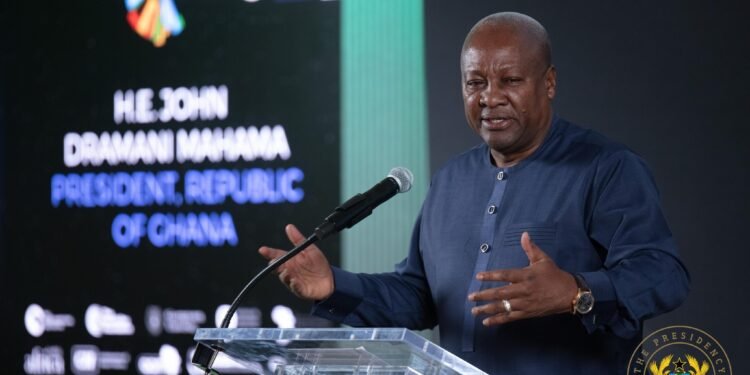
The union also appealed directly to the President of the Republic, HE John Dramani Mahama, the Minister of Education, Hon Haruna Iddrisu, and other relevant authorities to take immediate steps to reconstitute the Board to include meaningful and substantive student representation, duly nominated by NUGS.
The union went further to call for legislative reform, urging that the Scholarship Authority Act be amended under a certificate of urgency to explicitly provide for student representation.
According to NUGS, such an amendment would bring the Authority in line with existing education sector legislation and best practices in governance. The union maintained that formalising student participation in law would prevent future exclusions and strengthen the Authority’s ability to fulfil its mandate.
While adopting a firm tone, NUGS emphasised its commitment to constructive dialogue and cooperation. It said it remains ready to engage responsibly with government and other stakeholders to ensure that the scholarship system serves its intended purpose.
However, the union also signalled that it carries a solemn responsibility to protect the interests and future of Ghanaian students. It warned that it would not hesitate to deploy all legitimate and lawful means to ensure that student voices are heard, respected and reflected in decisions that directly affect their lives.

The statement was signed by NUGS President Rashid Ibrahim and General Secretary Benedict Amelorku, and issued from the union’s secretariat at the University of Ghana, Accra City Campus.
Their intervention adds to growing public debate around governance reforms in the education sector, particularly as the government pursues policies aimed at transparency, equity and fairness in scholarship administration.
As attention turns to how authorities will respond, the controversy underscores a broader question about inclusion in public institutions and the extent to which beneficiaries are involved in shaping policies that affect them. For NUGS, the matter goes beyond board appointments and speaks to the future of participatory governance in Ghana’s education system.
READ ALSO: Gold Smuggling Incentive Wiped Out by DGPP Purchase Pricing Model – Senyo Hosi