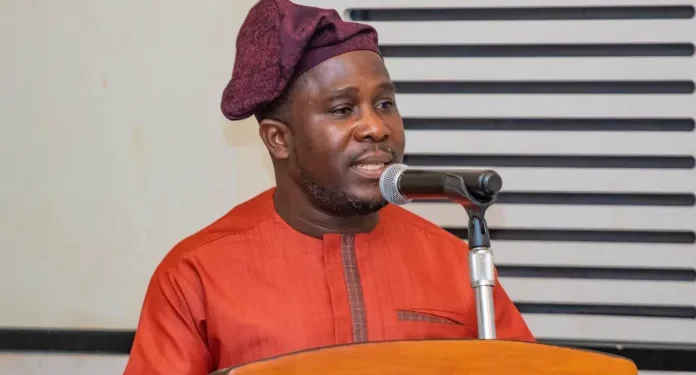
Energy law expert Lom Nuku Ahlijah has said Ghana’s US$1.47 billion energy debt payment restores contract discipline, reduces legal risk, and renews investor confidence in the power sector.
Commenting on the implications of the payment, Ahlijah described it as more than a fiscal intervention, framing it instead as a critical reset of Ghana’s legal and energy policy standing.
“From a legal and energy policy perspective, the issue of the payment is fundamental; it is a contract credibility moment for Ghana,”
Energy law expert Lom Nuku Ahlijah
He stressed that the implications reach far beyond balance sheets and budget lines. In his view, the move directly addresses years of weakened contract discipline that had eroded confidence among lenders, investors, and project partners.
Ahlijah traced the roots of the crisis to persistent non-payment for gas supplied to the power sector, particularly under long-term contractual arrangements.

These payment failures, he noted, eventually led to the exhaustion of the World Bank Partial Risk Guarantee that underpinned the Sankofa Gas Project.


“For years, persistent non-payment for gas supplied to the power sector led to the exhaustion of the World Bank Partial Risk Guarantee.”
Energy law expert Lom Nuku Ahlijah
He pointed out that the guarantee was central to the project’s financing structure. Its depletion was not merely a technical issue but a reflection of deeper governance and enforcement failures.
Why the World Bank Guarantee Mattered

According to Ahlijah, the PRG was far from symbolic. It was the legal instrument that gave international financiers the confidence to commit billions of dollars to Ghana’s gas-to-power infrastructure.
“That guarantee was not symbolic. It was the legal instrument that made billions of dollars of private investment possible.”
Energy law expert Lom Nuku Ahlijah
In global project finance, such guarantees serve as risk buffers against payment default. Their exhaustion, Ahlijah argued, sends a strong negative signal to markets.
He noted that once the PRG was fully drawn down, it became clear to international lenders that Ghana’s contractual commitments were under severe strain, undermining the country’s reputation as a reliable counterparty.
Restoring Reputation Through Payment
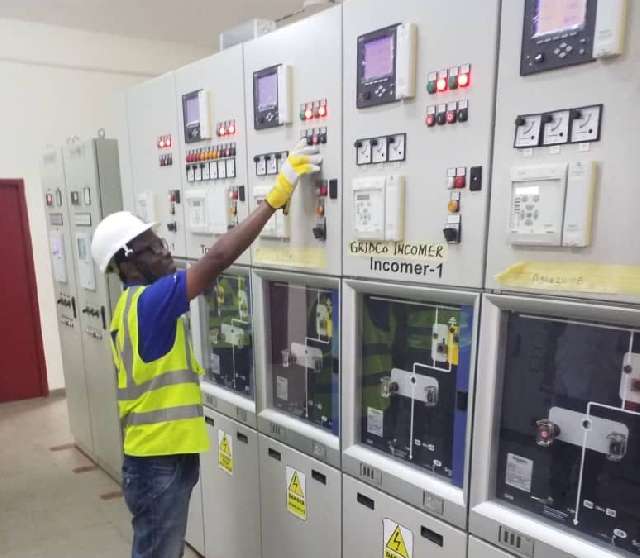
By fully repaying amounts drawn on the PRG and settling outstanding gas arrears owed to ENI and Vitol, Ahlijah said the government has taken a decisive step toward repairing that reputational damage.
“The Government has effectively restored Ghana’s reputation as a country that honours its contracts even when doing so is fiscally painful.”
Energy law expert Lom Nuku Ahlijah
He emphasised that in the energy sector, credibility is built not on promises but on performance. The willingness to clear arrears, even at significant short-term fiscal cost, signals a renewed commitment to contractual obligations that underpin long-term infrastructure investment.
Beyond gas supply contracts, Ahlijah highlighted the importance of settling legacy debts owed to independent power producers. He warned that unpaid power purchase obligations carry serious legal consequences that often go underestimated in public discourse.
“Unpaid power purchase obligations are not just accounting entries,” he said, explaining that they translate into arbitration risk, interest accumulation, the calling of government guarantees, and sustained upward pressure on electricity tariffs.
Each unresolved dispute, he added, compounds the state’s legal and financial exposure over time.
By paying down these liabilities, Ghana has reduced the risk of costly international arbitration and strengthened its negotiating position in future contract discussions.
Ahlijah noted that this improved footing will be particularly important as the country seeks to renegotiate or restructure power purchase agreements to reflect changing demand and fiscal realities.
Confidence, Not Instant Relief

While welcoming the debt payment, Ahlijah was careful to temper expectations. He cautioned that the settlement does not mean electricity tariffs will immediately fall or that the energy sector’s structural challenges have been fully resolved.
“This does not mean tariffs will suddenly fall. It does not mean the energy sector is ‘fixed’,” he said. However, he stressed that something essential has changed.
The restoration of payment discipline, he argued, creates the conditions for renewed confidence among investors and lenders who had grown wary of Ghana’s power sector.
For Ahlijah, the broader lesson is that energy stability is rooted in legal certainty and disciplined execution. “Energy stability is not built on rhetoric. It is built on contracts, guarantees, and payment discipline,” he said, describing the debt reset as a necessary, if costly, step.
He added that debates around electricity tariffs, IMF-supported reforms, and future power investments cannot be divorced from this context. When contracts are honoured, supply chains function, financing flows, and the risk of power disruptions diminishes.
Ahlijah concluded, “The lights stay on when the contracts are honoured,” underscoring the central role of legal credibility in sustaining Ghana’s energy sector and supporting long-term economic growth.
READ ALSO: GNFS Records Over 5,000 Fire Outbreaks As Chief Fire Officer Demands Prosecutorial Powers