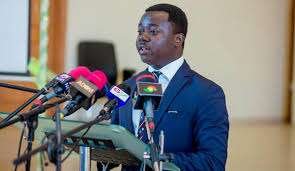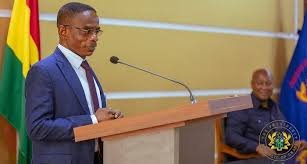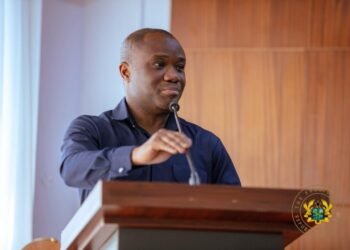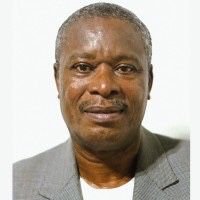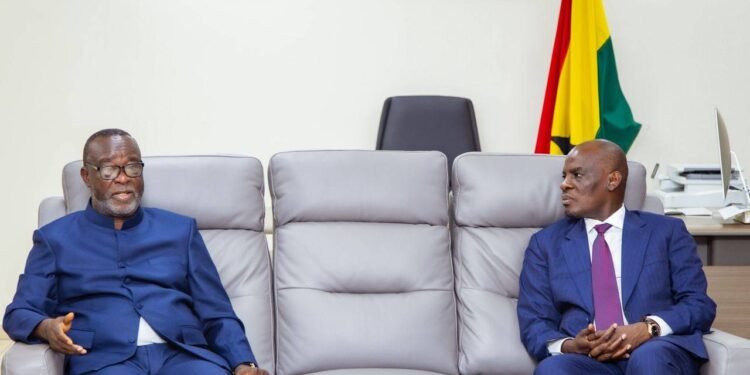

The Chief Justice of the Republic of Ghana, His Lordship Paul Kwadwo Baffoe Bonnie, has underscored the need for closer collaboration between the Judiciary and the education sector to strengthen civic awareness, legal literacy, and ethical responsibility among Ghanaians.
He made this call during a courtesy visit to the Ministry of Education in Accra, where he led a high-level delegation to engage education authorities on shared national priorities.
The visit formed part of ongoing efforts to deepen institutional cooperation between the Judiciary and key sectors of governance, with a particular focus on how education can reinforce respect for the rule of law and democratic values.
Accompanying the Chief Justice were the Attorney General and Minister for Justice, Dr Dominic Akuritinga Ayine, Supreme Court Justice Gabriel Scott Pwamang, and renowned legal scholar Dr Raymond A Atuguba.
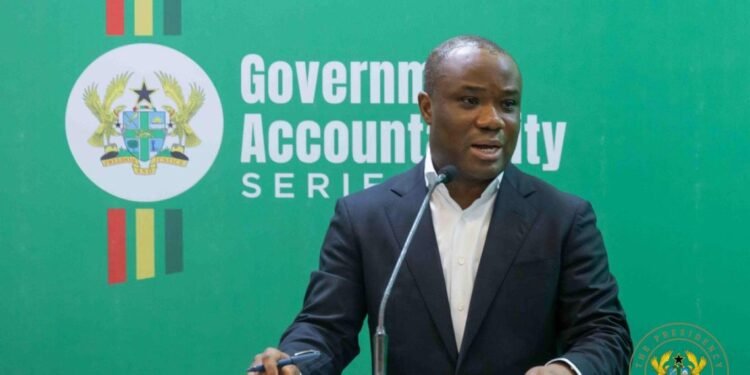
Welcoming the delegation, the Minister for Education, Hon Haruna Iddrisu, expressed appreciation for the initiative, describing it as timely and necessary in an era where civic consciousness and ethical leadership are critical to national development. He noted that education remains one of the most powerful tools for shaping attitudes, promoting accountability, and nurturing responsible citizenship.

In his remarks, Chief Justice Baffoe Bonnie emphasized that the sustainability of Ghana’s democracy depends not only on strong institutions, but also on a citizenry that understands its rights and responsibilities.


He stressed that legal education should not be limited to professional training for lawyers but should be embedded within the broader educational framework to help young people appreciate the principles that govern society.
According to the Chief Justice, schools play a central role in instilling values such as respect for the law, tolerance, fairness, and integrity. He observed that when citizens are adequately informed about the justice system and the Constitution, they are more likely to engage constructively with state institutions and less likely to resort to unlawful means to resolve disputes.
He therefore called for renewed attention to civic and legal education at all levels of learning. The Attorney General, Dr Dominic Ayine, reinforced the Chief Justice’s position by highlighting the link between education and access to justice.
He noted that many legal challenges faced by ordinary citizens stem from limited understanding of legal processes and civic obligations. Strengthening civic education, he said, would empower citizens to assert their rights lawfully while respecting the rights of others.
Justice Gabriel Pwamang also spoke about the importance of early exposure to constitutional principles, noting that an informed population contributes to judicial efficiency and public trust in the courts.
He explained that when citizens understand how the justice system works, misconceptions and unnecessary tensions between the public and the judiciary are significantly reduced. Dr Raymond Atuguba, a respected academic and jurist, used the opportunity to stress the role of ethical education in shaping future leaders.

He argued that beyond technical knowledge, Ghana’s education system must consciously cultivate moral reasoning and public spiritedness. According to him, legal and civic education should encourage critical thinking, responsibility, and a commitment to the public good.
In response, Education Minister Haruna Iddrisu assured the delegation of the Ministry’s commitment to working closely with the Judiciary to strengthen civic and legal education.
He noted that the Ministry is already pursuing reforms aimed at making education more relevant to national development and democratic governance. He indicated that collaboration with the Judiciary would enrich curriculum development, teacher training, and public education initiatives
Hon Iddrisu emphasized that civic education must evolve to address contemporary challenges such as misinformation, declining trust in institutions, and the need for peaceful conflict resolution. He stated that equipping students with practical knowledge of the Constitution, governance structures, and the justice system would prepare them to participate meaningfully in national life.
The Minister also highlighted the importance of partnerships in achieving educational transformation, noting that institutions such as the Judiciary possess valuable expertise that can enhance teaching and learning. He expressed optimism that sustained engagement between the two institutions would result in concrete programs that benefit learners across the country.
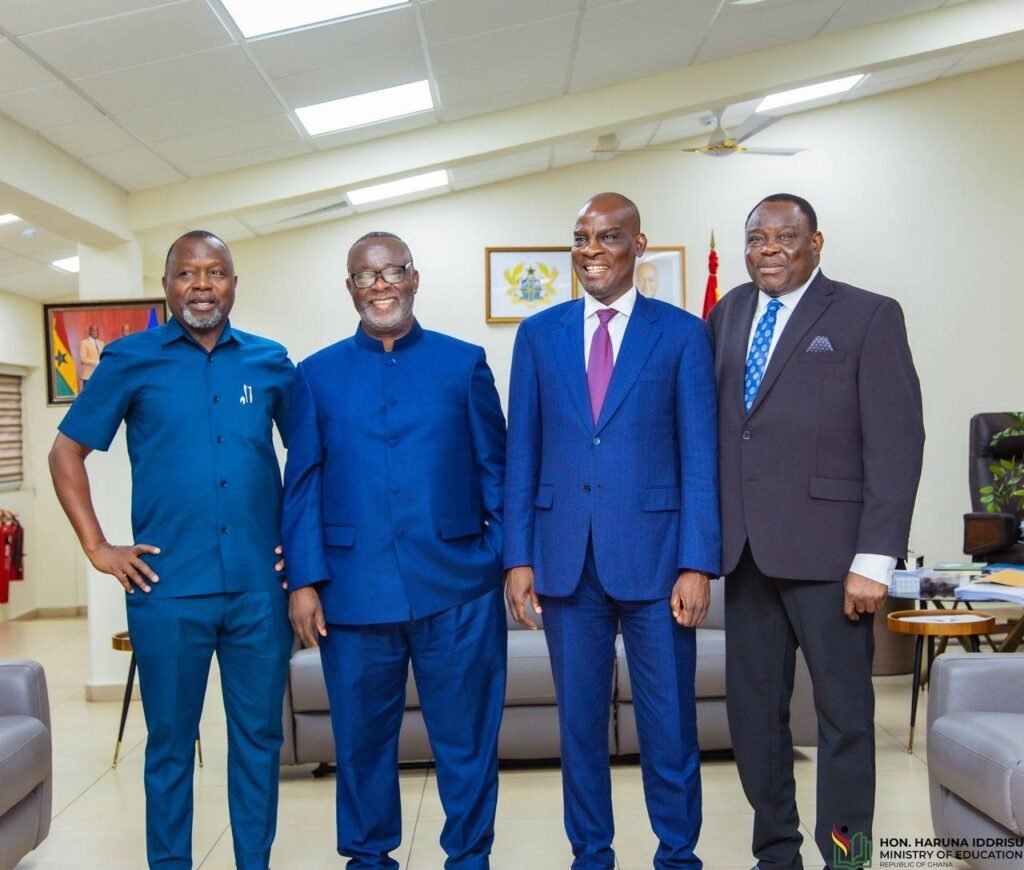
The meeting concluded with a shared commitment to explore practical areas of collaboration, including curriculum enrichment, public education campaigns, and initiatives that promote ethical leadership and civic responsibility.
Both sides agreed that fostering a culture of respect for the rule of law begins in the classroom and must be reinforced through consistent national effort. The courtesy call signals a broader recognition that education and justice are deeply interconnected pillars of democratic governance.
As Ghana continues to consolidate its democratic gains, the renewed focus on civic and legal education is expected to play a vital role in nurturing informed citizens who understand their rights, respect the law, and contribute positively to national development.
READ ALSO: GoldBod Calls for Informed Discussion Amidst Split Opinions