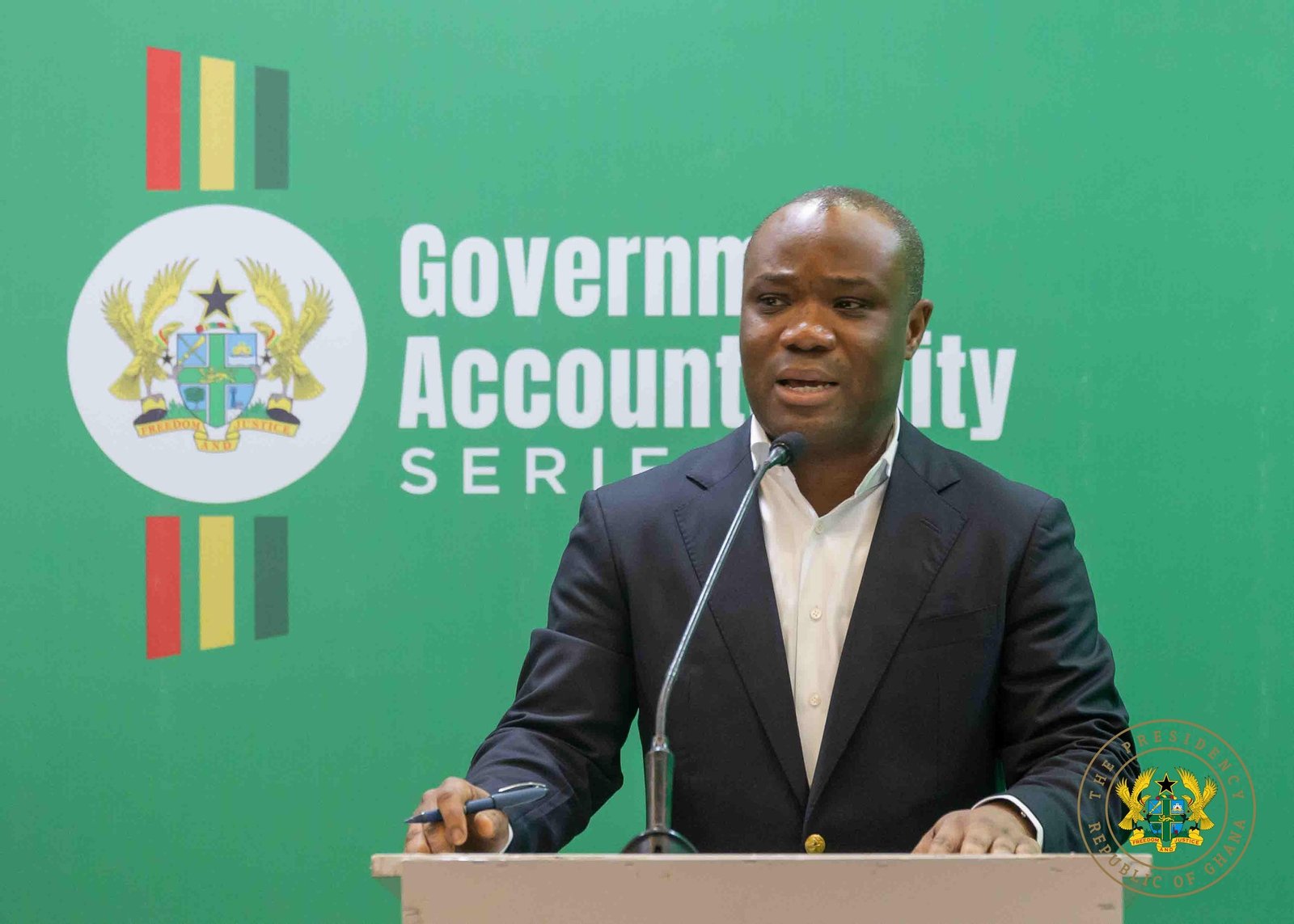
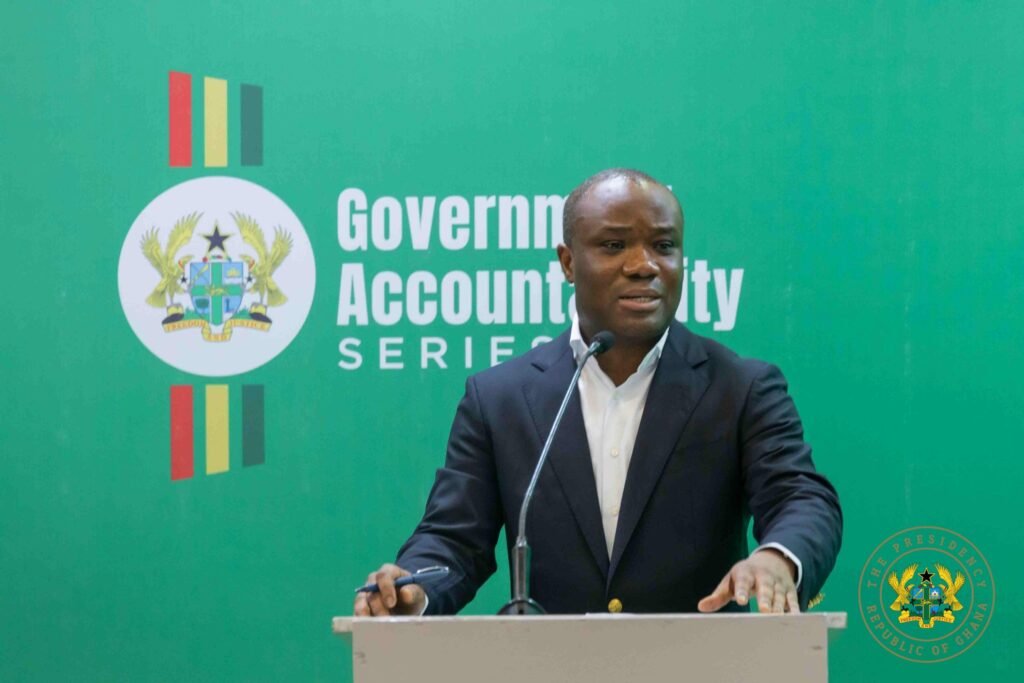
The Mahama’s government’s decision to significantly reduce the size of the ministerial and political appointee class has resulted in substantial savings to the public purse, according to the Minister of State in charge of Government Communications, Hon Felix Kwakye Ofosu.
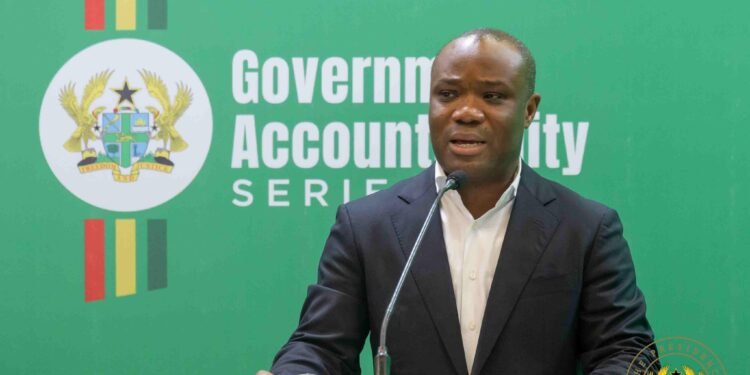
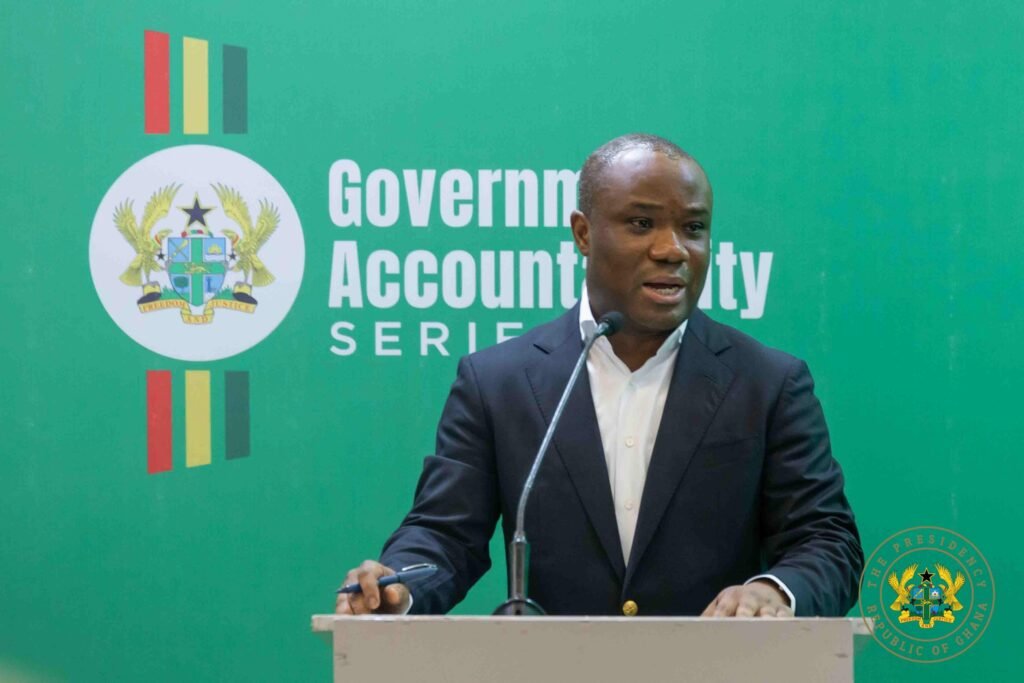
Speaking at the Government Accountability Series, the Presidential Spokesperson said while no single figure had been officially placed on the savings, the scale of cost reduction was unmistakable when compared with the structure of the previous administration.
Hon. Kwakye Ofosu explained that under the administration of President John Dramani Mahama, the number of ministers has been drastically reduced from a high of about 125 under the Akufo-Addo government to fewer than 60.
He said even a simple comparison between the two administrations shows how much expenditure has been avoided. According to him, the present government is operating with about 58 ministers, noting that it would have been 60 but for the tragic events of August 6.
He stressed that each minister and deputy minister comes with a defined package of entitlements that carry significant cost implications for the state. These include official duty post vehicles, accommodation or rent allowance, fuel, salaries and other benefits tied to service.
Hon. Kwakye Ofosu said that for ministers of state, the standard entitlement includes a four wheel drive vehicle, typically a Land Cruiser, as well as a saloon car to facilitate official duties.


“At the current market rate, a standard Land Cruiser used by a minister costs about 120,000 dollars,” he noted, adding that the accompanying saloon car costs between 50,000 and 60,000 dollars depending on the brand.
He explained that when a new administration takes office, new vehicles are often procured because existing ones may no longer be roadworthy or suitable for the demands of office.
Avoidance of Purchase of a Dozen Expensive Vehicles
Using conservative estimates, Mr Kwakye Ofosu said reducing the number of ministers by about 65 means government has avoided purchasing dozens of expensive vehicles.
He pointed out that the state has also avoided the cost of refurbishing government bungalows or paying rent allowances equivalent to 20 percent of basic salaries for those additional ministers every month. Fuel costs, travel expenses and consolidated salaries have also been eliminated for positions that no longer exist.
He added that beyond monthly remuneration, ministers are entitled to ex gratia payments at the end of their service, calculated as four months’ salary for each year served. According to him, avoiding these long term liabilities for dozens of positions translates into further savings running into tens of millions of cedis over time.
Hon. Kwakye Ofosu stressed that the savings extend beyond ministers alone. He recalled that under the previous administration, the Office of the President at one point had about 361 political staff.
He clarified that presidential staffers and aides are not merely ceremonial positions, noting that in terms of conditions of service, many are equivalent to ministers and deputy ministers.
He explained that presidential staffers are entitled to similar benefits, including official vehicles, accommodation, fuel and other allowances. Presidential aides, he added, enjoy conditions comparable to deputy ministers.

When these numbers are combined with the ministerial count, the cost to the state becomes enormous. According to him, at least 40 additional individuals within the presidency previously qualified for ministerial level entitlements, including vehicles and housing.
“When you add 40 more Land Cruisers, 40 saloon cars, 40 housing arrangements and fuel allowances every week, the cost becomes colossal,” he said, arguing that one does not need complex analysis to appreciate the financial burden such a structure placed on the state.
Learner but Efficient Government
The current administration’s leaner structure, Hon. Kwakye Ofosu said, reflects President Mahama’s campaign promise to create an efficient and cost conscious government.
In January 2025, following his inauguration, President Mahama formalised a major restructuring of government through the Civil Service Instrument 2025, known as E I 1. This reform reduced the number of ministries from 30 to 23.
As part of the restructuring, several stand alone ministries were abolished, including Information, National Security, Parliamentary Affairs, Railway Development, Public Enterprises and Sanitation. Other portfolios were consolidated to streamline operations and eliminate duplication.
Works and Housing was merged with Water Resources, while Chieftaincy and Religious Affairs were added to the Local Government ministry. Communication was realigned to focus on digital technology and innovation, and a new Energy and Green Transition ministry was created to integrate sustainability into the energy sector.
Hon. Kwakye Ofosu said the President also fulfilled his pledge to cap the number of ministers at 60, including regional and deputy ministers. He noted that some ministries are currently operating without deputy ministers, further reducing expenditure. According to him, this deliberate restraint demonstrates a commitment to fiscal discipline and efficient governance.
He maintained that the reduction in the size of government has freed up resources that can be redirected toward priority sectors such as health, education and infrastructure. While acknowledging that governance requires adequate staffing, he insisted that efficiency does not depend on bloated numbers but on clear mandates and accountability.
Hon. Kwakye Ofosu concluded that the reality of the savings achieved through ministerial reduction cannot be disputed. He said the fact that fewer people are now in government compared to the previous administration must be placed firmly on record as evidence of responsible leadership and prudent management of public resources.
READ ALSO: Ghana’s Economy Shows Steady Recovery with 3.8% Expansion in October, GSS Reports