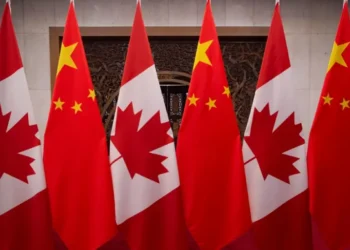
Canada has agreed to cut its 100% tariff on Chinese electric cars in return for lower tariffs on Canadian farm products.
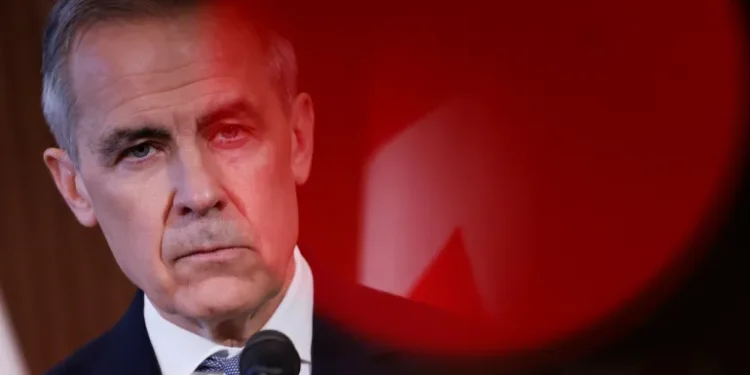
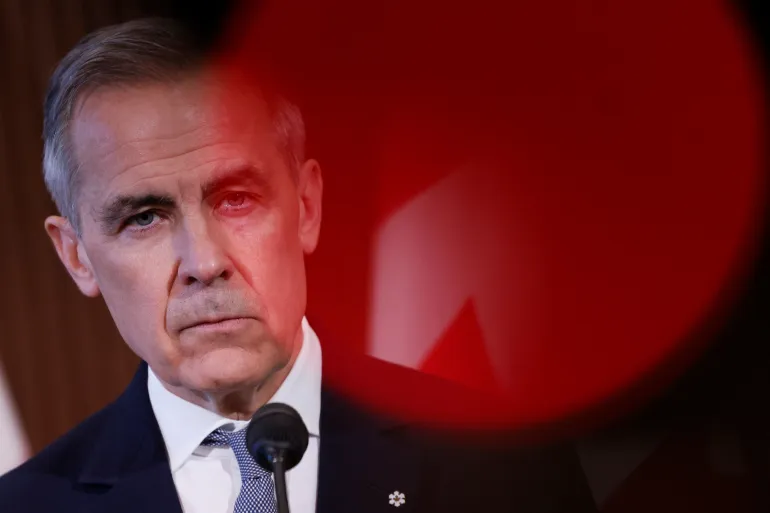
Canadian Prime Minister Mark Carney made the announcement after two days of meetings with Chinese leaders.
He said that there would be an initial annual cap of 49,000 vehicles on Chinese Electric Vehicle exports to Canada, growing to about 70,000 over five years.
He added that China, in turn, will reduce its total tariff on canola seeds, a major Canadian export, from 84% to about 15%, asserting that Canada’s relationship has progressed in recent months with China. “It is more predictable and you see results coming from that,” Carney said.

Carney hasn’t been able to reach a deal with US President Donald Trump to reduce some tariffs that are punishing some key sectors of the Canadian economy and Trump has previously talked about making Canada the 51st state.
Canada had followed the US in putting tariffs of 100% on Electric Vehicles from China and 25% on steel and aluminum under former Prime Minister Justin Trudeau, Carney’s predecessor.


China responded by imposing duties of 100% on Canadian canola oil and meal and 25% on pork and seafood. It added a 75.8% tariff on canola seeds last August.
Collectively, the import taxes effectively closed the Chinese market to Canadian canola, an industry group has said. Overall, China’s imports from Canada fell 10.4% last year to $41.7 billion, according to Chinese trade data.
China is hoping Trump’s pressure tactics on allies such as Canada will drive them to pursue a foreign policy that is less aligned with the United States.
Carney, though, noted Canada’s relationship with the US is much more multifaceted, deeper and broader. Canada and China have different systems and disagree on issues such as human rights, he said, limiting the scope of their engagement even as they seek ways to cooperate on areas of common interest.
Nonetheless, earlier today, Carney and Chinese leader Xi Jinping pledged to improve relations between their two nations after years of acrimony.
Carney made efforts to address the concerns of Canadian automakers and auto workers by saying the initial cap on Chinese EV imports was about 3% of the 1.8 million vehicles sold in Canada annually and that, in exchange, China is expected to begin investing in the Canadian auto industry within three years.
“We’re building (a) new part of our car industry, building cars of the future in partnership, bringing affordable autos for Canadians at a time when affordability is top of mind, and doing it at a scale that allows for a smooth transition in the sector.”
“For the exchange of a small piece of the Canadian market, we have a commitment. We are waiting for an investment commitment in Canada. The real leaders of the new industry. So it’s an agreement that will create the future for our industry.”
Mark Carney
Ontario Premier Slams Canada’s Deal
However, Ontario Premier Doug Ford, the leader of Canada’s most populous province where the country’s auto sector is based, slammed the deal.
Ford posted on social media, “Make no mistake,” adding that China now has a foothold in the Canadian market and will use it to their full advantage at the expense of Canadian workers.
“Worse, by lowering tariffs on Chinese electric vehicles this lopsided deal risks closing the door on Canadian automakers to the American market, our largest export destination.”
Doug Ford
The Canadian leader leaves China tomorrow, Saturday, January 16, 2026 and visits Qatar on Sunday before attending the annual gathering of the World Economic Forum in Switzerland next week.
His office said that he will meet business leaders and investors in Qatar to promote trade and investment.
READ ALSO: Government Moves to Fix Public Transport Crisis with Immediate and Long-Term Measures