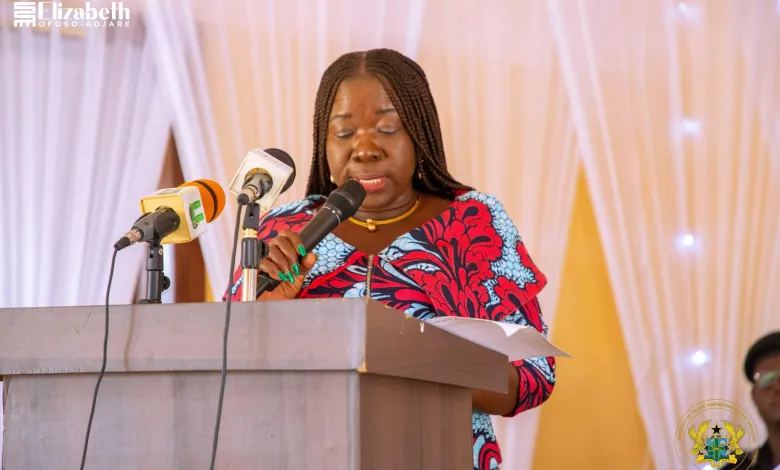
Hon. Elizabeth Ofosu-Adjare, the Minister for Trade, Agribusiness and Industry, has unveiled a transformative blueprint for Ghana’s industrial landscape, asserting that the strategic realignment of her ministry is already yielding unprecedented dividends in the export sector.
Speaking during the latest session of the Government Accountability Series, Hon. Ofosu-Adjare confirmed that the nation’s non-traditional exports (NTEs) reached a historic $2.54 billion in the first half of 2025.
This 41.21% increase over previous figures marks a significant milestone toward the government’s ambitious goal of hitting $10 billion in NTEs by 2030, driven by the presidency’s Executive Instrument that integrated agribusiness directly into industrial policy to eliminate bureaucratic bottlenecks.
“The vision of the President is driven by a desire to implement transformational policies to create sustainable, decent, and well-paying jobs. By realigning the Ministry to incorporate agribusiness, we have moved to rejuvenate manufacturing and address administrative bureaucracies.
“The result is a thriving sector where we attract investment into local production of high-quality raw materials that are in high demand globally”
Hon. Elizabeth Ofosu-Adjare, Minister for Trade, Agribusiness and Industry
The Minister emphasized that the realignment was not merely administrative but a “revolutionary” move to reduce the cost of doing business.

She noted that the synergy of bringing agribusiness under the same umbrella as trade and industry allowed agencies like the Ghana Export Promotion Authority (GEPA) and the Ghana EXIM Bank to work in lockstep, ensuring that raw material production in the hinterlands is directly linked to industrial processing hubs and global export markets.
A critical focus of Hon. Ofosu-Adjare’s presentation was the tangible relief provided to Ghanaian exporters to make them more competitive within the sub-region. Following direct consultations with industry players, the Minister identified that the previous “60-day repatriation period for export proceeds was a major constraint.”


In a strategic move to level the playing field, she successfully negotiated with the Bank of Ghana to extend this timeframe, providing exporters with the liquidity and flexibility needed to compete with neighboring countries that offer more generous terms.
According to Hon. Ofosu-Adjare, the Ministry has also taken a proactive stance on cross-border logistics.
To facilitate the movement of goods by road, the Minister initiated high-level discussions with colleagues in the ECOWAS sub-region to streamline fund transfers and tax payments.
“These interventions have already paid off; notably, 26 metric tons of mangoes were recently transported by road all the way to Morocco, signaling a new era for Ghanaian perishables in North African markets”
Hon. Elizabeth Ofosu-Adjare, Minister for Trade, Agribusiness and Industry

Global Investment and Local Empowerment
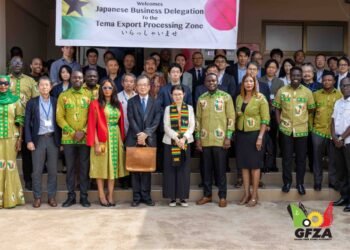
The Minister further highlighted the success of Ghana’s participation in the World Expo in Osaka, Japan, which directly resulted in a 50-member Japanese investment delegation visiting Ghana.
This delegation specifically targeted the automotive components, cocoa, shea, and cashew sectors – areas that Hon. Ofosu-Adjare identified as vital for Ghana’s industrial growth.
She noted that at home, the “Made in Ghana,” promotion continues to gain momentum, bolstered by the supply of over 211,600 coconut seedlings and 2 million pineapple suckers to local farmers, adding thousands of acres to national production.
GEPA’s support for small and medium enterprises (SMEs) has been equally impactful. By showcasing ICT-enabled services at GITEX Global in Dubai and supporting 150 SMEs in handicraft and manufacturing, the authority has secured hundreds of millions of dollars in new orders.
This digital export potential, according to the Minister, is the new frontier for Ghanaian youth under the Africa Continental Free Trade Area (AfCFTA) protocols. “This is exactly where we are: a country of possibility and empowerment,” the trade Minister said, noting that driving global exports is central to the Ministry’s 2026 outlook.
She concluded by reaffirming the government’s commitment to state-owned enterprises like GIHOC Distilleries and the Komenda Sugar Development Company.
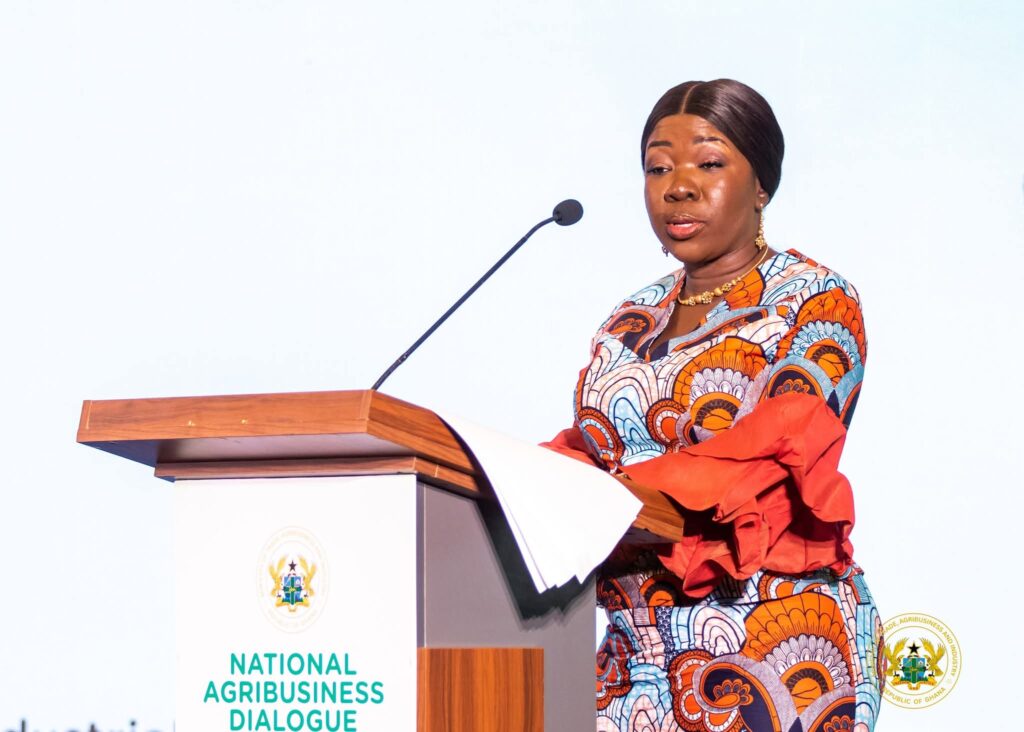
By linking these factories to the “Feed the Industry,” program, the Ministry ensures that the raw materials produced by Ghanaian farmers have a guaranteed market, completing the circle of the President’s industrial revolution.
“The beauty of trade, agribusiness, and industry is that when you work hard, it shows almost immediately. We are building an economy that earns more than it borrows and processes more than it exports raw”
Hon. Elizabeth Ofosu-Adjare, Minister for Trade, Agribusiness and Industry
READ ALSO: Ato Forson Signals 100% IGF Use for Judiciary Development