• About
  • Advertise
  • Privacy Policy
  • Contact
Monday, May 18, 2026
  • Login
The Vaultz News
  • Top Stories
  • News
    • General News
    • Education
    • Health
    • Opinions
  • Economics
    • Economy
    • Finance
      • Banking
      • Insurance
      • Pension
    • Securities/Markets
  • Business
    • Agribusiness
    • Vaultz Business
    • Extractives/Energy
    • Real Estate
  • World
    • Africa
    • America
    • Europe
    • UK
    • USA
    • Asia
    • Around the Globe
  • Innovation
    • Technology
    • Wheels
  • Entertainment
  • 20MOBPL2DNew
  • Jobs & Scholarships
    • Job Vacancies
    • Scholarships
No Result
View All Result
The Vaultz News
  • Top Stories
  • News
    • General News
    • Education
    • Health
    • Opinions
  • Economics
    • Economy
    • Finance
      • Banking
      • Insurance
      • Pension
    • Securities/Markets
  • Business
    • Agribusiness
    • Vaultz Business
    • Extractives/Energy
    • Real Estate
  • World
    • Africa
    • America
    • Europe
    • UK
    • USA
    • Asia
    • Around the Globe
  • Innovation
    • Technology
    • Wheels
  • Entertainment
  • 20MOBPL2DNew
  • Jobs & Scholarships
    • Job Vacancies
    • Scholarships
No Result
View All Result
The Vaultz News
No Result
View All Result
in Finance

Economic Gains Pave Way For Global Finance Congress

Silas Kafui Assemby Silas Kafui Assem
January 22, 2026
Reading Time: 4 mins read
Dr. Zakari Mumuni, 1st Deputy Governor of the Bank of Ghana

Dr. Zakari Mumuni, 1st Deputy Governor of the Bank of Ghana

Dr. Zakari Mumuni, the 1st Deputy Governor of the Bank of Ghana, has declared the nation’s economic recovery a cornerstone for restoring international financial credibility. Speaking at the launch of the ACI World Congress 2026 in Accra, Dr. Mumuni highlighted that Ghana’s selection as the host for this prestigious global event is no accident.

It is, instead, a direct “significant milestone,” reflecting the drastic stabilization of the nation’s macroeconomy over the past year. As global financial market players prepare to converge in Accra on May 21 and 22, the Bank of Ghana is leveraging this moment to showcase a resilient financial hub that has successfully transitioned from a period of high volatility to a state of robust, data-backed growth.

“These achievements underscore our commitment to sustaining the economy’s recovery and resilience. Ghana being host for this year’s congress is a significant milestone for the nation’s international credibility as a stable financial hub.

“The successes chalked up on both policy and macroeconomic fronts position Ghana as a competitive and reliable partner in global markets. We are espousing an open-door policy to maintain this momentum”

Dr. Zakari Mumuni, 1st Deputy Governor of the Bank of Ghana

The hosting of the 64th ACI World Congress marks a historic achievement for the sub-Saharan region. It is the first time in nearly two decades that a country in this block has hosted the event, with South Africa being the only other African host in the congress’s 70-year history.
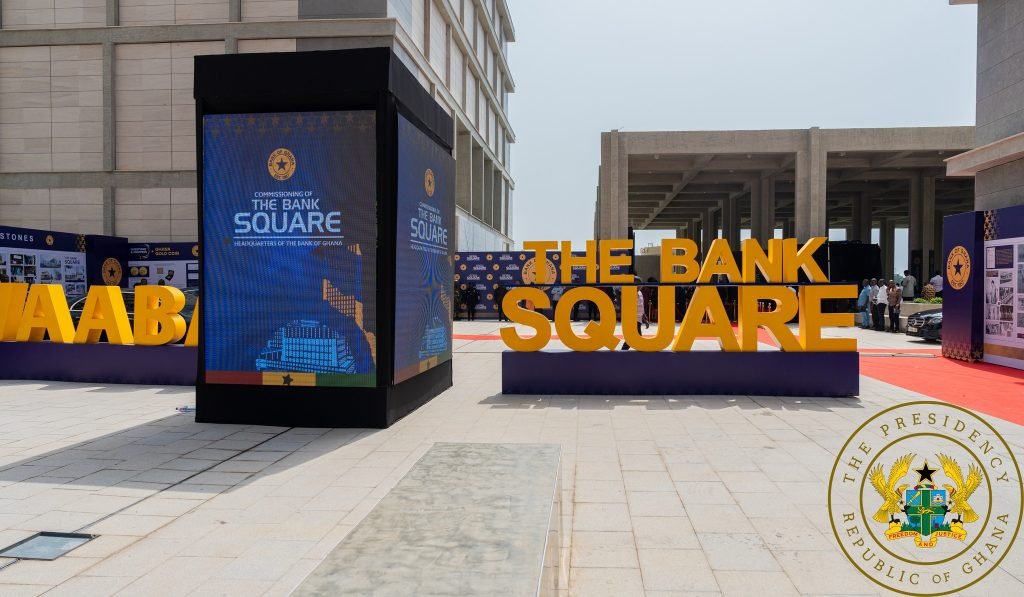
Bank Square
The Bank Square

For Dr. Mumuni, this is the ultimate “testament to macroeconomic stability,” and a signal to global capital that the Ghanaian market is both competitive and reliable. He noted that central to this restored confidence is a series of record-breaking macroeconomic indicators recorded throughout 2025.

ADVERTISEMENT

Dr. Mumuni revealed that inflation underwent a “meteoric fall,” plummeting from a staggering 23.8 percent in December 2024 to just 5.4 percent by December 2025. This disinflation has been supported by a historic performance of the national currency; the Cedi recorded its first annual appreciation since 1992.

Furthermore, Ghana’s external buffers have seen a massive infusion, now exceeding $13.8 billion. This represents approximately 5.7 months of import cover – a figure that significantly outstrips the International Monetary Fund (IMF) program target of three months.

These reserves provide a critical shield against external shocks and have given the central bank the necessary leverage to maintain currency stability and lower interest rates, thereby spurring domestic borrowing and growth.
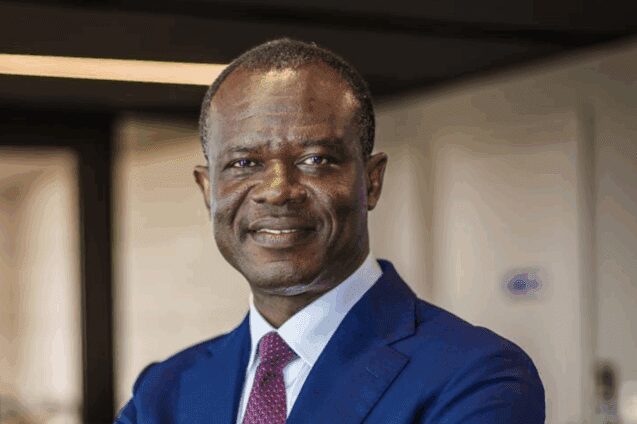
Dr. Zakari Mumuni 2
Dr. Zakari Mumuni, 1st Deputy Governor of the Bank of Ghana

Diversifying through Digital Reform

Beyond the numbers, the Bank of Ghana has implemented aggressive policy reforms to modernize the financial landscape.

Dr. Mumuni specifically cited the passage of the Virtual Asset Service Providers (VASP) Act and the introduction of new guidelines for non-interest banking as pivotal moves. By formalizing the digital asset sector and creating a framework for non-interest financial products, Ghana is opening its doors to a broader array of global investors who previously faced regulatory ambiguity.

Lawrence Osilaja Boampong, CEO of ACI Ghana, noted that these reforms are perfectly timed, revealing that institutional investors from both Europe and the Middle East are now eyeing the May congress as a strategic entry point into the wider African market.

The congress is expected to serve as a catalyst for new partnerships, with investors eager to understand the “success story” behind Ghana’s rapid fiscal turnaround. “A lot of investors are asking themselves, ‘What’s happening in Ghana?’ They want to be a part of this success story,” he added. 

The sentiment of resilience was echoed by Steve Williams, Managing Partner of Treasury Warehouse, who credited the central bank’s coordinated regulatory approach for the current stability. Mr. Williams argued that with sufficient reserves and a projected decline in interest rates, the Ghanaian economy is now better positioned to handle global market fluctuations than at any point in recent history.

Lawrence Osilaja Boampong
Lawrence Osilaja Boampong, CEO of ACI Ghana

For the local financial community, the event is also a moment of immense national pride. Othniel Ekow Kwainoe, a Member of Parliament and the first CEO of ACI Ghana, described the upcoming congress as a “full-circle moment,” that finally puts the Ghanaian financial professional on the global stage.

ADVERTISEMENT

READ ALSO: $70bn IMF Rescue Cushioned Africa’s Economies, Ghana Included

Sign Up to Our Newsletter

Fresh updates, Straight to your inbox

Tags: 1st Deputy Governor of the Bank of GhanaACI GhanaACI World Congress 2026Bank of GhanaCEO of ACI GhanaDr. Zakari MumuniEconomic GainsGlobal Finance CongressLawrence Osilaja Boampong
Share4Tweet3Share1SendSend
Please login to join discussion
Previous Post

NPP Flagbearer Aspirants Sign Peace Pact Ahead of Primaries

Next Post

NPP Bigger than any Individual – Akufo-Addo Preaches Unity

Related Posts

Ecobank Ghana PLC Breaks Silence After Supreme Court Judgement
Banking

Ecobank Ghana PLC Breaks Silence After Supreme Court Judgement

May 17, 2026
Ghana Defies Odds With Record Financial Growth
Banking

Ghana Defies Odds With Record Financial Growth

May 16, 2026
Fidelity Demands Africa Own Its Digital Future At a time when Africa’s digital economy is accelerating at an unprecedented pace, Fidelity Bank Ghana has delivered one of the strongest messages yet on the continent’s technological future. The bank made a bold and urgent case for Africa to stop depending on foreign controlled digital systems and begin building its own infrastructure capable of retaining value, strengthening currencies, and driving long term economic sovereignty. As one of the key sponsors of the 3i Africa summit, Fidelity Bank did not just show up to participate. It arrived with a message that resonated deeply across conference halls and policy discussions. Fidelity Bank emerged as one of the loudest voices championing a future where African nations control the very digital rails that power their economies. Digital Infrastructure Is The New Economic Power One of the defining moments of the summit came during a high level panel discussion on digital public infrastructure, where Adeline Aryee delivered a statement that immediately captured the attention of participants. She declared that if Africa builds its own digital rails, it naturally retains the value created by those systems. Her message was clear and uncompromising. In previous decades, national infrastructure was measured by roads, bridges, ports, and airports. Today, the true engines of economic power are payment platforms, identity systems, financial technology ecosystems, and digital marketplaces. According to Aryee, digital public infrastructure is no longer a luxury. It is now a strategic national asset. Her remarks struck at the heart of one of Africa’s most pressing economic concerns. Despite growing digital adoption, many transactions across the continent still pass through foreign payment systems, resulting in value leakage and continued pressure on local currencies. Ghana’s Success Story Becomes A Continental Blueprint Aryee highlighted Ghana’s progress in financial inclusion, mobile payments, and digital banking, describing the country as an emerging model for other African economies. Over the years, Ghana has invested heavily in domestic payment systems such as GhIPSS and its flagship platform, Gh-link. These systems have significantly expanded access to financial services while promoting digital transactions across urban and rural communities. Yet Aryee argued that inclusion alone is no longer enough. The next chapter for Africa, she insisted, must focus on ownership. She questioned why local transactions continue to depend on foreign rails when domestic infrastructure already exists. According to her, such dependence creates unnecessary external exposure and limits the continent’s ability to fully capture the economic benefits of its growing digital market. Her comments triggered intense debate among summit participants, many of whom acknowledged the urgent need for policy reforms and infrastructure investments. Market Driven Innovation Takes Center Stage Beyond infrastructure, Fidelity Bank also made a strong case for innovation that begins with real market needs. During the Ecosystem Roundtable on platforms, talent, and digital markets, Prince Osei Hyeaman-Addai shared insights from the bank’s years of digital financial innovation. He stressed that successful digital products are not built in boardrooms or based on assumptions. Instead, they are created by listening carefully to the market and understanding customer pain points. According to him, the market itself reveals the problems that need solving, the type of platform required, and the path toward scalable growth. His comments reflected a growing shift in African fintech circles, where customer centered design is becoming essential for product adoption and long term relevance. Trust And Credibility Remain The Real Currency Prince also emphasized that technology alone does not guarantee success. In his view, trust, credibility, and strong operational structures remain the real foundations of successful innovation. He noted that while investor interest in African fintech continues to rise, startups must prove they can deliver sustainable solutions, maintain transparency, and build products that respond to local realities. This perspective reflects Fidelity Bank’s own journey in digital transformation. Over the years, the bank has built strategic collaborations with leading fintech players, including IT Consortium, helping pioneer wallet to bank integrations and mobile financial solutions in Ghana. These partnerships have helped position Fidelity as one of Ghana’s most innovation driven financial institutions. A Defining Moment For Africa’s Digital Future Fidelity Bank’s participation at the 3i Africa Summit 2026 was more than a corporate appearance. It was a strategic declaration. At a time when Africa is racing to build competitive digital economies, the bank’s message was impossible to ignore. Africa cannot simply consume technology created elsewhere. It must own the infrastructure, shape the platforms, and capture the value generated by its digital future. As conversations from the summit continue to ripple across financial and policy circles, one thing is becoming increasingly clear. Africa’s next economic revolution may not be built on oil, gold, or minerals. It may be built on digital rails designed, owned, and powered by Africans. READ ALSO: IMF Ghana Review Ends in Dramatic Cliffhanger Fidelity Demands Africa Own Its Digital Future At a time when Africa’s digital economy is accelerating at an unprecedented pace, Fidelity Bank Ghana has delivered one of the strongest messages yet on the continent’s technological future. The bank made a bold and urgent case for Africa to stop depending on foreign controlled digital systems and begin building its own infrastructure capable of retaining value, strengthening currencies, and driving long term economic sovereignty. As one of the key sponsors of the 3i Africa summit, Fidelity Bank did not just show up to participate. It arrived with a message that resonated deeply across conference halls and policy discussions. Fidelity Bank emerged as one of the loudest voices championing a future where African nations control the very digital rails that power their economies. Digital Infrastructure Is The New Economic Power One of the defining moments of the summit came during a high level panel discussion on digital public infrastructure, where Adeline Aryee delivered a statement that immediately captured the attention of participants. She declared that if Africa builds its own digital rails, it naturally retains the value created by those systems. Her message was clear and uncompromising. In previous decades, national infrastructure was measured by roads, bridges, ports, and airports. Today, the true engines of economic power are payment platforms, identity systems, financial technology ecosystems, and digital marketplaces. According to Aryee, digital public infrastructure is no longer a luxury. It is now a strategic national asset. Her remarks struck at the heart of one of Africa’s most pressing economic concerns. Despite growing digital adoption, many transactions across the continent still pass through foreign payment systems, resulting in value leakage and continued pressure on local currencies. Ghana’s Success Story Becomes A Continental Blueprint Aryee highlighted Ghana’s progress in financial inclusion, mobile payments, and digital banking, describing the country as an emerging model for other African economies. Over the years, Ghana has invested heavily in domestic payment systems such as GhIPSS and its flagship platform, Gh-link. These systems have significantly expanded access to financial services while promoting digital transactions across urban and rural communities. Yet Aryee argued that inclusion alone is no longer enough. The next chapter for Africa, she insisted, must focus on ownership. She questioned why local transactions continue to depend on foreign rails when domestic infrastructure already exists. According to her, such dependence creates unnecessary external exposure and limits the continent’s ability to fully capture the economic benefits of its growing digital market. Her comments triggered intense debate among summit participants, many of whom acknowledged the urgent need for policy reforms and infrastructure investments. Market Driven Innovation Takes Center Stage Beyond infrastructure, Fidelity Bank also made a strong case for innovation that begins with real market needs. During the Ecosystem Roundtable on platforms, talent, and digital markets, Prince Osei Hyeaman-Addai shared insights from the bank’s years of digital financial innovation. He stressed that successful digital products are not built in boardrooms or based on assumptions. Instead, they are created by listening carefully to the market and understanding customer pain points. According to him, the market itself reveals the problems that need solving, the type of platform required, and the path toward scalable growth. His comments reflected a growing shift in African fintech circles, where customer centered design is becoming essential for product adoption and long term relevance. Trust And Credibility Remain The Real Currency Prince also emphasized that technology alone does not guarantee success. In his view, trust, credibility, and strong operational structures remain the real foundations of successful innovation. He noted that while investor interest in African fintech continues to rise, startups must prove they can deliver sustainable solutions, maintain transparency, and build products that respond to local realities. This perspective reflects Fidelity Bank’s own journey in digital transformation. Over the years, the bank has built strategic collaborations with leading fintech players, including IT Consortium, helping pioneer wallet to bank integrations and mobile financial solutions in Ghana. These partnerships have helped position Fidelity as one of Ghana’s most innovation driven financial institutions. A Defining Moment For Africa’s Digital Future Fidelity Bank’s participation at the 3i Africa Summit 2026 was more than a corporate appearance. It was a strategic declaration. At a time when Africa is racing to build competitive digital economies, the bank’s message was impossible to ignore. Africa cannot simply consume technology created elsewhere. It must own the infrastructure, shape the platforms, and capture the value generated by its digital future. As conversations from the summit continue to ripple across financial and policy circles, one thing is becoming increasingly clear. Africa’s next economic revolution may not be built on oil, gold, or minerals. It may be built on digital rails designed, owned, and powered by Africans. READ ALSO: IMF Ghana Review Ends in Dramatic Cliffhanger Fidelity Demands Africa Own Its Digital Future
Banking

Fidelity Demands Africa Own Its Digital Future

May 15, 2026
Absa Bank Ghana Empowers Academic City University College With Money Skills
Banking

Absa Bank Ghana Empowers Academic City University With Money Skills

May 14, 2026

Sign Up to Our Newsletter

Fresh updates, Straight to your inbox

Recent News

Dani Carvajal displays the Uefa Champions League trophy together with his man of the match award in 2024 UCL final

Real Madrid Confirm Carvajal Departure After 23-Year Association

May 18, 2026
President John Dramani Mahama speaking at the 79th World Health Assembly in Geneva, Switzerland

President Mahama Challenges WHO: Reform Must Be Real, Not Ritual

May 18, 2026
IRAWMA 2026

Black Sherif Claims First IRAWMA Win

May 18, 2026
United Nations

UN Warns Anti-LGBTIQ+ Laws Are Expanding in Countries Worldwide

May 18, 2026
President John Dramani Mahama speaking at the 79th World Health Assembly in Geneva, Switzerland

Mahama Unveils Ghana’s ₵3bn Health Boost At Geneva Assembly

May 18, 2026
Next Post
HE Nana Addo Dankwa Akufo-Addo, former President of Ghana

NPP Bigger than any Individual - Akufo-Addo Preaches Unity

The Vaultz News

Copyright © 2025 The Vaultz News. All rights reserved.

Navigate Site

  • About
  • Advertise
  • Privacy Policy
  • Contact

Follow Us

Welcome Back!

Login to your account below

Forgotten Password?

Retrieve your password

Please enter your username or email address to reset your password.

Log In
No Result
View All Result
  • Top Stories
  • News
    • General News
    • Education
    • Health
    • Opinions
  • Economics
    • Economy
    • Finance
      • Banking
      • Insurance
      • Pension
    • Securities/Markets
  • Business
    • Agribusiness
    • Vaultz Business
    • Extractives/Energy
    • Real Estate
  • World
    • Africa
    • America
    • Europe
    • UK
    • USA
    • Asia
    • Around the Globe
  • Innovation
    • Technology
    • Wheels
  • Entertainment
  • 20MOBPL2D
  • Jobs & Scholarships
    • Job Vacancies
    • Scholarships

Copyright © 2025 The Vaultz News. All rights reserved.

This website uses cookies. By continuing to use this website you are giving consent to cookies being used. Visit our Privacy and Cookie Policy.

Discover the Details behind the story

Get an in-depth analysis of the news from our top editors

Enter your email address