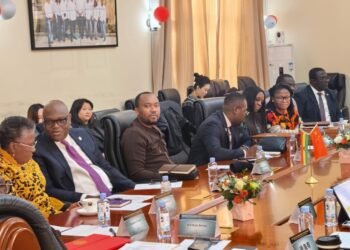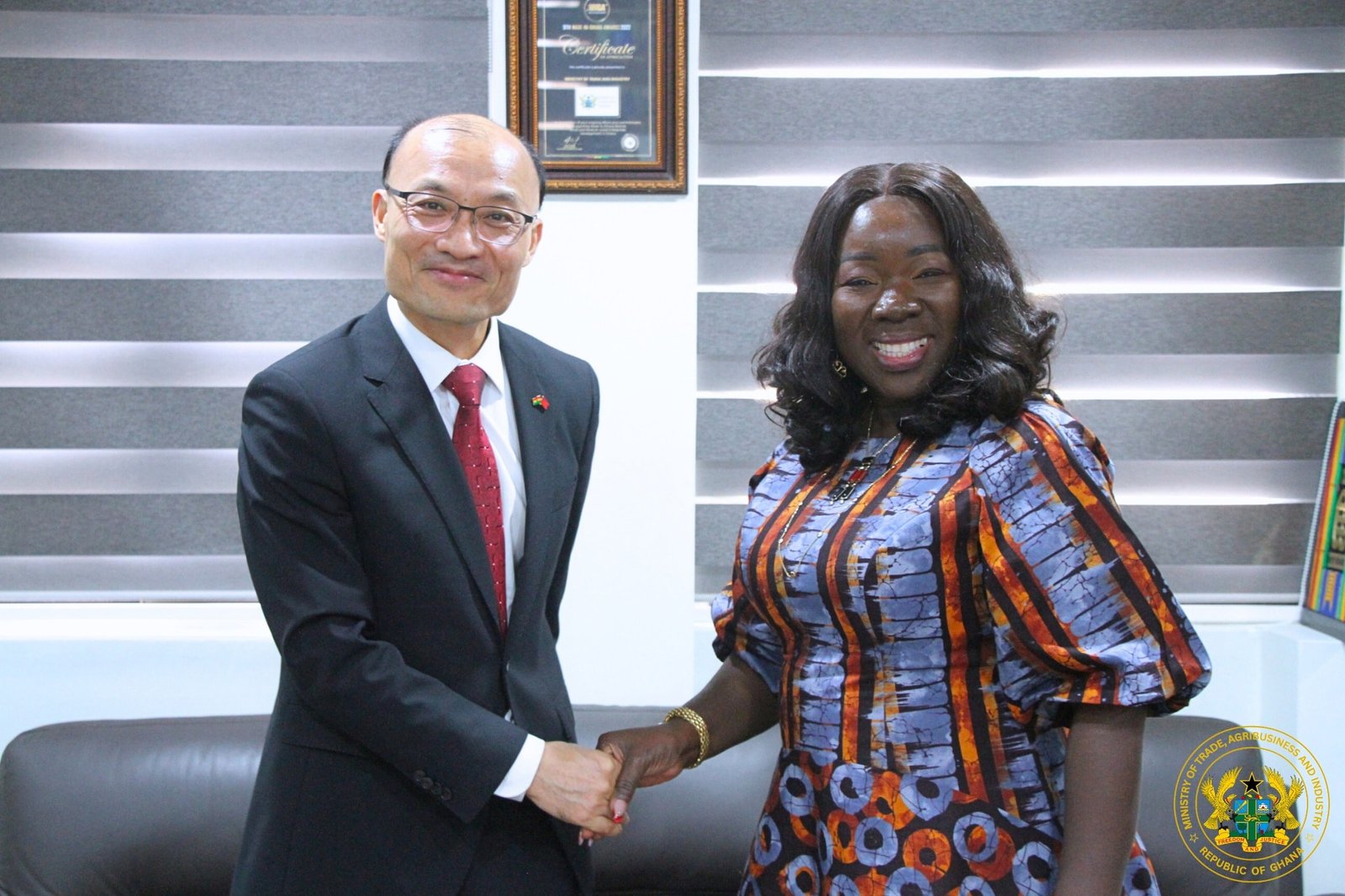
Hon. Elizabeth Ofosu-Adjare, the Minister for Trade, Agribusiness and Industry, has initiated a bold new chapter in Ghana-China relations by announcing the opening of a dedicated Trade Office in Nanjing, China, as a proactive step toward rebalancing trade and securing a larger share of the Chinese market for Ghanaian producers.
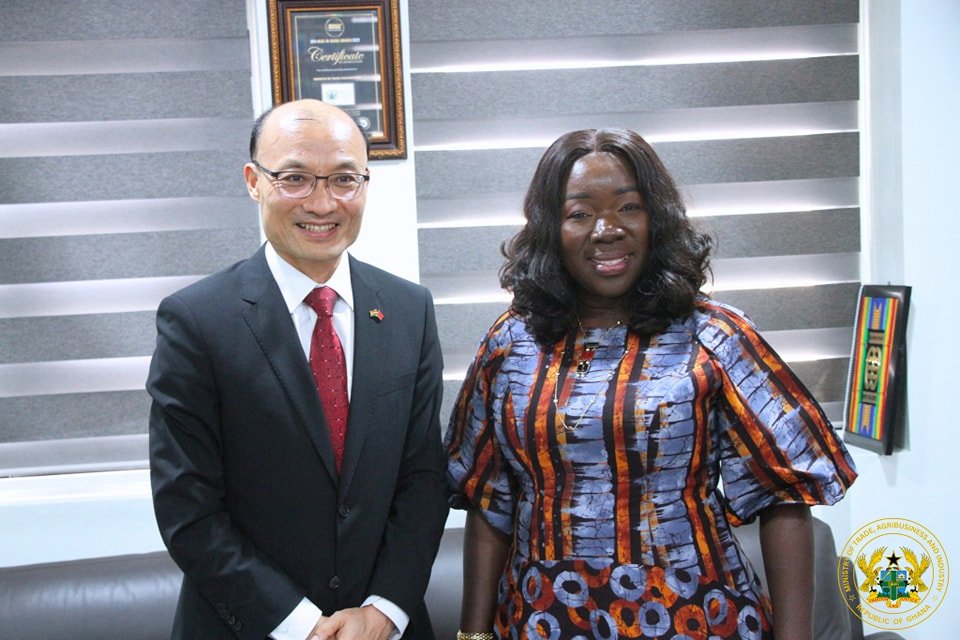
Scheduled to launch in 2026, this strategic outpost in the heart of Jiangsu Province – a global industrial and research powerhouse – is designed to serve as the primary gateway for Ghanaian exports into the world’s second-largest economy. The Minister revealed this in Accra, during a farewell call from the Outgoing Chinese Ambassador, H.E. Tong Defa.
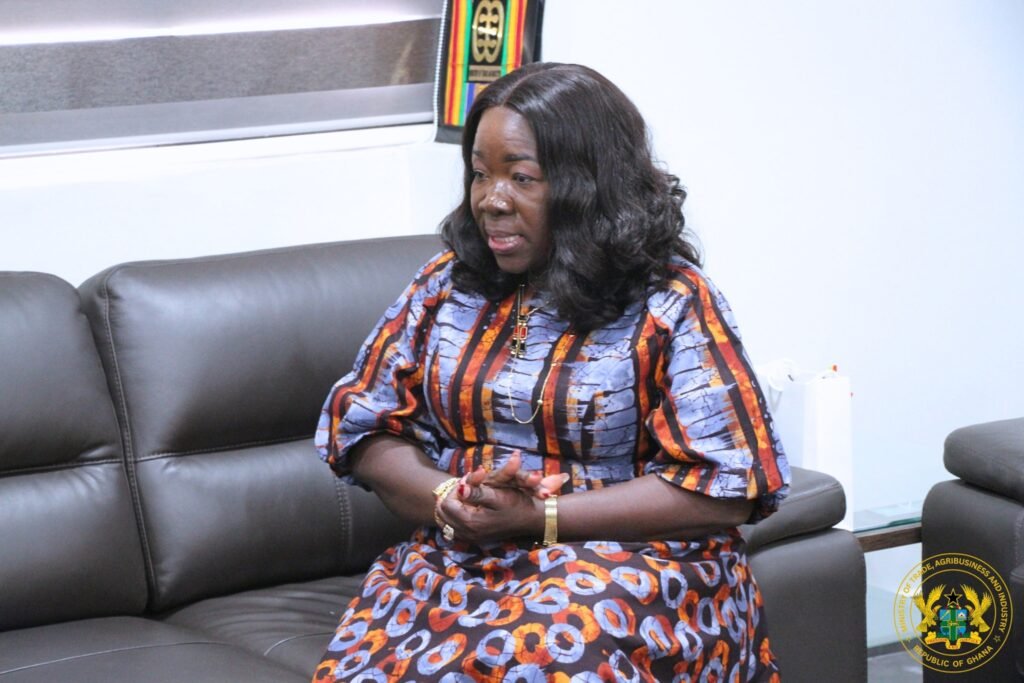
“The move is aimed at promoting and strengthening bilateral trade and investment relations between Ghana and China. This new trade office in Nanjing will be instrumental in bridging the gap between our local producers and the vast Chinese consumer base.
“Ghana is ready to sign the Zero-Tariff Agreement with China, and we are optimistic that this institutional presence will ensure our businesses can fully capitalize on these duty-free opportunities”
Hon. Elizabeth Ofosu-Adjare, Minister for Trade, Agribusiness and Industry
The decision to anchor the new trade office in Nanjing is particularly strategic. Nanjing is not only a historical capital but also a modern center for electronics, manufacturing, and chemical industries.
By establishing a permanent presence there, the Ministry of Trade, Agribusiness and Industry (MoTAI) is providing Ghanaian businesses with the institutional support needed to navigate complex Chinese market protocols.
For Hon. Ofosu-Adjare, the Nanjing office is the physical manifestation of Ghana’s readiness to move from a purely import-driven dynamic toward a more balanced, export-led partnership.
Local Currency Trading
A cornerstone of this renewed partnership is the official commencement of trading in local currencies between the two nations.


MoTAI explained that drastic measures have been taken to reduce the reliance on third-party currencies like the US dollar, which has historically exposed Ghanaian traders to high transaction costs and exchange rate volatility.
During the meeting, Hon. Ofosu-Adjare emphasized that by enabling direct Cedi-to-RMB settlements, the government is providing a natural buffer for the national currency.
“If we are able to trade in our own currencies, Ghana’s currency will be strengthened because the bulk of our trading goes to China. This reduces our dependency on external buffers and ensures that we retain more value within our domestic economy”
Hon. Elizabeth Ofosu-Adjare, Minister for Trade, Agribusiness and Industry
This shift is critical for small and medium-scale enterprises (SMEs) that have previously struggled with the scarcity and cost of foreign exchange.
The announcement comes at a time when Ghana is preparing to sign a comprehensive Zero-Tariff Agreement with China. This deal, which stems from a broader policy to grant duty-free access to Ghanaian exports, covers nearly 98 percent of taxable products.
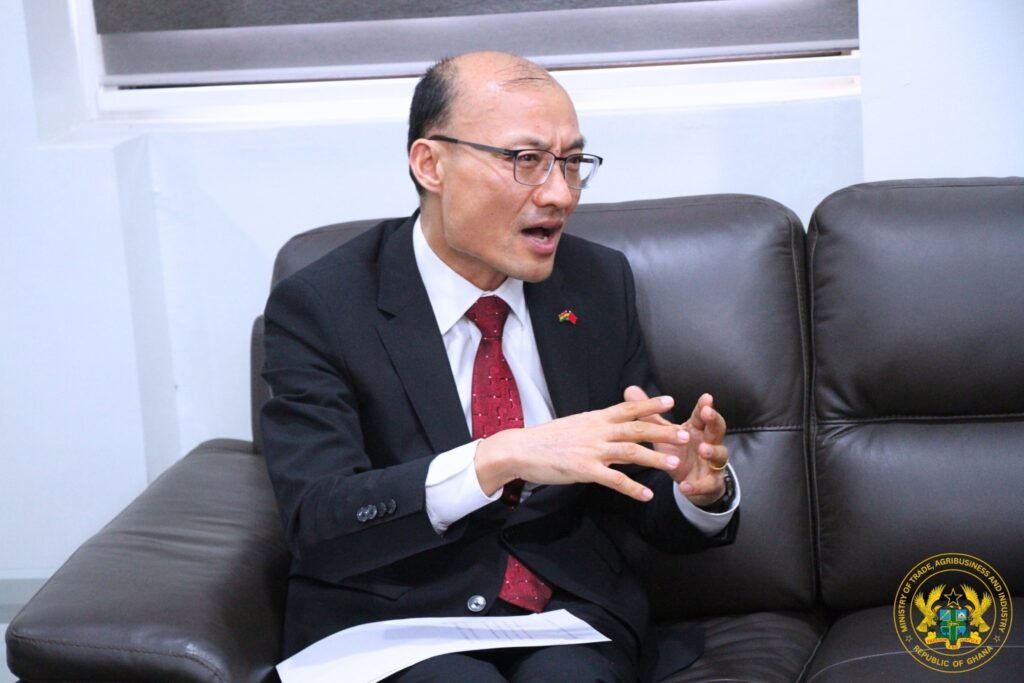
Ambassador Tong Defa noted that this framework has already bolstered bilateral trade to an unprecedented $15 billion, with significant interest from Chinese companies eager to invest in Ghana’s industrial and educational sectors.
Under the leadership of President John Dramani Mahama, the government is positioning this agreement as a catalyst for the “24-Hour Economy,” and the “Big Push” infrastructure program. The Zero-Tariff deal is expected to ignite demand for value-added Ghanaian products such as processed cocoa, cashew, and textiles, helping to narrow the trade imbalance.
“I am happy that Chinese businesses are doing very well under President Mahama,” Hon. Ofosu-Adjare noted.
As Ambassador Tong Defa concludes his tenure, the Minister commended his dedication to attracting strategic investment, including recent grants for a university in Damongo and a multipurpose market in Aflao. These projects illustrate the multifaceted nature of the relationship, which extends beyond trade into infrastructure and human capital development.
The Nanjing office will also support the newly launched 24H+ Mission, ensuring that the research and investment goals discussed in Beijing are implemented on the ground.
By combining zero-tariff market access with local currency trading and a permanent presence in China’s industrial heartland, MoTAI is ensuring that Ghana’s economic “Black Star” shines brighter on the global stage.