Minority caucus in parliament has sounded a distress call over a staggering US$214 million loss involving the Ghana Gold Board (GoldBod) and the Bank of Ghana (BoG), categorizing the deficit as a clear case of causing financial loss to the state.
The lawmakers are demanding immediate intervention from the central bank to rectify what they described as a breakdown in fiduciary responsibility, following revelations that state funds have been eroded through a combination of trading inefficiencies and questionable fee structures.
This alarming fiscal gap was brought to light by the International Monetary Fund’s (IMF) September 2025 Staff Report, which flagged the US$214 million as a “quasi-fiscal loss” stemming from the domestic gold purchase programme.
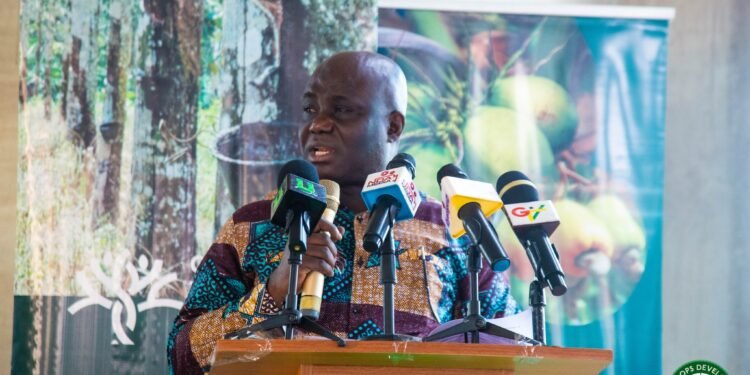
Hon. Afenyo-Markin, the Minority leader argued that the loss represents a systemic failure where the central bank provided funds for gold acquisitions, only to see the value dissipated by exchange rate fluctuations and the payment of unauthorized fees.
He stressed that the BoG cannot benefit from the program’s successes while distancing itself from the resultant liabilities, warning that the current lack of accountability will not be tolerated.
“How can there ever be a justification that in rolling out a policy, there is an economic cost? The central bank must not forget the true definition of causing financial loss as laid down by Justice Afreh in the Solomey case. What is happening amounts to a financial loss to the state.”
Hon. Afenyo-Markin
Legal Threshold of Financial Loss

From the Minority’s perspective, the US$214 million deficit satisfies the legal criteria for “wilfully causing financial loss to the state,” a precedent firmly established in Ghanaian jurisprudence.


Hon. Afenyo-Markin specifically referenced the Solomey case, where the late Justice Afreh defined the offence as any act or omission by a public officer that leads to a quantifiable depletion of national resources.
In the extractive sector, where margins are tight and risks are high, the Minority contends that the Bank of Ghana’s decision to absorb “GoldBod off-taker fees” and losses from artisanal doré gold transactions constitutes a reckless disregard for the public purse.
The Minority’s argument hinges on the fact that these losses were predictable and avoidable, yet the central bank proceeded with a structure that essentially “feasted” on state liquidity without safeguarding the principal capital.
Accountability and IMF Red Flags

The IMF’s Fifth Review report provides the technical backbone to these claims, noting that the losses reached 0.2 percent of GDP by the end of the third quarter of 2025.
While the government has defended the programme as a tool for reserve accumulation, the Minority views the $214 million figure as an “unjustifiable economic cost” that should have been captured on the national budget rather than hidden within the BoG’s balance sheet.
The Minority leader revealed that senior legal experts within the administration had previously warned of these specific risks, suggesting that the current financial hemorrhaging is the result of ignored advice.
The Minority asserts that the BoG’s failure to manage the “exchange rate fluctuations” associated with the Gold-for-Reserves scheme has turned a strategic policy into a fiscal liability.
Call for Institutional Reform

The Minority Leader’s demand for action centers on the central bank’s inability to “shift the blame” to Gold Board for a programme it co-manages and funds.
By highlighting the confusion over accountability, Hon. Afenyo-Markin is calling for a total overhaul of how the gold purchase programme is governed.
He maintains that the current arrangement, which involves the payment of fees the bank is “legally not obliged to make,” serves as a conduit for the loss of state funds.
To the Minority, the IMF’s disclosure is not just an accounting entry but a “stark reminder” of mismanagement that requires the BoG to immediately “take steps to address this” before further damage is done to the country’s macroeconomic stability.
READ ALSO: Western Region Investment Forum Targets Local Industrial Growth