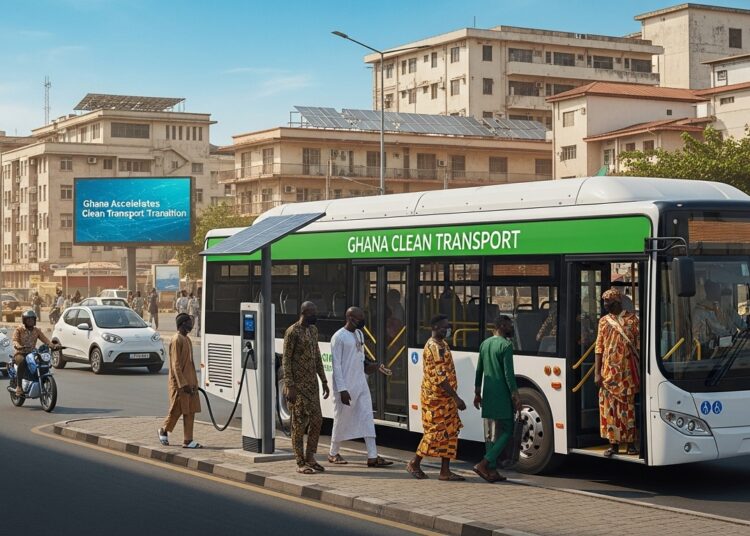
Ghana has been urged to fast-track the decarbonisation of its transport sector as a critical step toward reducing emissions, improving public health, and strengthening its emerging automotive industry. The call was made by the UK–Ghana Jobs and Economic Transformation (JET) Programme on Monday, January 26, to mark the International Day of Clean Energy.
According to the programme, Ghana is well positioned to harness clean energy solutions to drive industrial competitiveness, create quality jobs, and reinforce its ambition of becoming a leading automotive hub in West Africa, in line with Sustainable Development Goal 7.
Speaking on the clean energy transition, Development Director at the British High Commission in Accra, Terri Sarch, highlighted the strategic role of Ghana’s automotive industry in achieving sustainable growth.
“Ghana’s automotive sector has the potential to be a powerful driver of clean energy transition, industrial growth and job creation.
“This is a part of our partnership approach with Ghana on mutual economic growth, through policies and investments that accelerate cleaner transport, strengthen local manufacturing, and deliver economic opportunities that are inclusive and sustainable.”
Terri Sarch, Development Director at the British High Commission in Accra
The JET Programme emphasised that aligning clean energy ambitions with industrial policy would allow Ghana to capture both environmental and economic benefits.
Call for High-Level Leadership

The programme urged Vice President Professor Jane Naana Opoku-Agyemang, the champion of the Ghana Automotive Development Policy (GADP), alongside the Minister of Trade, Agribusiness and Industry, Elizabeth Ofosu-Adjare, to spearhead an early and coordinated push toward cleaner transport.
According to JET, strong political leadership is essential to accelerate reforms that support an inclusive energy transition and position the automotive sector at the centre of decarbonisation efforts.
Progress on clean energy, the programme noted, is critical to Ghana’s commitment under its Nationally Determined Contribution to reduce greenhouse gas emissions by 15 per cent by 2030. Beyond climate targets, transport emissions are imposing mounting public health and economic costs.
Transportation remains one of Ghana’s largest sources of greenhouse gas emissions, accounting for nearly half of all energy-related emissions.
Emissions from the sector have increased by almost 15 per cent between 2015 and 2023, driven largely by heavy reliance on fossil fuels, an ageing vehicle fleet, and rapid urbanisation.
The JET Programme warned that air pollution is now the second leading cause of deaths in Ghana, surpassing the combined toll of HIV, tuberculosis and malaria. The economic impact is estimated at about $3 billion annually, roughly four per cent of the country’s GDP.
Ageing Vehicle Fleet a Major Challenge

Ghana currently has an estimated 3.2 million vehicles on its roads, with an average vehicle age of 14 years. Annual vehicle imports stand at about 100,000 units, with nearly 80 per cent consisting of used vehicles, many of which are over a decade old and highly polluting.
While adoption of electric vehicles is gradually increasing, particularly in the two- and three-wheeler segment, the transition to a modern, low-emission vehicle fleet remains slow. Without deliberate intervention, the programme warned, the shift could take decades.
A mid-term review of the Ghana Automotive Development Policy conducted in 2025 by the Ministry of Trade, Agribusiness and Industry, with support from the UK–Ghana JET Programme, showed that the policy has already delivered tangible gains.
The review found that the GADP helped unlock approximately $98 million in investment from global manufacturers such as Volkswagen, Toyota, Kia, Nissan and Hyundai, alongside local firms including Kantanka. Seven vehicle assembly plants have been established, with a combined installed capacity of 140,000 units per year.
However, domestic demand for new vehicles remains significantly below this capacity, limiting the sector’s overall economic impact and slowing the uptake of cleaner vehicles.
Affordability and Financing Gaps
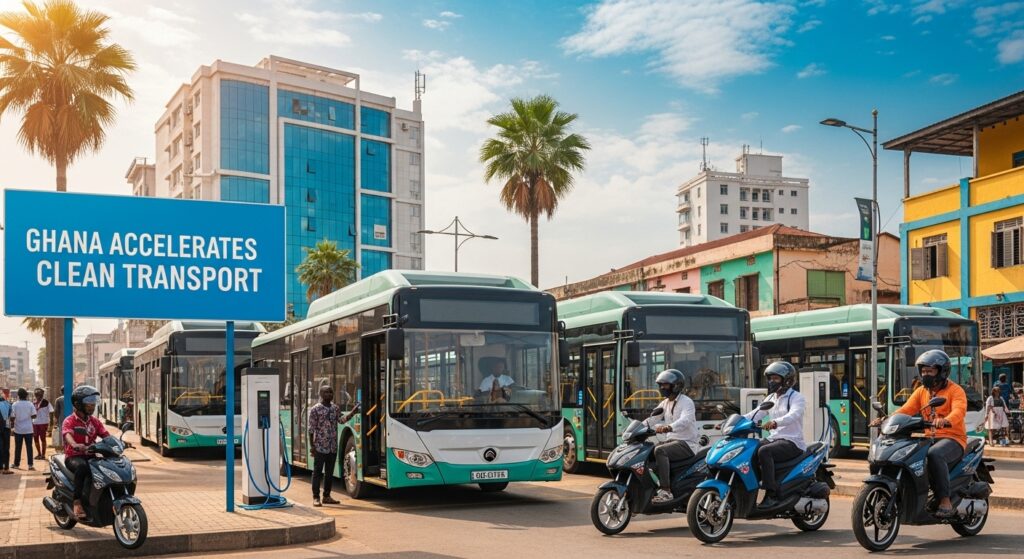
Affordability was identified as a major constraint to cleaner mobility. The programme pointed to the absence of structured, asset-backed vehicle financing schemes and the dominance of cash-based purchases, which restrict access to new and cleaner vehicles, particularly for low-income households.
These barriers, the JET Programme noted, are undermining both environmental objectives and the growth potential of the local automotive industry.
To address these challenges, the programme outlined several priority actions. These include fast-tracking approval of the revised Ghana Automotive Development Policy to explicitly include electric vehicles and two- and three-wheelers, supporting asset-based vehicle financing through participating financial institutions, and prioritising government procurement of locally assembled vehicles.
According to the programme, such measures would help boost demand, improve investor confidence, and accelerate the transition to cleaner transport.
Marking the International Day of Clean Energy, the UK–Ghana JET Programme said Ghana has a clear opportunity to lead in clean manufacturing and sustainable transport across the region if decisive action is taken.
Accelerating the clean transport agenda, it argued, would deliver cleaner air, safer roads, thousands of skilled jobs, and a more competitive manufacturing base, while reducing emissions and improving public health outcomes.
With policies already in place and early successes recorded, the programme maintained that the challenge now lies in scaling what works to secure long-term environmental and economic gains.
READ ALSO: Mahama Hails First Sky Philanthropy, Pushes Preventive Healthcare