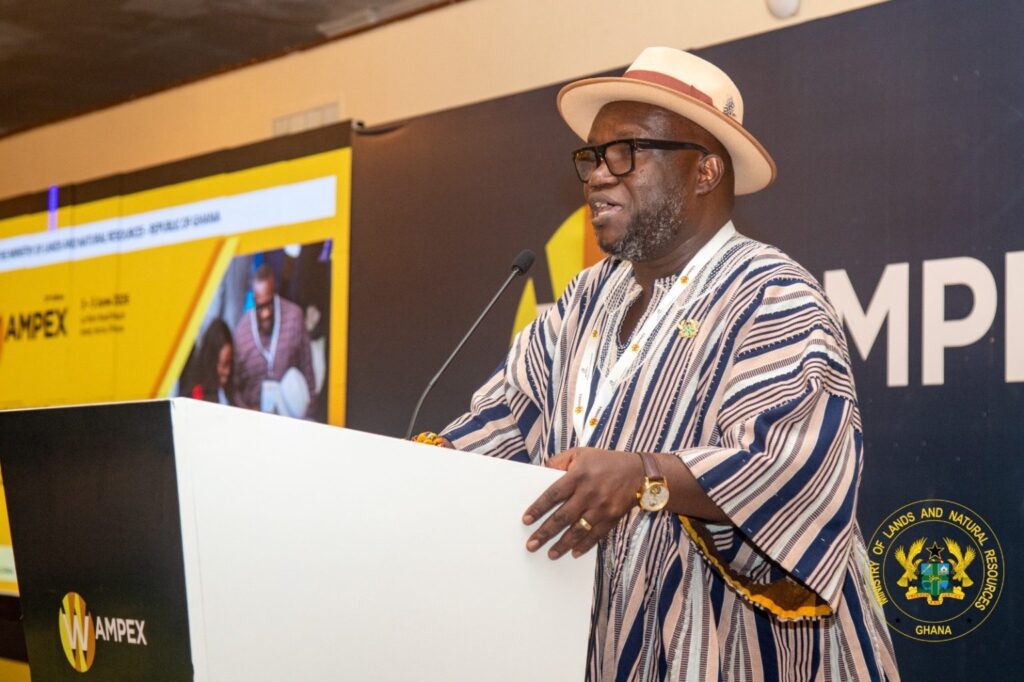
President of the Ghana Chamber of Mines and Vice President for External Affairs at Gold Fields, Michael Edem Akafia, has urged the government to urgently restructure Ghana’s local content policy, shifting the national focus away from strict domestic ownership requirements toward a comprehensive framework centered on manufacturing, technology transfer, and capital investment.
Mr. Akafia emphasized that the primary metric of success for domestic procurement laws should be their capacity to foster industrialization and secure real economic value within the country’s borders.
He warned that overemphasizing the nationality of business owners without insisting on actual local production risks transforming the domestic private sector into a class of import intermediaries rather than industrial innovators.
“One of the things, we at the Ghana Chamber of Mines have been focusing on is ensuring value retention rather than promoting local content for its own sake. Value addition is absolutely critical; it should be a priority above all priorities. The two objectives of local ownership and capacity building should be balanced to ensure that we achieve the best outcomes, as one should not come at the expense of the other.”
Michael Edem Akafia

Mr. Akafia clarified that while the Ghana Chamber of Mines remains deeply committed to advancing indigenous participation in the extractive industry, the current regulatory structure can inadvertently penalize high-value entities.
He explained that current definitions of local content often require suppliers to be exclusively Ghanaian-owned to qualify for specific procurement slots, an approach that can discourage foreign companies from setting up capital-intensive factories in Ghana or forming meaningful technology partnerships.
By realigning the policy to prioritize local value retention over simple equity distribution, Ghana could attract substantial foreign direct investment, boost long-term employment, and build a resilient industrial core capable of supporting the mining sector locally.
The Pitfalls of Ownership-Centric Regulation
The focus on strict corporate ownership structures under current mining procurement regulations has created structural imbalances that do little to advance Ghana’s macroeconomic stability.
Mr. Akafia observed that an excessive legislative focus on the nationality of shareholders often creates a counterproductive scenario where local participation is legally maximized on paper, yet the vast majority of goods, machinery, and specialized items supplied to the mining industry continue to be fully imported from abroad.
This dynamic creates a “fronting” economy where local firms act as logistical pipelines for foreign goods, failing to build any indigenous manufacturing capabilities or engineering expertise.

To illustrate how these strict ownership definitions harm the domestic market, the Chamber President highlighted the case of Tema Lube Oil Company Limited (TLOC).
Established by a consortium of oil marketing firms, including Shell, the company maintains extensive physical operations in Ghana, employs an overwhelmingly Ghanaian workforce, and contributes significant corporate taxes to the state.
However, under certain narrow legal interpretations applied to high-value fuel and lubricant procurement, companies like TLOC face potential disqualification or market disadvantages simply because they do not feature exclusive, 100 percent Ghanaian ownership.
Mr. Akafia maintained that a comprehensive review of the law is necessary, noting that “some provisions of the existing local procurement framework do not fully reflect current market realities.”
Industrialization and the Balance of Payments
A structural pivot toward deep local value addition is critical to tackling Ghana’s historical economic vulnerabilities, particularly its persistent balance-of-payments deficits and heavy import dependence.

In the broader energy and mining ecosystem, the continuous outward flight of capital to purchase foreign-manufactured spare parts, specialized chemicals, and heavy equipment exerts unrelenting downward pressure on the local currency.
By transforming local procurement laws into an industrial catalyst, the state can incentivize international technology firms to establish local assembly plants and specialized manufacturing hubs in partnership with indigenous investors.
A Balanced Path Forward for Extractive Policy
Achieving these structural reforms requires institutional synergy and an ongoing dialogue between state regulators, the Ghana Chamber of Mines, and commercial stakeholders to refine local content guidelines in tandem with market trends.
The Chamber advocates a balanced regulatory ecosystem where foreign capital, technology, and specialized knowledge can seamlessly integrate with local human capital and domestic business networks.
Rather than closing markets through protectionist ownership barriers, local content laws should reward companies based on their real economic footprints, such as their domestic infrastructure investments, training programs, and research initiatives.
Ultimately, the refinement of Ghana’s procurement laws must seek a sustainable equilibrium that expands indigenous corporate capacity without creating an inhospitable climate for foreign direct investment.