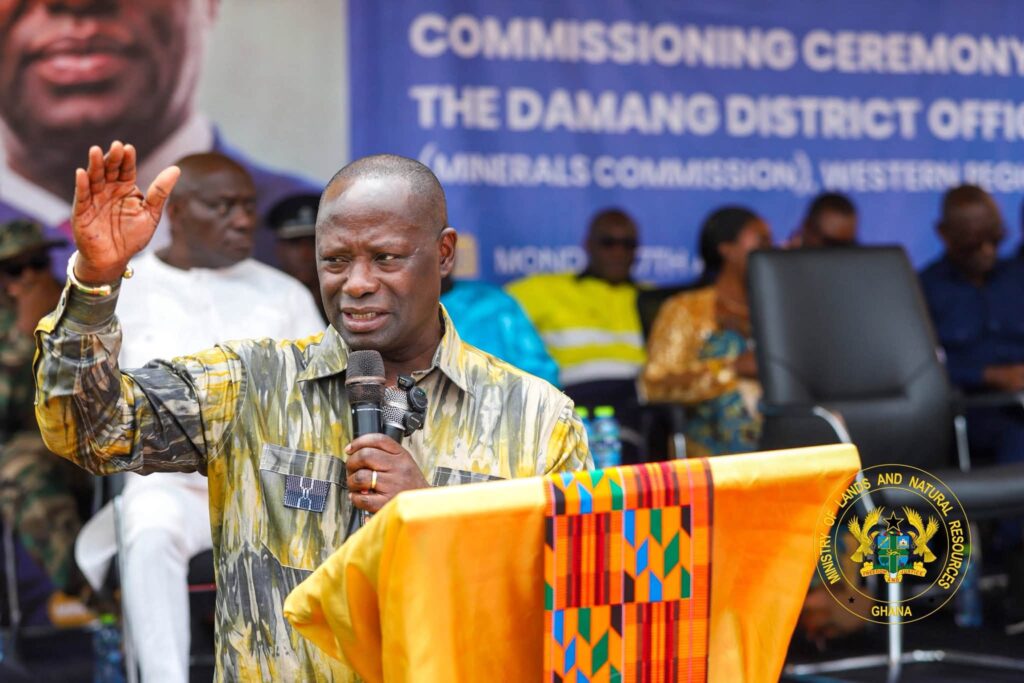
The Minister for Lands and Natural Resources, Hon. Emmanuel Armah-Kofi Buah (MP), has emphasized that the newly commissioned Minerals Commission’s Damang District Office in the Western Region, marks another significant milestone in Government’s drive to decentralise mineral administration and bring regulatory services closer to mining communities.
This newly established operational facility is strategically engineered to strengthen licensing procedures, routine inspections, environmental and safety monitoring, stakeholder engagement, and regulatory compliance.
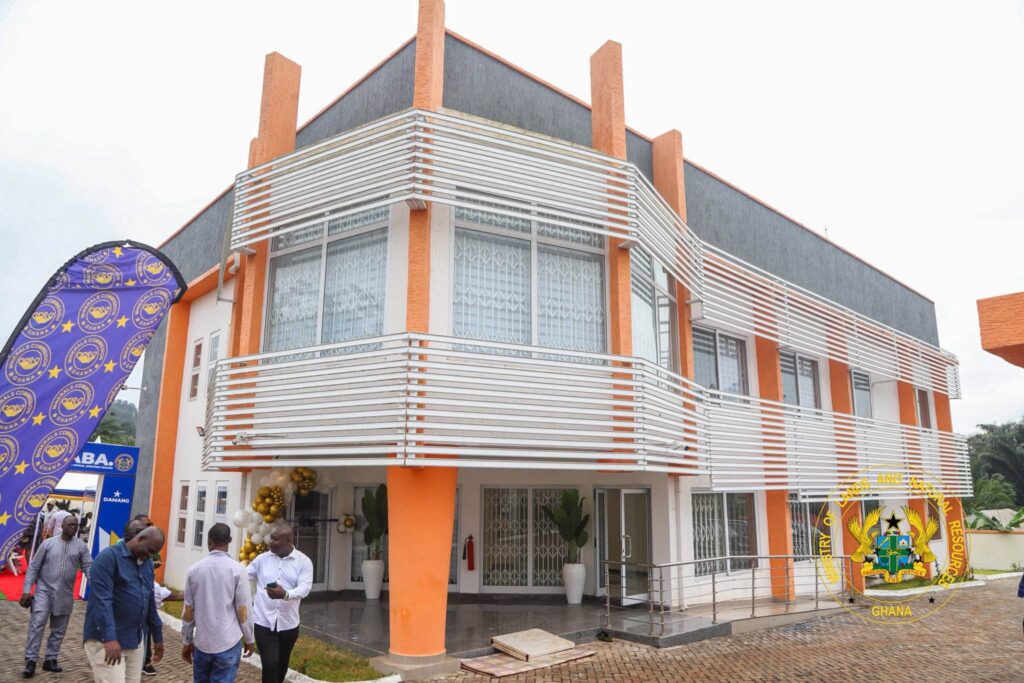
By locating administrative functions directly in Damang, the initiative provides mining companies, local businesses, and host communities with direct access to the Commission’s core services while reducing bureaucratic delays.
“…The facility is a demonstration of Government’s commitment to a community-centred and bottom-up approach to mineral resource governance, where local participation and consultation are strengthened in decisions affecting mining communities.”
Hon. Emmanuel Armah-Kofi Buah
Institutionalising Local Participation in Extractive Administration
The opening of the district office represents a departure from centralized top-down oversight in favour of grassroots community engagement.
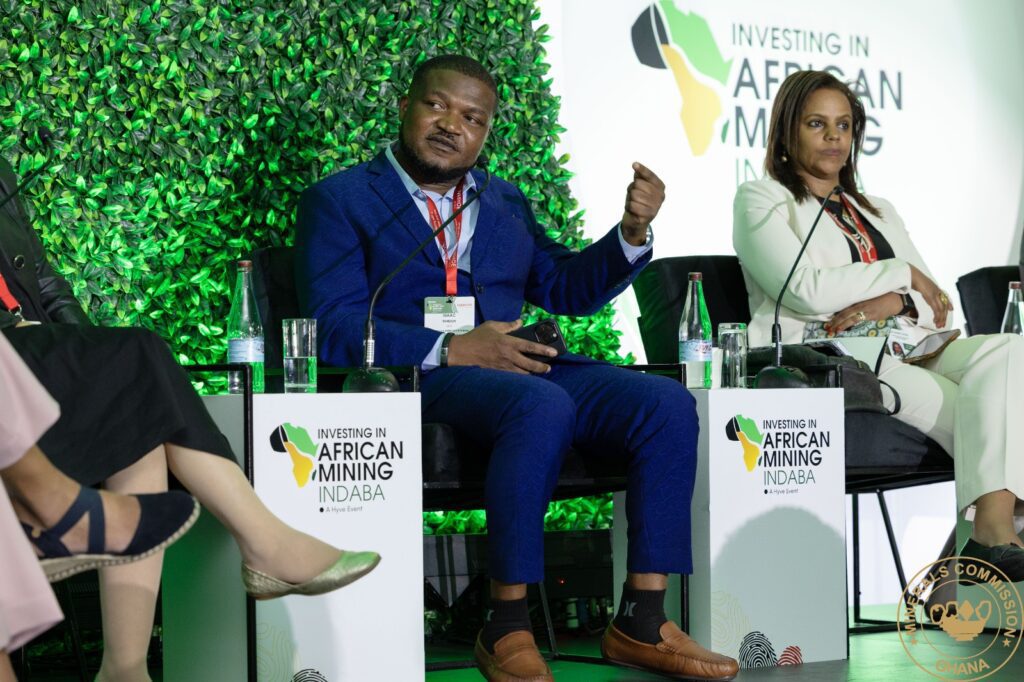
Mr. Isaac Tandoh, CEO of the Minerals Commission, reaffirmed the Commission’s commitment to responsible mining, regulatory excellence, and local content development, stressing that decentralisation is “not simply about constructing offices but ensuring that regulation is accessible, responsive and effective”.
Through localized monitoring, regulators can immediately address grievances and evaluate safety compliance in real time.
The Damang Office will therefore serve as a critical regulatory hub, supporting legitimate investment, empowering local businesses, and ensuring that Ghana’s mineral resources are developed responsibly.
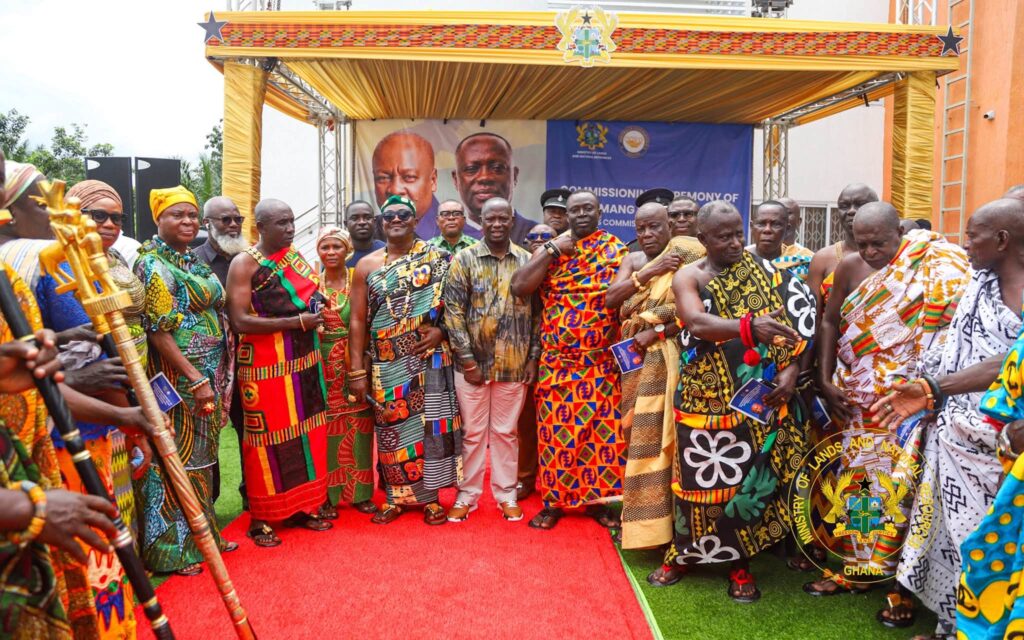
Present at the unveiling to endorse this institutional transformation were the Chief of Damang, Nana Kwaku Armah II, Hon. Wisdom Cudjoe, the MP for Prestea Huni-Valley, and key stakeholders of the Commission.
How Modern Decentralized Infrastructure Enhances Bottom-Up Mining Regulation
Physical and digital regulatory infrastructure at the district level transforms abstract governance policies into tangible protections for mining communities.
When regulatory bodies establish state-of-the-art administrative hubs directly within host districts, the cost and logistical friction of compliance for small-scale miners and local businesses drop sharply.
Proximity encourages informal operators to transition into the formal sector, giving government a clearer view of local operations while granting miners access to legal protections, safety guidelines, and modern environmental standards.
Furthermore, physical infrastructure in mining districts creates an ongoing feedback loop between civil society, traditional leaders, and state officials.
Rather than traveling to national headquarters in Accra to lodge complaints or seek licenses, local stakeholders can participate in direct, face-to-face consultations.
On-site staff can conduct frequent unannounced environmental and safety inspections, monitor tailings dams, and enforce local content requirements that mandate the hiring and procurement of Ghanaian workers and suppliers.
Ultimately, equipping district offices with dedicated personnel and modern equipment operationalizes the “bottom-up” model.
It ensures that local resource governance is driven by real-time field data and community inputs, resulting in sustainable mining practices that safeguard both current livelihoods and future generations.
Strengthening Local Content and Sustainable Resource Exploitation
Decentralised mineral administration serves as the primary mechanism for realizing genuine local content development in host communities.
When oversight facilities sit directly alongside extraction sites, regulators can monitor whether concession holders actively prioritize local sub-contractors, supply chains, and labor forces.
This operational proximity ensures that economic benefits generated from natural resource extraction circulate back into host communities rather than bypassing them entirely.
Moreover, decentralized infrastructure reinforces long-term environmental stewardship. Continuous on-the-ground regulatory presence deters illegal land degradation, river pollution, and unsafe working conditions before catastrophic damage occurs.
By bridging the gap between national policymakers and grassroots communities, modern district hubs create a transparent, accountable framework where extractive activities are managed sustainably for the benefit of present and future generations.
READ ALSO: FIFA’s Chief Operating Officer Leaves Role Following FFE Proposal Criticism