Ghana’s petroleum industry is confronting a problem that cannot be solved by squeezing more output from existing fields alone: the country’s mature oil assets are continuing to decline, while new production has yet to arrive at a scale capable of replacing the barrels being lost.
GNPC’s 2025 Annual Report records the fifth consecutive year of declining crude oil production, a trend the Corporation describes as a threat to the long-term sustainability of the upstream sector.
Average crude production from Jubilee, TEN and Sankofa Gye Nyame stood at 102,199 barrels per day, slightly below the annual target of 103,201 barrels per day.
The underlying numbers reveal why the issue is becoming harder to dismiss as a temporary downturn.
Mature fields remain under mounting pressure
Total oil production from the three producing fields fell to 37.30 million barrels in 2025.
TEN, which once reached 23.56 million barrels of annual production in 2018, produced 5.83 million barrels in 2025.
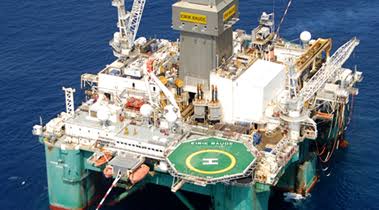
Sankofa Gye Nyame also declined from its 2020 peak of 18.70 million barrels to 9.26 million barrels in 2025.
Jubilee remains the largest producing asset and has helped cushion the national decline.
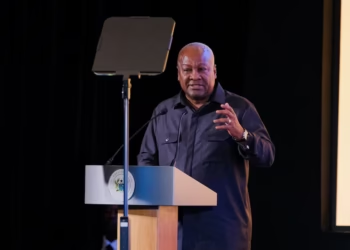
“The sector registered its fifth consecutive year of decline in crude oil output threatening long term survival of the sector.”
Kwame Ntow Amoah, Chief Executive Officer, GNPC
The significance extends directly into Ghana’s wider economy.
Declining crude production means fewer barrels available for lifting, lower exposure to petroleum-sector upside and greater pressure on the country to bring new discoveries into production quickly enough to replace mature output.
New resources must move beyond discovery
GNPC’s response is increasingly focused on reserve replacement rather than simply protecting current production.
The Corporation says the Eban-Akoma discoveries in Cape Three Points Block 4 achieved commerciality during 2025, with estimated peak production of about 6,500 barrels per day and an estimated addition of 15.8 million barrels to Ghana’s resource base.
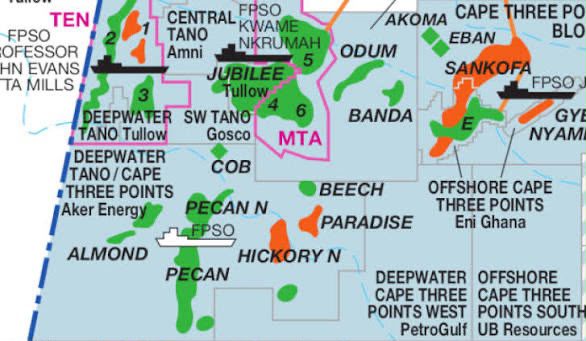
That is encouraging, but the scale also puts the challenge into perspective.
Eban-Akoma is important, yet a development expected to produce thousands of barrels per day cannot by itself reverse a national decline measured across tens of millions of barrels annually.
The development timetable is therefore critical. GNPC plans to tie the Eban-Akoma development into existing OCTP infrastructure, with first oil anticipated in the second quarter of 2029, subject to approvals and execution readiness.
The more immediate opportunity may lie in extracting additional value from discoveries and smaller resources that have historically struggled to justify standalone development costs.
Exploration is becoming central to Ghana’s next oil chapter
GNPC’s Marginal and Stranded Fields Development Programme is designed around that problem.
The strategy seeks to combine smaller or infrastructure-constrained resources through clustering, shared infrastructure, phased development and modular technologies.
At the frontier, the Voltaian Basin represents an even longer-term bet.
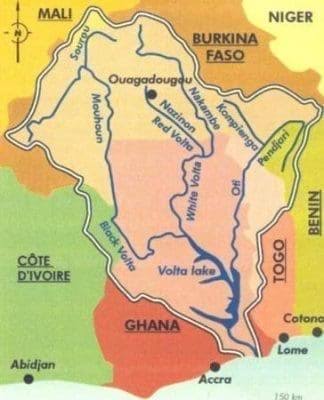
GNPC and GNPC Explorco are preparing an exploration well targeted for the fourth quarter of 2026.
If completed as planned, it would mark the first drilling activity in the basin since Premuase-1 in 1974.
“Exploration remains fundamental to securing the long-term future of Ghana’s petroleum sector.”
GNPC Annual Report 2025
There is also considerable offshore upside.
GNPC reports remaining prospective resources of about 304 million barrels of oil equivalent in parts of Cape Three Points Block 4, while WCTP Block 2 continues to be advanced as an exploration and appraisal asset with discovered resources and access to existing offshore infrastructure.
Operatorship could determine GNPC’s next phase
The strategic calculation is straightforward.
Ghana cannot depend indefinitely on increasingly mature fields while treating exploration and development as future possibilities.
Every year of declining production without sufficient reserve replacement reduces the room for manoeuvre.
The report shows that GNPC understands the problem.
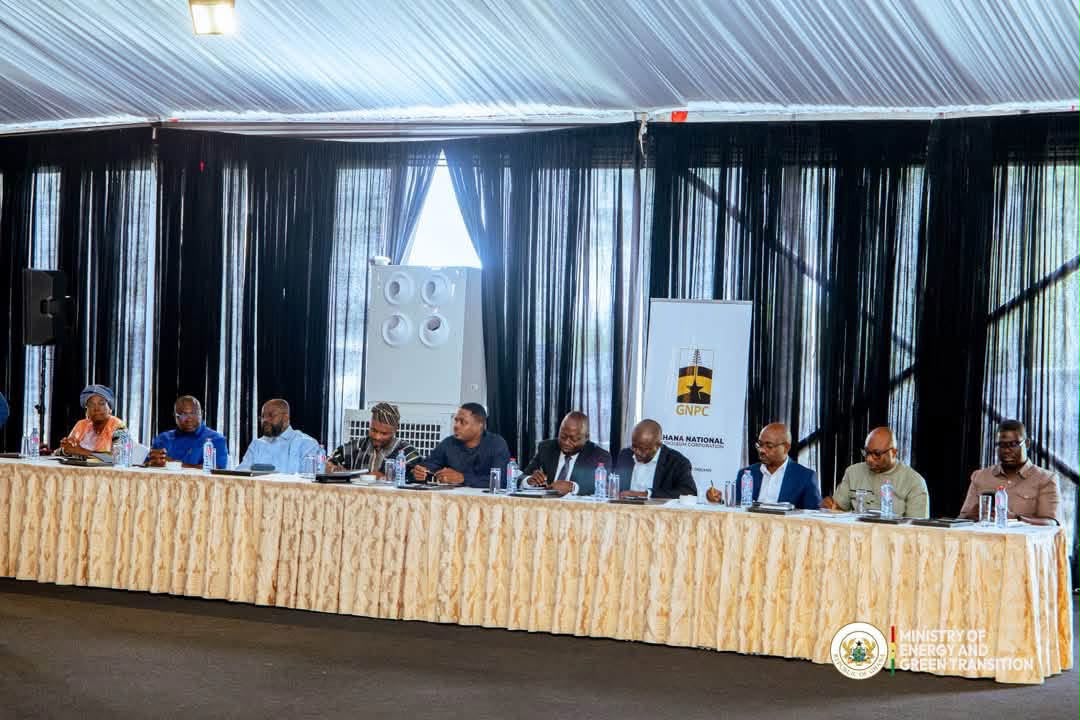
Its next phase combines production optimisation, new field development, exploration, marginal-resource development and greater operatorship capability.
The harder question is whether those measures can move quickly enough.
For Ghana, the real test is no longer whether petroleum remains underground.
It is whether new resources can be converted into producing assets before the decline from existing fields becomes too deep to reverse economically.
The 2025 report therefore reads less like a celebration of four decades of petroleum activity and more like a warning about the urgency of the next decade.
READ ALSO: UMB Branches Become New Hubs for Business Registration